Michael Sercan Daventry
24 March 2016•Update: 02 April 2016
LONDON
Thursday marked the first formal day of campaigning ahead of elections for Scotland’s devolved parliament in six weeks’ time.
It is only the fifth election to take place since the 129-seat chamber was established in 1999, but this year’s parliament will be more powerful than its predecessors.
The next Scottish government will be permitted to set some of its own taxes, including the rate of income tax and Value Added Tax, and a number of welfare benefits, granting it the unprecedented ability to raise some of its own funds.
It comes because British politicians devolved more responsibilities to Scotland after 55 percent of voters rejected independence in a 2014 referendum.
But March 24 could have been a different day altogether if Scots had voted to become a separate country, because it was the day the governing Scottish National Party (SNP) had penciled in for Independence Day.
In many ways, an independent Scotland would not have been radically different than it is today.
Under the SNP’s plans, day-to-day aspects of Scottish life would not have changed. Scotland would have remained a constitutional monarchy with Queen Elizabeth II as its head of state.
Despite becoming a heated campaign issue during the referendum, the pound sterling would have most likely remained the country’s currency. No police checks were proposed for the land border with England under Scottish government plans.
The BBC’s Scottish services would have been reorganized into a new Scottish Broadcasting Service, although audiences were assured they would still enjoy all the programs they used to watch.
Even the state-franchised lottery system would have been shared with the rest of the United Kingdom.
But politicians favoring the U.K. have continued to argue Scotland’s economy would have struggled as an independent country because it would have depended too heavily on revenues from offshore oil and gas reserves.
Before the referendum, the SNP had estimated production in Scottish waters would generate £48 billion ($67.8B) in tax revenues between 2012 and 2018, based on an average price of $113 per barrel of oil.
But the price of oil has dropped dramatically since then. Brent crude was trading at $97.70 a barrel the day after the referendum on Sept. 19, 2014; this week, it was hovering around the $41 mark, having reached lows of $27 a barrel at the beginning of the year.
Prices have reached such lows that U.K. Finance Minister George Osborne last week announced tax reductions for Britain’s oil and gas sector to support the industry.
“We are only able to provide this kind of support to our oil and gas industry because of the broad shoulders of the United Kingdom,” Osborne told the House of Commons.
“None of this support would have been remotely affordable if … Scotland had broken away from the rest of the U.K., as the nationalists wanted.
“Thankfully, the Scottish people decided that we are better together in one United Kingdom,” he added.
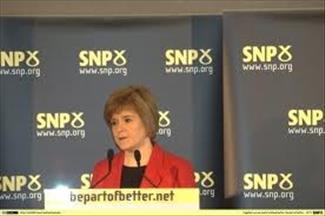
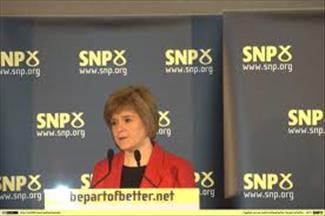
Nicola Sturgeon, who succeeded Salmond as SNP leader after the referendum, has insisted the case for independence was not based exclusively on oil and gas money, even though many believed it was.
Sturgeon told the BBC earlier this year: “I said our growth in onshore revenues over the next few years is projected to significantly outstrip the decline in offshore revenues and our deficit, even on the most pessimistic projections, will fall every year over the remainder of this decade”.
She added: “What I take some responsibility for perhaps not getting this argument across strongly enough during the referendum campaign, is that the case for Scotland as an independent, strong independent country was never based on oil”.
Scotland will remain part of the U.K. for the foreseeable future but, with Sturgeon’s SNP widely predicted to win a majority in May’s Scottish parliament election, the independence question has not been muzzled.
An annual social attitudes survey by ScotCen found 39 percent of respondents supported becoming an independent country, the highest ever recorded by the company.
But ScotCen senior research fellow John Curtice warned: “it appears the [SNP] still faces a challenge in convincing the majority of voters in Scotland that the country should seek to leave the U.K.
“Much may rest on the re-examination of the prospectus for independence that the party leader, Nicola Sturgeon, has now promised the party will undertake.”