- Debate over UK's relationship with EU resurfaces as Prime Minister Keir Starmer announces resignation, triggering Labour leadership contest
- Research suggests Brexit significantly reduced UK-EU trade, while supporters argue Britain has regained control over laws, borders and trade policy
LONDON
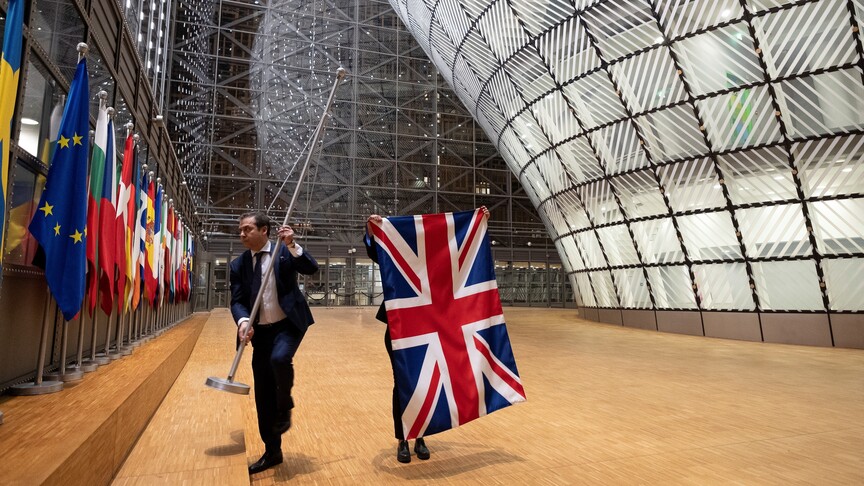
Ten years after Britain voted to leave the European Union, Brexit is no longer the all-consuming political battle that once dominated Westminster, but the arguments raised by the referendum remain far from settled.
On June 23, 2016, 51.9% of voters backed leaving the EU, while 48.1% voted to remain. The result reshaped British politics, led to protracted negotiations with Brussels and fundamentally altered Britain's relationship with its largest trading partner.
Britain has left the EU's single market and customs union, regained control over immigration policy and signed its own trade agreements around the world. But sluggish economic growth, weaker trade with Europe and growing public regret over Brexit have reignited debate over whether the promises made in 2016 have been fulfilled.
The referendum also ushered in an era of political instability.
Britain has had five prime ministers since David Cameron resigned immediately after the vote, and that number is set to rise to six following Prime Minister Keir Starmer's resignation announcement on Monday.
The Labour leadership contest that follows could reopen questions about Britain's future relationship with Europe at a time when more Britons appear to regret Brexit than support it.
For Neil, a self-employed professional who previously worked with clients across Europe, the consequences have been tangible. Brexit transformed what had once been a straightforward business relationship into an administrative burden.
"It’s terrible for the economy," he told Anadolu. "I no longer do work for people in mainland Europe because I can’t handle the VAT for 26 different countries. So I’ve lost work."
Looking back on the referendum campaign, he believes many of the promises made by Brexit supporters failed to materialize.
"The whole thing was ridiculous from the beginning," he said. "I just don’t understand how people can be so dumb, and they’ve come to realise that they were dumb, but it’s 10 years later."
Economic debate continues
The economic impact of Brexit remains one of the most fiercely debated aspects of the referendum.
The UK economy has continued to grow since 2016, but growth has been sluggish, productivity weak and living standards under pressure. Most economists believe Brexit has cost the economy an estimated 2% to 8% in lost output over the past decade.
Recent research by the Centre for European Reform estimated that Brexit reduced UK exports to the EU by around 12% and imports by roughly 16%, with most of the damage stemming from Britain's departure from the EU single market rather than the customs union.
Giles Wilkes, a senior fellow at the Institute for Government, recently described Brexit as "a straightforward act of anti-economics folly," arguing that access to larger markets remains a key driver of prosperity.
Supporters of Brexit dispute such assessments, arguing that leaving the EU restored democratic control over laws, borders and trade policy while allowing Britain greater flexibility to pursue its own interests.
Even many critics acknowledge that assessing Brexit's impact has become more complicated because it coincided with extraordinary global events, including the COVID-19 pandemic, Russia's invasion of Ukraine and growing protectionism from the United States.
For Madeleine, an anti-Brexit activist, the overall direction is becoming clearer.
"I think after Brexit happened, the UK was feeling really hopeless," she said. "But now we are experiencing the true negative impacts of Brexit."
Polling suggests she is not alone.
An ongoing poll by Statista has found that regret for Brexit has consistently grown over the years. According to the latest June poll, 57% now say Britain was wrong to leave the EU while just 30% say it was a good decision.
At the same time, support for rejoining the bloc remains more mixed, reflecting continuing divisions over sovereignty, immigration and Britain's role in Europe.
Could Britain move closer to Europe?
For many pro-European voters, the debate is no longer about reversing Brexit overnight but gradually rebuilding ties with Brussels.
Madeleine believes that process has already begun.
"With the Brexit reset and the slowly moving back towards Europe, there is hope again," she said. "We could realistically be a member of the EU in 10 years' time."
The question may gain renewed attention during Labour's leadership race.
"Starmer has always tried to appeal to the Reform voters,” said Madeline, referring to the right-wing populist party led by Nigel Farage. “That has meant that he has not vocally been positive about the EU or even mentioned the possibility of joining the EU again. He doesn't even want to join the single market at this point.”
One of the leading contenders to replace Starmer is Andy Burnham, the former mayor of Greater Manchester. While Burnham has described Brexit as economically damaging and previously expressed hope that Britain could one day rejoin the EU, he has ruled out seeking a return to membership, arguing Britain cannot remain trapped in endless arguments over the referendum.
Others remain skeptical that any major political party is prepared to revisit the issue directly.
"Starmer, although Labour are a centre-left party, panders to the right," David, another long-standing Brexit opponent, told Anadolu. “We might have a better chance with Burnham, but he’s said some pretty right-wing things as well.”
As a result, he believes any future push for rejoining the EU is more likely to come from smaller pro-European parties.
"The only way for us to look for a rejoin with the EU is the Liberal Democrats and the Green Party," he said.