Aysu Bicer
28 August 2026•Update: 28 August 2026
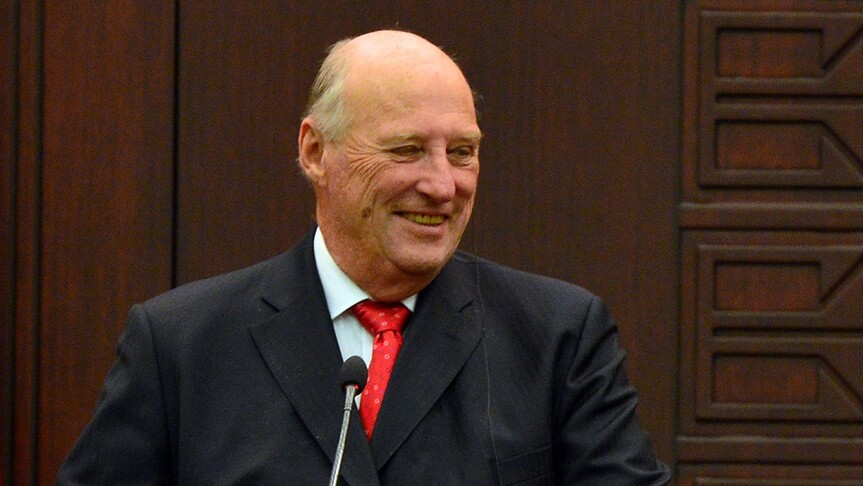
King Harald V of Norway, who died Friday at the age of 89, stood out as one of Scandinavia’s most modern monarchs.
The king who has ruled since 1991 is widely recognized for blending royal tradition with contemporary democratic values.
Born on February 21, 1937, at Skaugum, Harald became the first prince born on Norwegian soil to accede to the throne since the late Middle Ages.
Following the Nazi invasion of Norway in 1940 during World War II, the three-year-old prince was forced into exile with his mother and sisters, spending his early childhood in Washington, D.C., at the personal invitation of US President Franklin D. Roosevelt.
Upon returning to his homeland in 1945, he broke centuries-old royal custom by becoming the first member of the Norwegian royal family to attend a public state school.
He went on to complete his education at the Norwegian Military Academy and Balliol College, Oxford.
Love story
One of the defining chapters of Harald’s life was his decade-long romance with Sonja Haraldsen, who was a commoner.
His marriage to Sonja sparked intense political and constitutional debate.
Faced with royal opposition, the young prince gave a firm ultimatum to his father, King Olav V. He said that if he could not marry Sonja, he would remain unmarried for life, potentially bringing the Norwegian royal bloodline to an end.
With the eventual consent of the government and parliament, the couple married in 1968, a landmark event that helped modernize the royal institution’s relationship with the public.
Love for sailing
Harald represented Norway in sailing at three consecutive Summer Olympic Games: Tokyo in 1964, Mexico City in 1968, and Munich in 1972.
He achieved world-class status, winning World and European Championship medals.
Promoting tolerance
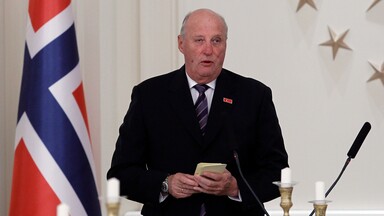
In his constitutional role as head of state, Harald is celebrated for promoting tolerance and national unity.
His widely acclaimed 2016 address, which explicitly championed religious freedom and reconciliation with Norway’s indigenous Sami population, garnered global attention.
Refusal to abdicate throne
Despite an array of health challenges in recent years, Harald has repeatedly said that he will never abdicate the throne.
Citing the solemn constitutional oath he took before the Norwegian parliament, the Storting, in 1991, he maintains that his pledge to serve Norway is lifelong.
Fighting illness
The monarch was admitted to the National Hospital in Oslo on Aug.17 with a bacterial infection in his bloodstream. He has been receiving antibiotics for the infection.
The palace said on Thursday that Crown Prince Haakon and Queen Sonja had cancelled their planned engagements following the latest update on the king's condition.
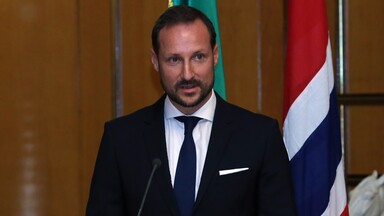
Haakon, the king's eldest son and heir, has been acting as regent while his father remains in hospital.
The royal court previously said the king's illness was linked to treatment with cortisone for haemolytic anaemia. The medication caused fluid to build up in his body, it said.
Haemolytic anaemia is a rare condition in which red blood cells are destroyed more quickly than the body can replace them. It can be inherited or develop later in life.
Harald has experienced a number of health problems in recent years and has required hospital treatment on several occasions.
In February, he was taken to hospital in the Canary Islands while on holiday and was treated for a skin infection.
In 2024, he became ill during a private holiday in Malaysia and was fitted with a temporary pacemaker. He was later flown back to Norway on a medical aircraft, where doctors implanted a permanent pacemaker.