Lavrov accuses Trump administration of seeking control over global energy sector
Russian foreign minister claims Washington aims to push Russian energy companies out of global markets, shape European energy pricing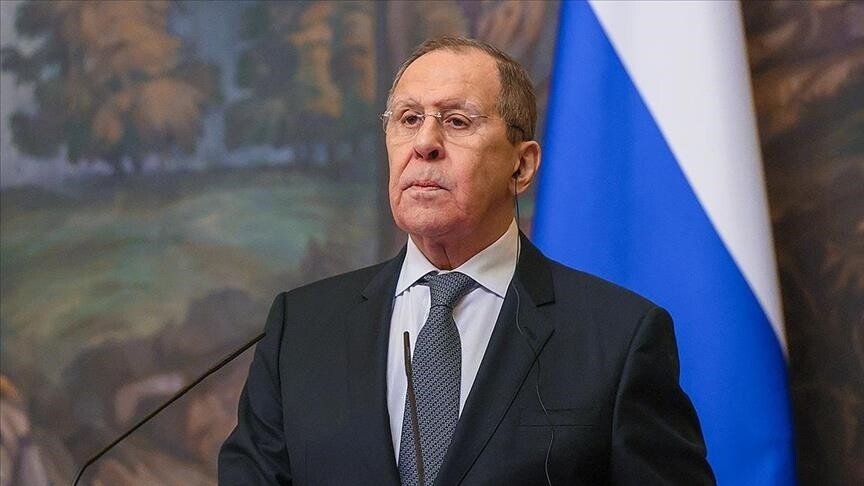
Russian Foreign Minister Sergey Lavrov accused on Wednesday the Trump administration of attempting to “usurp” influence over the global energy market.
Lavrov claimed Washington’s objective was to force Russian energy firms such as Lukoil and Rosneft out of international markets as part of a broader strategy to control global energy flows.
“The United States has adopted a series of doctrinal documents, one of which proclaims that the US must dominate global energy markets," he said in an interview with broadcaster RT India. "So their goal is entirely clear: they want to bring every significant energy supply route under their control."
As part of this strategy, Washington is seeking control over key energy transit routes, including the damaged Nord Stream pipelines and gas transit infrastructure through Ukraine, he argued.
Washington plans also include shaping future European energy pricing and supply arrangements, Lavrov claimed.
He argued that if the Nord Stream pipelines are used again, energy prices in Europe would no longer be determined through agreements between Russia and Germany but instead by the US, which he claimed seeks greater control over European energy infrastructure and supply.
"They want to purchase it at roughly one-tenth of what the Europeans paid for it,” he said.
At the same time, Lavrov said Moscow welcomed contacts initiated by Trump and noted that communication channels between the two countries remain active, including between the Russian Foreign Ministry and the US State Department.
“However, nothing is happening in real life. Aside from this regular dialogue – which is normal in relations between people and countries – everything else follows the pattern initiated by President (Joe) Biden," he said.
Lavrov noted that sanctions introduced under the previous US administration remain in force and that additional measures targeting the Russian economy had since been adopted.
Commenting on tensions in the Strait of Hormuz, Lavrov warned that instability around major maritime trade routes could severely affect global energy markets.
"Europe will probably be impacted more than anyone else by the crisis in the Strait of Hormuz. Beyond that, bans on Russian gas and oil imports mean switching to US liquefied natural gas, which is dramatically more expensive," he said.
"The Nord Stream pipelines have been blown up. Now we are witnessing an aggression in the Strait of Hormuz. Word is out that the Bab-el-Mandeb Strait could also become a zone of confrontation, and the ensuing damage to global energy markets would be immeasurable," he said.