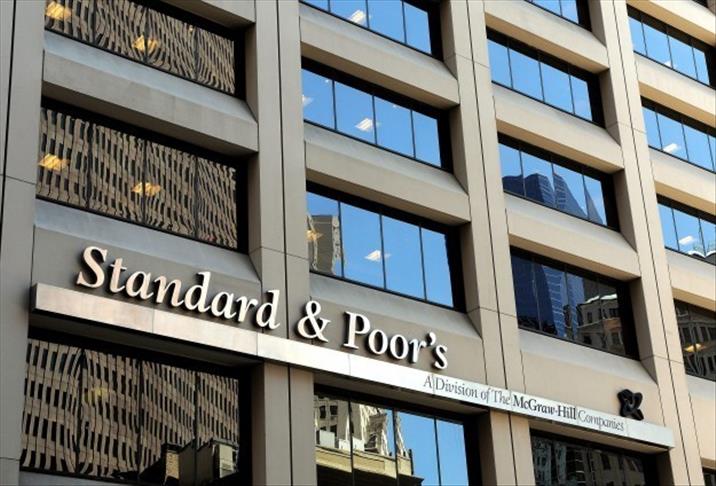
Economic pressures could start to weigh on Turkey's bank assets, according to Standard & Poor's.
"Turkish banks have demonstrated a steadily improving financial profile, since undertaking decisive structural reforms following the country's economic and financial crisis of 2001," S&P said in a report.
“Growth in lending to consumers and small and midsize enterprises has fuelled credit growth. While we expect this growth to continue, albeit at a slower pace, we believe that Turkish banks are now more exposed to an economic slowdown than ever,” the report said.
The rapid depreciation of the Turkish lira since mid-2013 is testing the resilience of banks' foreign exchange lending and will continue to do so in 2014,” the report said.
S&P credit analyst, Magar Kouyoumdjian added: "We believe that heightened domestic political risk, repercussions of tapering of the U.S. Federal Reserve's quantitative easing, and a slowdown in Turkey's economic growth are prompting a deterioration in the operating environment for Turkish banks."
"Our current base-case scenario for the Turkish banking sector incorporates a moderate economic slowdown with real GDP growth averaging 2.2 percent during 2014-2015. We would expect asset quality to deteriorate only marginally and affect banks' profitability moderately," said Kouyoumdjian. "This would not materially affect banks' overall financial profiles, particularly given the good interest margins and capitalization.
The report also said that Turkey’s “quality metrics still look relatively strong, and proactive measures taken by the country’s banking regulator, the BDDK, have helped cushion the blow on asset quality".
However S&P has warned that accelerated growth in Turkey’s commercial real estate has the potential to cause a bubble.
englishnews@aa.com.tr