By Ata Ufuk Seker
BRUSSELS
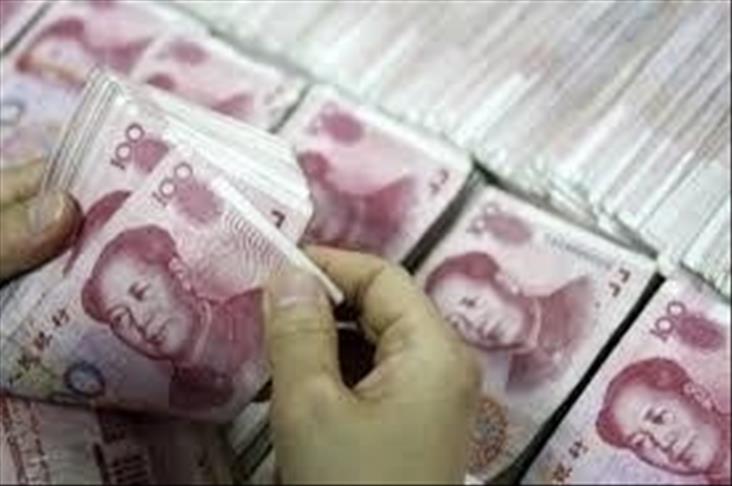
The devaluation of the renminbi of nearly 4 percent against the dollar on Tuesday and Wednesday is a move to help banks, not exporters, Hosuk Lee-Makiyama, director of European Centre for International Political Economy told Anadolu Agency on Wednesday.
"There seems to be a unanimous opinion in the West that the Chinese devaluation of the renminbi is aimed at boosting exports. I would not be so confident about that," Makiyama said.
"China is less export-oriented than you think. China is very well aware of what this does to commodity prices. If you look at the Chinese economy, it is extremely dependent on fuel and raw materials imports. China is the biggest purchaser in world markets, which means that, when China decides to devalue its currency what little they gain in exports would be immediately lost in increased input prices of raw materials, minerals etc. This is a sensitive issue," Makiyama said.
"It’s more likely that the devaluation is intended as a short- term transition, a reaction to the current decline of the Chinese stock indexes," Makiyama explained.
The Shanghai Composite index dropped 1.03 percent on Wednesday morning, after Chinese authorities announced the devaluation of the renminbi.
"One of the reasons I think is going to be short-term is, because, if you look at the crisis we now see in China, it’s not so much in about the transitional economic crises we talk about in Europe -- this is primarily a banking crisis. Chinese economists and the economic literature is very well aware of it," Makiyama commented.
"And I would be surprised if they decide to export themselves out of this crisis, because they know they can’t. The problem is within the financial system, and every Chinese economist knows it," he added.
"The real problem is, first of all, if you look at the banks, one of the problems in the Chinese economy is that the credit rating system doesn't work as well as it does in the West, because you don’t have access to the data. We have all sorts of market data. Before a western bank lends money to an entity, it would have all sorts of access to data about the entity they are lending to.
Whereas in China, you don’t have the sophisticated credit rating instruments. You take a bigger risk when you lend out money in China. This is the reason China has a bigger spread between the bank and the market lending rates. Risk is so high that there is a gap," Makiyama said.
"One of the big things underlying this problem is that many of the loans commercial banks make are for real estate. So you have local governments which have different kinds of investment vehicles underlying security in land. Most people would say that land is hugely overvalued currently in China. We don’t actually know whether the value of investment vehicles is confirmed. That explains real estate bubbles in the Chinese economy," Makiyama said.
"If you look at the Chinese stock exchanges, which have been declining, nothing else has changed in China," Makiyama said. "The Shanghai Composite took a huge dive all of a sudden. If you look at the companies in the Shanghai Composite, there are very few exporters listed, most of the companies are banks or financial institutions. This is the reason why I am very cautious. This is a banking crisis which may or may not develop into a financial crisis. Many of the banks lent money to state-owned enterprises. So the political system is perfectly in control of it all."