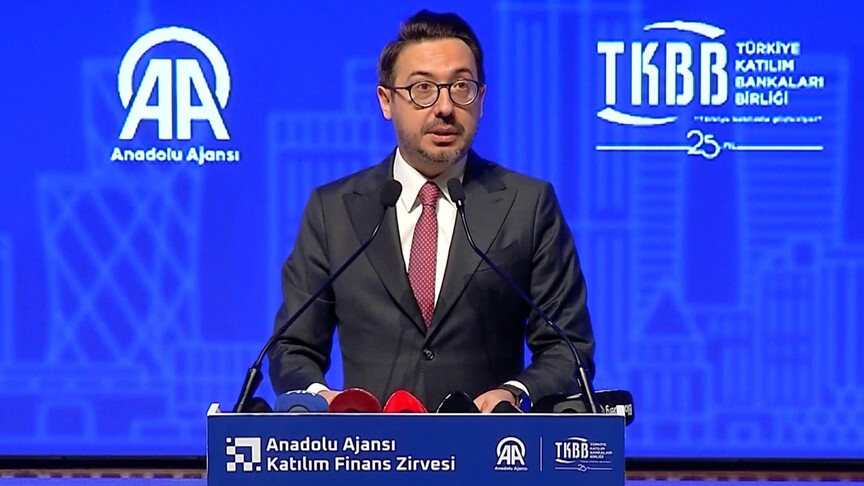
The future of participation finance will develop with trust and accurate, effective communication, Anadolu CEO Serdar Karagoz said, adding: "For this reason, we are working to build a framework of trust in participation finance communications."
Speaking on Thursday at the Participation Finance Summit, organized by Anadolu at the Istanbul Financial Center, Karagoz asked what truly builds trust in the financial world, whether it is simply data or in fact how data is both narrated and perceived.
The summit features panels on the future strategies of participation banks and Türkiye’s participation economy, participation-based investment products, and the role of digitalization in participation finance’s future.
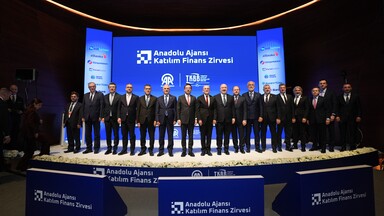
The summit was organized through a collaboration between Anadolu and the Participation Banks Association of Türkiye, with contributions from Turkish participation lenders Vakif Katilim, Kuveyt Turk, Ziraat Katilim, Emlak Katilim, Albaraka, Turkiye Finans, Dunya Katilim, Hayat Finans, TOM Bank, and Adil Katilim.
"Narrative is more effective than data in the digital age due to the influence of mass media, as data alone does not persuade," Karagoz explained.
The modern financial system went through a deep questioning process since the 2008 global crisis, when the mortgage crisis wiped out trillions of dollars in value, he said.
Trust in global financial institutions was severely damaged, opening the fairness of the system up to debate, he said, adding that the crisis was a crisis of meaning and trust beyond just an economic rupture.
Questions over whether the financial system shares risks fairly, the equity of profit and loss balance, and whether finance supports production or creates an internal cycle remain unanswered today, he said.
"This situation showed that the issue is an ethical, structural, and communicational problem beyond a financial one," Karagoz said.
"It’s at precisely this point that participation finance stands out as a strong alternative, offering a model built on risk-sharing, direct links with production, transparency, and ethical principles."
The participation finance ecosystem in Türkiye reached a broad and holistic structure ranging from banking to insurance and portfolio management to fintechs, he explained.
Türkiye presents a very strong vision in this field with the Istanbul Financial Center, which hosted the Thursday event at the headquarters of Turkish state lender Ziraat Bank, Karagoz said.
'Global media tries to marginalize participation finance, push it aside'
He warned about a deeper problem in the global financial system, where participation finance neither finds enough space nor is understood, failing to receive its deserved value.
"Mainstream international finance media outlets such as Reuters, Bloomberg, The Financial Times, and The Wall Street Journal either treat this field superficially or fail to evaluate it as a holistic model," Karagoz pointed out.
Even when participation finance finds a place in the global financial narrative, it is usually framed as a niche area with limited impact rather than being at the center, he added.
Framing theory in communication clearly explains what is happening in this situation, said Karagoz.
Citing sociologist Erving Goffman, he said the issue goes beyond what is said and focuses on what is centered versus what is left on the margins.
"When you do not want to grow something, you either ignore it or trap it in a separate frame away from the center," he stated.
The global media, with an orientalist perspective, is currently doing exactly this in the field of participation finance by trying to shrink it through ignorance and neutralize it by pushing it aside, Karagoz stated.
He stressed that the moment they center it, the global media knows they will have to compete with participation finance, so they see it but never center its successes.
Anadolu's efforts
However, the data of participation finance is very clear and strong and continues to strengthen rapidly, he underlined.
Karagoz noted that the size of participation finance assets tops $4 trillion, according to a 2025 report by the Islamic Financial Services Board.
He mentioned that they are talking about a financial system growing and deepening on a global scale despite the marginalization and sidelining efforts of the global media.
The failure of this field to find its deserved place in the global narrative shows an open reality of a narrative and meaning gap stemming from the global system rather than a deficiency, Karagoz stated.
This is exactly where Anadolu steps in, by centering this field in its international journalistic work, he said, stressing their belief that the future of participation finance will develop with trust and accurate communication.
The agency tries to build a trust architecture in communication about participation finance, he said.
He explained: "This architecture requires producing accurate data, establishing the right frame, and making this frame understandable on a global scale.
"More importantly, this architecture requires building a trust-producing discourse and establishing a narrative."
Recently Anadolu significantly stepped up its work in this area, turning participation finance into one of its main areas of coverage, he stated.
Karagoz noted that the agency has done exclusive interviews and produced content with executives of leading institutions in the sector.
The agency has posted hundreds of news items and analyses reflecting current developments, he said.
By welcoming sector decision-makers to its Finance Desk platform, Anadolu provided the opportunity to listen to the present and future of participation finance directly from its actors, he said.
Karagoz emphasized that the agency not only produces this coverage but also provides global access by publishing it in 13 different languages.
So their goal is not limited to producing content but trying to build an international discourse in the field of participation finance, he stated.
The agency is working to make sense of, deepen, and make developments in this field visible on a global scale, he said.
Current and future summits
The power of a model is revealed by the narrative and trust it creates rather than numbers, and it is with this understanding that Anadolu organized this summit, Karagoz said.
He shared their goal to better explain participation finance on a global scale, lay a strong international communication groundwork in this field, and over time transform this platform into a global meeting point.
Karagoz expressed hope that next year’s second edition of the event will be an international participation finance summit, internationalizing this meeting in the best way possible.
He concluded by thanking all stakeholders who contributed to the success of the event, especially the Participation Banks Association of Türkiye.