Hilal Mir
25 September 2024•Update: 25 September 2024
SRINAGAR, Jammu and Kashmir
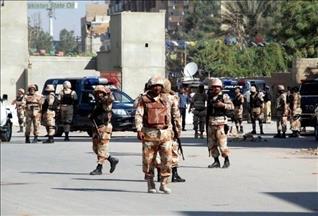
The second phase of the crucial local election in the Indian-administered Kashmir on Wednesday recorded a turnout of 56.79%, according to election authorities.
More than 2.5 million voters were eligible to cast ballots for a total of 26 assembly seats in the second phase, including eight in the capital Srinagar, which recorded the lowest turnout at 29.24%, Chief Election Commissioner PK Pole said.
Former Chief Minister Omar Abdullah is contesting from two constituencies.
Nearly 9 million people are registered across the region to vote for the 90-member Jammu and Kashmir Legislative Assembly. The seats are distributed between the two areas that make up the union territory -- 47 for Kashmir and 43 for Jammu.
The first phase witnessed a high turnout of 61.1%, according to the Election Commission of India. The final phase will be held on Oct. 1, followed by counting and results on Oct. 8.
The elections have greater significance as they are also the first since India scrapped the Muslim-majority region’s special autonomy in August 2019.
A total of 219 candidates were in the fray for the 24 constituencies in the first phase, including 16 in southern Kashmir districts that until recently were the hub of a resurgent anti-India armed insurgency.
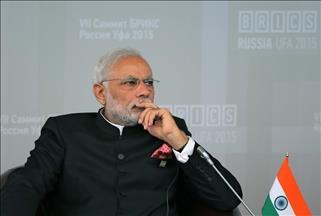
Indian Prime Minister Narendra Modi in a brief statement appealed voters to cast their votes and “play their important role in strengthening democracy.”
Foreign diplomats visit Kashmir
A group of foreign diplomats was flown to Srinagar on Wednesday to witness the ongoing election process.
The diplomats represent the US, Mexico, Guyana, South Korea, Somalia, Panama, Singapore, Nigeria, Spain, South Africa, Norway, Tanzania, Rwanda, Algeria and the Philippines, sources in Indian Foreign Ministry said.
The trip triggered an angry response from Abdullah of National Conference who told reporters in Srinagar: “I don’t know why foreigners should be asked to check elections here. When foreign governments comment, then the government of India says ‘this is an internal matter for India’ and now suddenly they want foreign observers to come and look at our elections.”
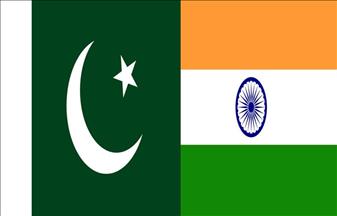
At the end of the first phase, India's longtime rival Pakistan “categorically” rejected the polls, asserting that they are no substitute for the Kashmiri people's right to self-determination.
From 2018 to Aug. 5, 2019, New Delhi ruled the region directly through a governor who wielded as much authority as an elected government.
It was then made a federally ruled territory and has since been under a lieutenant governor with even more powers, which prompted the region’s top pro-freedom leader, Mirwaiz Umar Farooq, to remark that the “polls lost the significance even before they began.”
The vote will lead to a limited transition of power from New Delhi to the local assembly, as Jammu and Kashmir will remain a union territory under direct federal control and the Indian parliament will be its top legislature.
*Ahmad Adil contributed from New Delhi