KARACHI, Pakistan
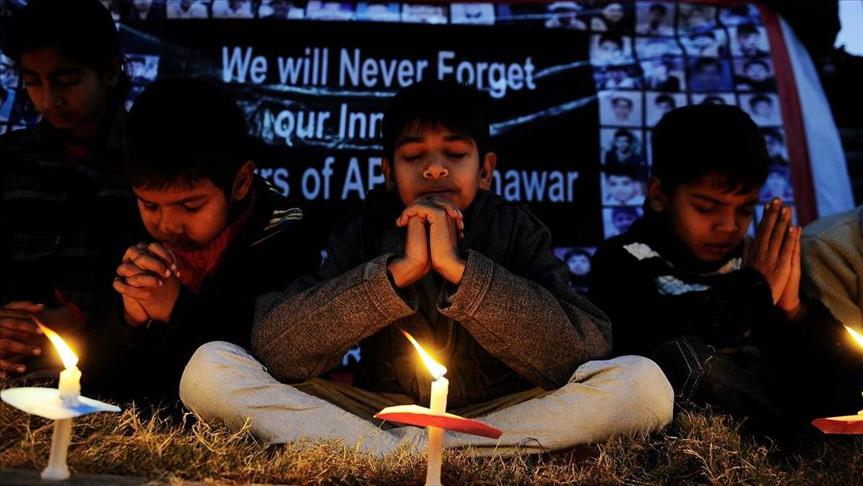
On the morning of Dec. 16 of last year, nine heavily-armed Taliban militants stormed an army-run school in Pakistan’s northwestern city of Peshawar and killed over 140 students in one of the deadliest incidents in the country’s history -- and one which changed it in many ways.
Dubbed "Pakistan's 9/11", the deadly gun-and-bomb attack was followed by a series of actions by the government, including the intensification of military operations in the country’s restive tribal belt near the Afghan border, the lifting of a six-year ban on capital punishment, and the establishment of military tribunals to try unrepentant terrorists.
But most of all, Islamabad subsequently facilitated long-awaited peace talks between the Afghan government and Taliban in hopes of ending a 13-year insurgency by the latter.
All these were seen as significant shifts in Islamabad’s efforts to contain the insurgency, which has so far claimed over 50,000 lives -- including nearly 5,000 Pakistani army troops -- since the country joined the so-called "War on Terrorism" in 2002.
"Things have changed in Pakistan as a result of the key steps taken by the country’s military and civilian leadership [since last year’s school massacre]. Pakistan is much safer now," Abdul Khalique Ali, a Karachi-based security analyst, told Anadolu Agency.
"The Dec. 16 carnage did away with all the confusion regarding security threats to the country. Now, there are no ‘good’ Taliban or ‘bad’ Taliban. Militants are just militants," Ali said, referring to recent actions taken against the Taliban, sectarian violence and organized crime.
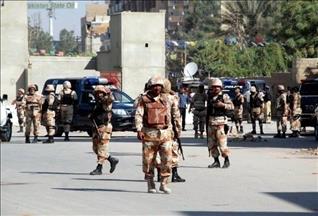
One feature of this three-pronged crackdown is an ongoing operation in the country’s commercial capital, Karachi, in which over 400 alleged gangsters -- and more than 200 suspected Taliban militants -- have been killed in clashes with security forces over the last 11 months.
What’s more, Ali said, after the Peshawar school massacre, the Taliban lost whatever sympathies they might have enjoyed earlier.
"All the right-wing political parties are now united against the Pakistani Taliban, who are on the run," he asserted.
According to the Interior Ministry, there has been a 70 percent decrease in suicide bombings and bomb blasts in 2015, although the Taliban continue to ambush security personnel in different parts of the country and strike soft targets, such as Shia mosques and churches.
"Phenomenal successes have been achieved in the ongoing operations against the militants. Their last strongholds near the Pakistan-Afghan border are now being cleared," Pakistani army spokesman Asim Saleem Bajwa told Anadolu Agency.
Some 3,400 militants and nearly 500 army troops have been killed in an ongoing operation dubbed "Zarb-e-Azb", or "Sword Strike", said Bajwa.
"The entire nation supports the armed forces; the resolve against terrorism expressed after the Dec. 16 attack is the bedrock of Operation Zarb-e-Azb," Bajwa added, noting that over 80 percent of North Waziristan -- once the Taliban’s main stomping ground -- had been cleared of militants.
The government has vowed to wind down the operation in North Waziristan and the adjacent Khyber Agency by the end of 2015, which will be followed by the repatriation of nearly 1.5 million tribesmen displaced by the conflict.
- More needed
Despite the ostensible improvement in terms of law and order, analysts believe more immediate steps are required to maintain the successes seen since Dec. 16.
"The repatriation of over 1.5 million displaced tribesmen from North Waziristan, South Waziristan and Khyber Agency is the biggest challenge the government still faces," Rahimullah Yusufzai, a Peshawar-based expert on Afghan affairs, told Anadolu Agency.
The government, he said, had not been able to entirely repatriate tribesmen displaced from South Waziristan, even after six years of military operations.
"In light of the government’s past record, I don’t think it will be able to repatriate the displaced people of North Waziristan, even by the end of next year," he said.
Voicing doubts regarding the government’s pledge to wrap up military operations by the end of this year, Yusufzai said the army would have to remain in North Waziristan -- and certain other tribal areas -- for the mid-term future since many areas had still not been cleared of militants.
Another challenge the government and army must deal with, the expert noted, was the huge cost of the repatriation process.
"The main parts of North Waziristan, including its administrative headquarters in Miranshah, have been flattened as a result of heavy bombing. Until infrastructure in these areas is rebuilt, repatriation of displaced tribesmen will not be possible," said Yusufzai.
"All this requires enormous finances that have yet to be arranged, either by the federal government or by international donors," he said.