Diyar Güldoğan
15 June 2026•Update: 15 June 2026
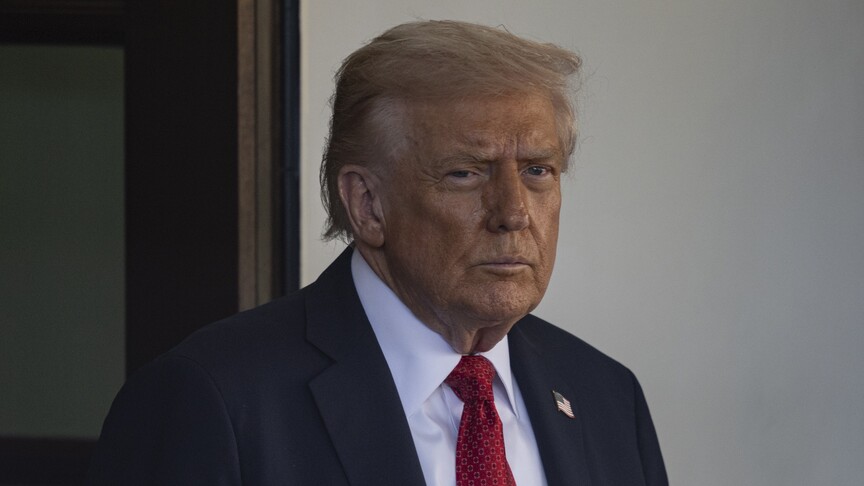
US President Donald Trump said Monday that the text of the Memorandum of Understanding with Iran will be released "sometime after Friday."
"I think pretty soon. I would say, I mean, I want it to be released, because it's a very powerful document," Trump said during a meeting with his French counterpart Emmanuel Macron on the sidelines of the G7 summit in Evian, France.
"It's a very powerful document, and I want it to be released. So, probably pretty soon. I would say sometime after Friday."
Trump said "the deal's all signed."
The Strait of Hormuz is "already partially" opened, the president said, adding the waterway will be "completely opened" on Friday.
Pakistani Prime Minister Shehbaz Sharif, whose country led mediation between Washington and Tehran, announced early Monday that the US and Iran had reached a peace agreement and that a signing ceremony would be held in Switzerland on Friday.
Trump said Vice President JD Vance will be coming for the signing ceremony.
When asked whether he will be present during the signing ceremony, Trump said "it depends."
"JD is coming in for it. He was originally going to do it. I'll probably be gone by then ...I may be involved. I may not, but JD was coming in for that specifically," he added.
US wants to see ‘if we can straight out the Lebanon’
About sanctions relief in the Iran deal, Trump said it is "really a behavioral thing."
"If they do what they're supposed to do, that starts taking effect."
Macron, for his part, said the deal is a "very important" one, because it will fix the nuclear issue and provide peace in Lebanon.
Despite the agreement, the Israeli army carried out demolitions and shelling in several towns in southern Lebanon on Monday. Displaced residents were also reported returning to some southern villages, while local municipalities urged caution and called on residents to delay their return.
The US wants to see "if we can straight out the Lebanon," Trump said.
The G7 brings together seven of the world’s most advanced economies -- Canada, France, Germany, Italy, Japan, the UK and the US -- with the EU also being a member.
It serves as the primary platform for members to discuss and coordinate responses to major global economic, financial and geopolitical challenges.