Simgenur Akbolat
17 December 2025•Update: 17 December 2025
ISTANBUL
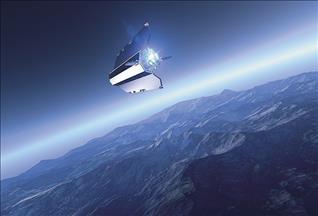
NASA's Carruthers Geocorona Observatory has captured its first images from space, revealing Earth surrounded by a glowing crown of hydrogen gas invisible to the naked eye, the agency said Tuesday.
The observatory photographed Earth and the moon on Nov. 17 using ultraviolet light, a type of light humans cannot see. The images confirm the spacecraft is operating properly, according to NASA.
The spacecraft carries two cameras that captured Earth's geocorona, which translates from Latin as "Earth crown." This faint glow comes from hydrogen atoms in Earth's outermost atmosphere, extending far into space.
In the images, the moon appears as a sharp sphere while Earth looks fuzzy, surrounded by a bright haze stretching outward. The haze represents the geocorona that the observatory will study by taking repeated pictures over time to track how it changes.
The spacecraft also captured a rare view of sunlight bouncing off the far side of the moon, the hemisphere permanently facing away from Earth that cannot be photographed from our planet.
Currently traveling toward a special orbital position about 1 million miles (1.6 million kilometers) from Earth, the observatory will begin its main science mission in March, taking longer exposures to reveal “fainter details” of Earth's hydrogen envelope.
The mission, launched Sept. 24, honors George Carruthers, a pioneer in ultraviolet astronomy.