GENEVA
The United Nations (UN) Special Rapporteur Tomás Ojea Quintana, who is tasked with monitoring the human rights situation in Myanmar, raised the alarm on Thursday on a number of challenges which, if left unaddressed, could jeopardize the entire reform process in the country.
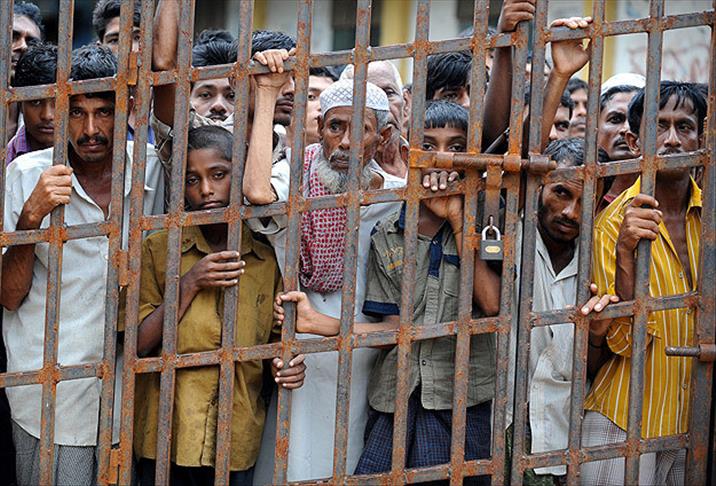
The violent clashes between Buddhists mobs and Rohingya Muslims in the country continues; last month a group of local Buddhists, backed by police, rampaged through the village killing at least 40 people, according to a UN statement and human rights organisations.
Regarding this police operation in Du Chee Yar Tan, northern Rakhine State, Quintana said that if an independent investigation does not take place, "I will urge the UN Human Rights Council to work with the Government of Myanmar to establish a credible investigation, to uncover the truth, and to hold anyone responsible for human rights violations to account."
The UN said at least 48 Muslims appear to have been killed by Buddhist mobs in a village in the state's Maungdaw region. The government has vehemently denied that the violence occurred.
"The military retains a prevailing role in the life and institutions of Myanmar for the time being. State institutions in general remain unaccountable and the judiciary is not yet functioning as an independent branch of government,” Quintana said in a statement on Thursday, after his visit to Myanmar.
"Moreover, the rule of law cannot yet be said to exist in Myanmar," Quintana stated, noting that the current situation in Rakhine State still represents a particular obstacle and a threat to the reform process.
The U.N. rapporteur commended progress towards this national ceasefire accord, which could be signed by April.
He said: "A critical challenge will be to secure a ceasefire and political agreements with ethnic minority groups, so that Myanmar can finally transform into a peaceful multi-ethnic and multi-religious society."
On the constitution, Quintana said that reform was necessary to "embrace the aspirations of the ethnic communities" and to "address the undemocratic powers granted to the military and further democratize parliament, upholding the right of people to choose their own government and president."
The Rohingya Muslims, who the U.N. say are among the most persecuted ethnic groups in the world, reside mainly in the Western Myanmar state of Rakhine.
Rohingya Muslims are not recognised as Myanmar citizens under the 1982 Citizenship Law.
englishnews@aa.com.tr