BANGKOK
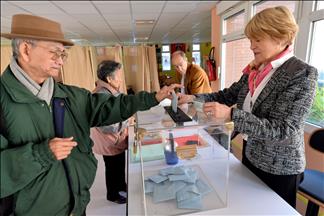
Anti-government protesters have been enthusiastically voting in a senatorial vote - in stark contrast to their efforts to disrupt February 2 legislative elections which left the ballot and Thailand in chaos.
Voting proceeded smoothly in all constituencies Sunday with leaders of the anti-government People’s Democratic Reform Committee (PDRC) acknowledging that their slogan “reform before elections” did not apply to Senate elections but only to legislative polls.
The PDRC sees the Senate - half appointed and half elected - as crucial in a likely impeachment process against Prime Minister Yingluck Shinawatra. The unelected half is appointed by judges and representatives of independent agencies representative of the traditional establishment, and opposed to Yingluck's government.
These agencies include the Constitutional Court, the Electoral Commission and the National Anti-Corruption Commission, which has accused Yingluck of dereliction of duty in relation to a rice-subsidies scheme and has the power to indict her and recommend a Senate judicial process which could see her impeached.
Yingluck has proclaimed her innocence, her lawyers highlighting that corruption and political violence charges against her predecessor - the leader of the opposition - have come to a standstill while Yingluck's appear to have been rushed through in record time.
“I have no alternative but to conclude that as far as the examination of evidence and witnesses in this case is concerned, I have not been treated fairly or received any justice,” she wrote in a Facebook post Friday.
The PDRC disrupted the earlier election by stealing ballot boxes and papers and intimidating election officials and voters. The Constitutional Court nullified the polls March 21, stating that conditions set by the constitution had not been respected. The PDRC is now opposing the organization of a new round of legislative elections, the date of which has still to be announced although they are expected to be held in early May. It wants an unelected “people’s council” to run Thailand until the political system is reformed in a way which would limit the influence of elected governments and increase the power of independent agencies appointed by magistrates.
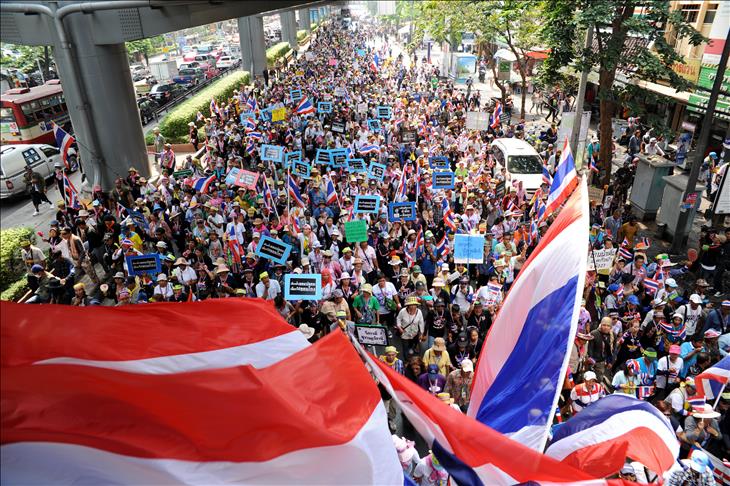
Anti-government protest leader, former MP Suthep Thaugsuban, led a march through Bangkok on Saturday to state that the movement “will not allow Parliament to open without prior political reforms."
Yingluck is facing a wave of opposition protests after her government pushed through an amnesty that would have lifted a conviction against her brother, Thaksin – a deeply divisive figure in Thai politics who led the country from 2001 to 2006 before being overthrown in a coup.
Thaksin was sentenced for abuse of power in 2008, but left the country shortly before the judgment and has since been living since in exile, mostly in Dubai.
Confronted by massive protests, the government withdrew the bill, but the opposition has alleged massive corruption by the government and Shinawatra family.
englishnews@aa.com.tr