SEOUL
By Alex Jensen
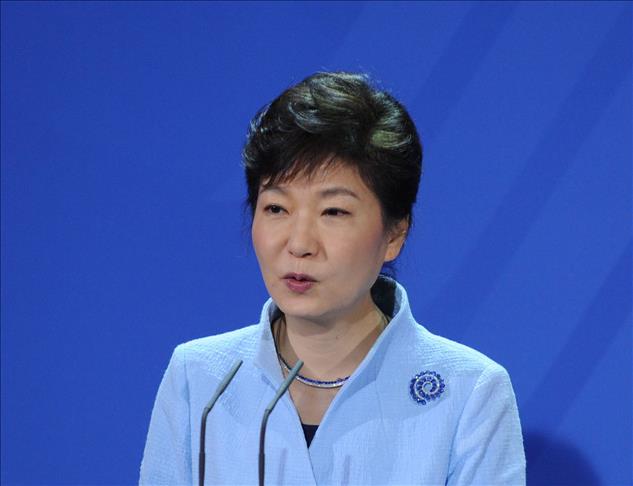
South Korean President Park Geun-hye left the door open for talks with North Korea Monday, but warned of a stern response to future military escalation.
Park’s comments follow exchanges of fire at the border at the weekend after activists sent leaflet-filled balloons into the North, aiming to spread information about the communist leadership as well as news of the outside world.
North Korea’s state-run Rodong Sinmun newspaper Sunday suggested the latest exchange of fire had made “a high-level meeting irrelevant” – a reference to talks agreed during a visit to the South by the North’s effective second-in-command Hwang Pyong-so last month.
The paper added that “spreading anti-Pyongyang leaflets is part of flagrant psychological warfare that could lead to a military clash.”
Park told a ministers’ meeting Monday that “the two Koreas must continue dialogue to reduce tensions and establish peace on the Korean Peninsula,” South Korean news agency Yonhap reported.
She also reiterated Seoul’s position that it is prepared to respond sternly to North Korean provocations.
Park spoke after the South Korean military said it had bolstered forces near the western border with missiles and armored vehicles “to strengthen preparedness against the North’s surprise attacks on and occupation of border islands in the Yellow Sea.”
The absence of North Korean leader Kim Jong-un, who has not been seen in public since September 3, adds another element to the unpredictable nature of relations between the two Koreas.
The unexpected visit of Hwang, a member of the powerful Organization and Guidance Department, for the Asian Games closing ceremony on October 4 was seen as a major step forward in Seoul-Pyongyang relations. It was the first chance the Park administration got to talk directly with such an influential member of the North Korean hierarchy.
But that tone of optimism was dampened Tuesday last week when naval vessels exchanged fire after a North Korean ship crossed the western maritime border.
Then Friday there was more shooting along the land border.
Technically the two countries remain at war, having never signed a peace treaty at the end of the 1950-53 conflict.
www.aa.com.tr/en