ISTANBUL
Here’s a rundown of all the news you need to start your Saturday, including latest round of US-Iran nuclear talks in Oman; a new Yemeni government; and a deadly suicide attack in Pakistan's capital.
TOP STORIES
- Iran, US conclude latest round of talks in Oman: Iranian media
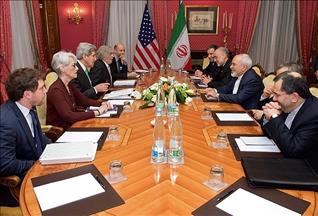
Iranian state media reported the conclusion of the latest round of nuclear negotiations with the US in Oman.
A reporter with the Iranian state broadcaster, accompanying the Iranian delegation, said the talks have concluded “for now,” after several hours of indirect negotiations.
State-run news agency IRNA also confirmed the end of the latest round, noting that assessments indicate an “understanding to continue negotiations.”
According to the report, during the session that began early Friday, the delegations of Iran and the US conveyed their respective views, considerations, and approaches to each other through Oman’s Foreign Minister Badr Albusaidi.
Another round is expected to in the coming days, the report said.
Iranian Foreign Minister Abbas Araghchi described the talks as a “good start,” saying they could continue if the atmosphere of distrust is overcome. He said it was agreed that the process would continue and that the sides could reconvene in Muscat at a later date.
Omani Foreign Minister Badr Albusaidi said the talks were “very serious,” helping clarify the positions of both sides and identify areas for possible progress.
Iran and the US resumed indirect nuclear diplomacy after weeks of heightened tensions fueled by US President Donald Trump’s threat of military action against Tehran.
- New Yemeni government formed under Shaya al-Zindani with 34 ministers
Yemen’s Presidential Leadership Council approved the formation of a new government headed by Prime Minister Shaya al-Zindani, with a 34-member Cabinet that includes three women, the Saba News Agency reported.
Al-Zindani will also serve as Minister of Foreign affairs and Expatriates.
The Cabinet includes Maamar Motahar al-Eryani as Information Minister, Maj. Gen. Ibrahim Ali Ahmed Haidan as Interior Minister, and Maj. Gen. Taher Ali Obeidah al-Oqaili as Defense Minister.
Among the female ministers named are Afrah Abdulaziz al-Zouba as Minister of Planning and International Cooperation, Ahd Mohammed Salem Jaasous as Minister of State for Women’s affairs, and Judge Ishraq Fadl al-Maqtari, according to the announcement.
The formation of the government was approved in line with Yemen’s Constitution, the Gulf Cooperation Council initiative and its implementation mechanism signed in 2011, as well as the 2022 decision transferring presidential powers to the Presidential Leadership Council, said Saba.
- At least 31 killed in explosion at religious site in Pakistani capital
A suicide attack targeting a religious site in Pakistan's capital of Islamabad killed at least 31 people and wounded scores of others, said officials.
The attacker hit Imambargah Khadijah-tul-Kubra, a worship place for Shia Muslims, during Friday prayers. It is located in the Shehzad Town area of Islamabad.
Defense Minister Khawaja Asif said on US social media company X that security guards challenged the attacker, who in response opened fire and blew himself up in the last row of worshippers. He also alleged India’s and Afghanistan’s involvement in the attack.
A statement by Islamabad's district administration on X confirmed the attack killed 31 people.
In an earlier statement, the administration said 169 others were injured, who were being treated at nearby hospitals.
Foreign Minister Ishaq Dar described it a "cowardly suicide attack on innocent worshippers during Friday prayers at a Shia Imambargah in Islamabad." He vowed to punish the “extremists.”
NEWS IN BRIEF
- The body of former Russian Deputy Justice Minister Sergei Tropin was found in an apartment in western Moscow, with no indications of a violent death, emergency services said, according to Russia’s state-run Tass news agency.
- Ukrainian prisoners who have returned home from Russia “are people who deserve” the Nobel Peace Prize, Moldovan President Maia Sandu said after she was proposed for nomination for the award.
- The US condemned a drone attack by the Rapid Support Forces (RSF) on a World Food Program (WFP) convoy in Sudan’s North Kordofan state that killed one person and injured three.
- Bosnian Serb leader Milorad Dodik met senior US officials in Washington this week, months after the Trump administration lifted sanctions against him for actions undermining Bosnia and Herzegovina’s post-war peace agreement.
- Attorney General Pam Bondi said a suspect connected to the 2012 attack on the US Embassy in Benghazi, Libya has been arrested and will face prosecution in the US.
- Somalia’s National Intelligence and Security Agency (NISA) said that it carried out a targeted operation against the al-Shabaab terror group, killing eight terrorists.
- US President Donald Trump is under fire for sharing a social media video showing former President Barack Obama and former first lady Michelle Obama as monkeys, a clip that also repeats widely debunked claims that the 2020 US presidential election was rigged.
- A delegation from Syria’s Defense Ministry traveled to the northeastern province of Hasakah to discuss mechanisms for integrating members of the YPG/SDF terror group into state military institutions, in line with a comprehensive agreement reached in late January.
- At least nine people were killed and six injured after a landslide triggered by heavy rains hit a village in western Burundi, an official said.
- NATO commemorated the victims of Türkiye’s devastating earthquakes three years ago and reaffirmed its solidarity with the country ahead of an upcoming alliance summit in the capital.
- Israeli Prime Minister Benjamin Netanyahu used the renewed focus on the Epstein files to attack his predecessor Ehud Barak, saying that Jeffrey Epstein “did not work for Israel.”
- New York City Mayor Zohran Mamdani signed an executive order aimed at strengthening protections for immigrants and limiting federal immigration enforcement actions on city property.
BUSINESS & ECONOMY
- US, India announce interim trade deal framework; seeking wider deal
The US and India announced they reached terms on an interim framework deal to end a bilateral trade dispute, with President Donald Trump taking action to advance the agreement.
Trump quickly lifted a 25% second tariff he imposed on Indian goods in retaliation for its import of Russian oil, his first major step to make good on the breakthrough.
The decision to lift the import duty came as the US and India issued a statement in which they said the trade framework "reaffirms the countries’ commitment to the broader U.S.-India Bilateral Trade Agreement (BTA) negotiation."
The talks "will include additional market access commitments and support more resilient supply chains."
"The Interim Agreement between the United States and India will represent a historic milestone in our countries’ partnership, demonstrating a common commitment to reciprocal and balanced trade based on mutual interests and concrete outcomes," the nations said.
The terms of the agreement stipulate that India will lower or eliminate tariffs on US industrial goods and a "wide range" of US agricultural products. The US will separately lower its reciprocal tariff, separate from the secondary Russian oil tariff, to 18%, and will remove tariffs on Indian aircraft and associated parts.
- Trump formalizes order threatening tariffs on nations that do business with Iran
US President Donald Trump signed an executive order establishing authorities to impose tariffs on nations that do business with Iran, but stopped short of actually imposing the penalties.
The order was issued on the same day the US met with Iran for nuclear talks for the first time in more than half-a-year. It does not specify what percent the secondary tariffs will be set at, but cites 25% as an "example."
Trump's order said the duty "may be imposed on goods imported into the United States that are products of any country that directly or indirectly purchases, imports, or otherwise acquires any goods or services from Iran."
It tasks the secretaries of state and commerce with determining "whether, after the effective date of this order, a foreign country directly or indirectly purchases, imports, or otherwise acquires any goods or services from Iran."
The order is slated to take effect early Saturday.