By M. Bilal Kenasari
WASHINGTON
A young doctor has traveled more than 10,000 kilometers (7,000 miles) to give American politicians a personal account of his experiences in war-torn Syria.
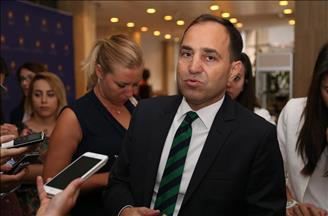
Dr. Mohamed Ghalib Tennari, who recently testified before Congress, is a manager of a field Hospital in Sarmeen town of Idlib, and the director of the Idlib office of the Syrian American Medical Society.
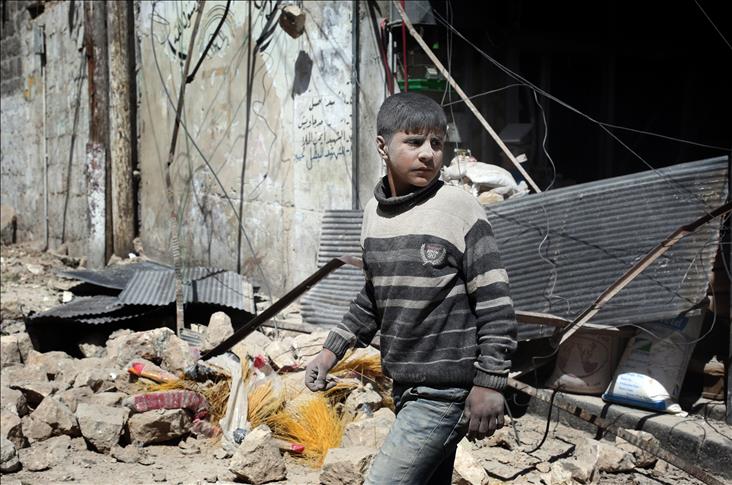
I am tired of seeing the dead bodies of Syrian children, Tennari says.
Following his brief but impactful congressional testimony, Tennari sat down with Anadolu Agency and talked about chlorine gas and barrel bomb attacks in Idlib province and the "tremendous number of victims" exposed to it.
"We see injuries and victims of barrel bombs on a daily basis in the hospitals," said Tennari, who unlike millions of Syrians, says he simply can't leave everything behind him and flee to become a refugee "because we have to continue treating people”.
He vividly recalled a particular attack in March that still seems to haunt him.
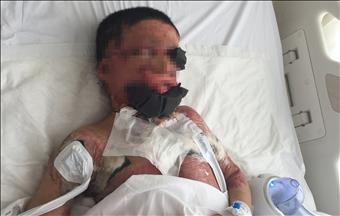
"A whole family came to the hospital who were exposed to a chlorine gas attack. Thank God that we were capable to treat them, and we were so happy," he said. The feeling of relief and excitement was quickly replaced the next day when "the entire neighborhood was targeted by a military aircraft attack. A number of the family members who survived one day earlier -- the chlorine gas attack -- were dead, including a little child called Mohammed, and his cousins who came from a different city to pay a visit due to the chlorine attack he was exposed to a day earlier."
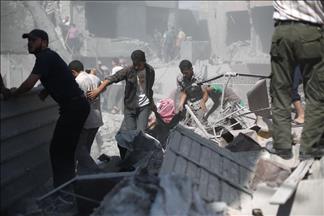
The devastating attack killed 12 victims, injured more than 30 others and overwhelmed the hospital’s limited resources. "Some people were brought in decapitated into pieces instead of a whole body,” he said. “The hospital floor was all blood. There was no space for people anymore, so we started putting them on the floor because of the many injured people.”
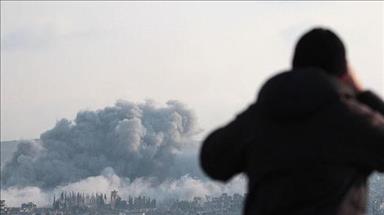
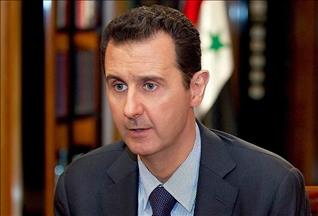
The scenes Tennari described are an everyday occurrence for health care workers in Syria, where the regime of President Bashar Assad attacks with barrel bombs areas that are out of his reach in order to force residents who support opposition fighters to flee the country, according to Tennari who went on to add that the use of chlorine gas is not only to kill people, as the barrel bombs kill in far greater numbers.
He believes the regime wants to displace residents by using the gas attacks as a terror tactic to force victims to abandon their homes and flee Syria.
Since March 16, the Idlib office of the Syrian American Medical Society has documented 31 chlorine gas attacks by the Assad regime that has killed at least 10 victims and left 580 exposed.
Tennari again articulated the challenge of trying to treat victims in depressed conditions even with outside help.
"We suffer of shortage in CT scan machines, MRI that doesn't exist in any of the liberated areas. We also suffer shortage of medications and disposables,” he said. “We are only 11 doctors in the hospital who cover a population of over 250,000. We are receiving assistance from the international community but we have shortness in many of the materials.” The shortage of supplies is compounded by the fact that many of his colleagues have fled because of the continuous bombing and the ongoing targeting of hospitals.
He said many of the patients have to be transported to Turkey because of staff and equipment deficiencies.
But all things considered, residents in Idlib are relatively lucky when compared to many other areas in Syria because patients are able to be transported to Turkey via ambulances, or private cars, he said. This has been in practice since the war erupted in 2011.
Tennari suggests that a no-fly zone, which has been proposed by Turkey, can help alleviate some of the effects of the airstrikes.
A no-fly zone would ensure safe zones on the ground to protect civilians, open the way for humanitarian aid, and enable refugees to return to Syria as well, he said.
"Failure to do so will prolong the suffering and loss of innocent Syrian lives, and will allow the direct security threat to the region and the world to become ever more imminent," he said.
Turkey has sheltered more than 1.7 million Syrians, according to the UN, with more refugees seeking to cross the border.
Last week tens of thousands of Syrian's entered Turkey.
According to government figures, Turkey has spent more than $6 billion so far on refugees while the international community's help has amounted to $300 million.