By Michael Hernandez
WASHINGTON
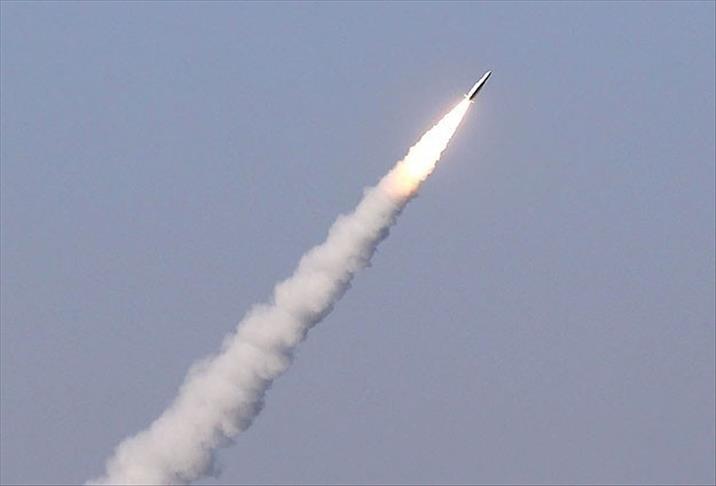
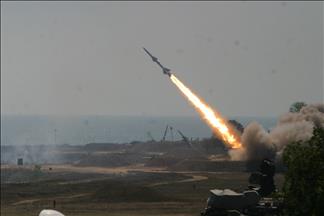
A redeployment of ballistic missiles to Europe following a precipitous decline in relations with Russia would be an expensive, if unlikely scenario, experts told Anadolu Agency.
“We haven’t had that program for almost 30 years now,” said David Kearn, an assistant professor of foreign affairs at St. John’s University. “This would be a costly, costly program, because we haven’t built these things in a long time.”
A landmark accord brokered by Washington and Moscow in 1987 resulted in the elimination of the countries’ short and medium range ballistic and cruise missile arsenals -- bringing to a close one of the greatest Cold War threats.
But Russia’s alleged testing of a new land-based cruise missile system in violation of the Intermediate-range Nuclear Forces (INF) treaty has prompted reports that Washington is weighing a variety of responses, including sending the munitions back to Europe in a bid to reassure its allies there of its support.
Speaking to lawmakers at his Senate confirmation hearing in February, defense chief Ashton Carter said violations of the treaty goes both ways.
“You have to remind Russia that this was a two-way street, that we signed a treaty that said, ‘You're not going to do this, and we're not going to do it either,’" he said.
The State Department has long voiced objections to Russia’s testing of the missile in private, but with Moscow’s annexation of Crimea and support for rebels in eastern Ukraine, diplomatic sensitivities have taken a backseat to public maneuvering, according to Michael Kofman, a public policy scholar at the Wilson Center.
“The motivation to keep this a private dispute between us and Russia over the INF is obviously now gone, and there is also considerable pressure that’s been applied on the State Department from other parts of government, namely Congress,” he said.
“The U.S. is trying to message to Russia, in effect, that Russia should not deploy this long-range cruise missile and try to leverage it for coercive power over U.S. European allies,” he added.
For its part, Russia has sternly denied violating the INF treaty, and voiced its own objections to Washington’s deployment of air defense systems in Eastern Europe – a claim Kofman said is “dubious.”
The INF Treaty prohibits the deployment of ground-launched ballistic and cruise missiles, and called on the parties to destroy their arsenals of such missiles with ranges of 500 - 5,500 kilometers.
“The United States should respond by trying to work with the Russians to clear up this violation – to get it settled,” said John Isaacs – a senior fellow at Council for a Livable World – who has been working on U.S.-Russian relations since the 1970s. “There’s no reason for the United States to consider deploying additional intermediate range missiles in Europe.”
Russia has yet to deploy the new missile, but doing so could prompt a heavy-handed response from Washington.
The Associated Press reported earlier this month that Washington is contemplating a host of “aggressive responses” to Russia’s alleged violations of the treaty that include sending ground-launched missiles to Europe or Asia, and ground-launched medium-range ballistic missiles that can adjust the trajectory of their warheads when they re-enter the atmosphere en route to a target.
Daryl Kimball, the executive director of the Arms Control Association, dismissed the notion that policymakers are weighing the option, saying, “Such a move would provide no military value and would likely give Russia an excuse to pull out of the INF treaty.
“At the same time, Russia should endeavor to refrain from basing new military systems near the borders of NATO member states and should refrain from the further development of any ground-based intermediate range missile system prohibited by the INF Treaty,” he said.
Kofman further argued that should Washington choose to exit from the INF and redeploy its munitions to Europe, it would become the “spoiler” of the arms control agreement.
“You would actually cancel the treaty and lift the existing restrictions on Russia that are currently in place,” he said. “Even though this is a violation of the treaty it’s not from the perspective a physical threat to U.S. allies. It doesn’t alter security dynamics in Europe,” he said.