Experts say that the Muslim Brotherhood is considered a "terrorist organization" among some Gulf countries and that the Arab monarchy feels threatened by the organization.
By M. Bilal Kenasari
ANKARA
Experts have said that the Muslim Brotherhood is a threat to the status quo of the Arab region, the Arab monarchy and is now considered a terrorist organization by most of the Arab world.
Mehmet Sahin of Gazi University and contributor to the Ankara based think-tank, Strategic Thinking Institution, said “the operations against the Muslim Brotherhood aim to protect the political systems of Gulf countries, as the Muslim Brotherhood is considered revolutionary in the region.”
Tarıq Ramazan, a leading Muslim scholar from Oxford University, has said “the Arab populations are on the march towards freedom, dignity, justice and democracy. They are determined to gain their political independence and have set their sights on modernity and democracy.”
However, among the countries involved in the so-called “Arab Spring” only a few were able to maintain stability after their revolutions and their freely elected presidents retain power.
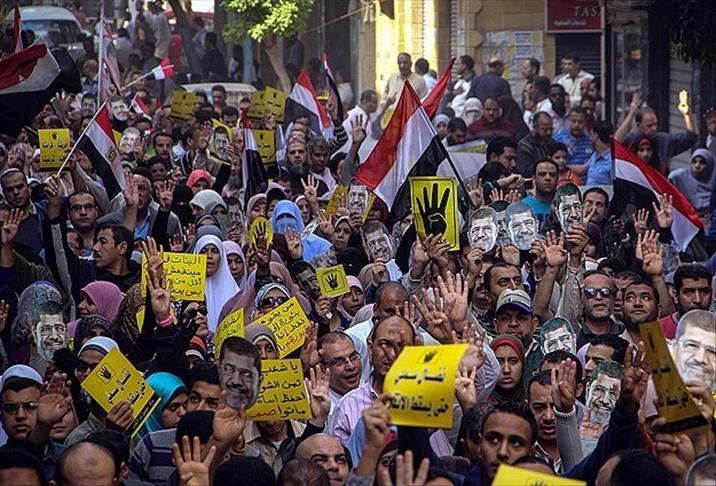
Morsi was one of the first to be brought down after a military coup led by General Abdul-Fettah Al Sisi that was financially backed by Gulf countries. Morsi was Egypt’s first elected president after the Freedom and Justice Party, backed by Muslim Brotherhood, won the election with 51 percent of the votes.
In their condemnation of the Muslim Brotherhood Saudi Arabia, the United Arab Emirates and Bahrain have even gone so far as to recall their ambassadors from Qatar after it appeared to back the organization and in a joint statement said "the three countries had to take what they deemed to be appropriate steps to preserve their security and stability by withdrawing their ambassadors from Qatar as of March 5."
Qatar's Foreign Minister, Khalid al-Attiya, has responded saying "Our policy is based on openness towards all, and we do not want to exclude anyone."
Ufuk Ulutas from the Ankara-based organization, Foundation for Political, Economic and Social Research, said that the existence of the Muslim Brotherhood is a threat to the status quo of Gulf countries. “There is a clash between status quo and change” and “at this moment, the Muslim Brotherhood represents change.” He added that the “Gulf is obsessive about Ihvan as it is the most important organization with popular support and is a strong candidate for establishing change in the region.”
Madawi al-Rasheed points out in her analysis for Al-Monitor that “the Muslim Brotherhood’s base in Saudi Arabia and the Gulf in general remains the educated middle classes, a class that is destined to widen as a result of the expansion of mass education,” suggesting that time is on the side of the Brotherhood in the long term.
Regarding Turkey, Sahin said that operations against the Muslim Brotherhood could negatively affect the country as it is one of the few countries to be concerned about the existence of the Muslim Brotherhood.
Ulutas said Turkey is an important member in a region that desires change, adding that by blocking the Muslim Brotherhood the Gulf countries also aim to cut Turkey’s relations with other parties in the region that want change.
englishnews@aa.com.tr