TEHRAN
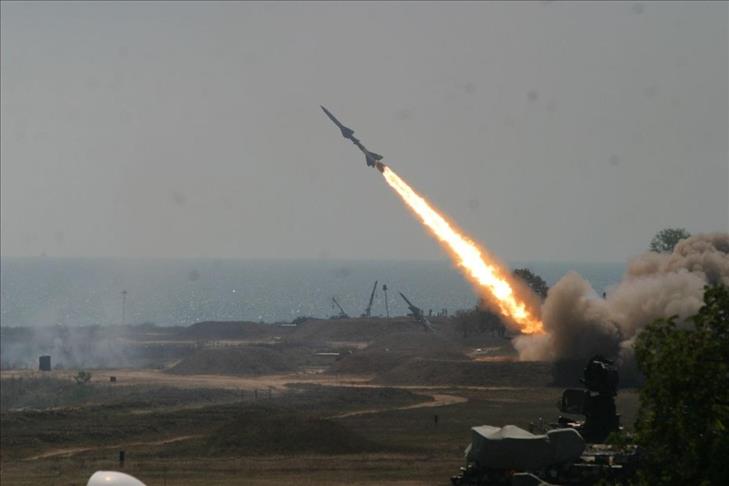
Russian-made S-300 defense missile system will arrive in Iran this year, Iran's defense minister has announced.
An agreement with Russia to deliver the S-300 - said to be one of the world's most efficient anti-aircraft systems - will be signed at a security conference in Moscow on Wednesday, Defense Minister Hossein Dehghan said on Iranian state television ahead of his visit.
“We will sign an agreement for the delivery of the S-300s during my visit in Moscow,” said Dehghan, adding that Tehran would receive the missiles within the year.
Dehghan said the agreement’s main details had been discussed throughout the year with Russia, as the S-300 issue was on the agenda at last year’s security conference in Moscow.
He added: “The U.S. and Israel have been against Russia selling these systems to Iran since the beginning.
"It is important that President Putin decided to lift the ban."
A contract for Russia to supplying S-300s to Iran was signed in 2007 but was suspended in 2010 when the United Nations Security Council imposed an arms embargo on Iran.
In April 2012, Tehran filed a $4 billion lawsuit against Russian weapons company Rosoboronexport for failing to deliver the system at the International Arbitration Court in Geneva.
Russia had offered Tor air defense systems in place of the S-300s but Iran rejected the offer, as the systme was incompatible with Iran’s defense requirements.
Putin’s lift of the ban is expected to put an end to the lawsuit.
The S-300 system is used in Russia and more than ten countries around the world, including China, Venezuela, Armenia, Azerbaijan, Ukraine, Slovakia, Greece and Vietnam.
The system, completed in 1978, is designed to defend against medium- and short-range air attacks and is considered one the world’s most powerful air defense systems.
The S-300s were initially developed for use against aircraft but is now capable of defending against ballistic missiles.
The system is capable of simultaneously tracking 100 targets on radar, locking on to up to six targets at a time and can launch up to 12 rockets.
The range of the system is five to 150 kilometers and it is able to hit targets at altitudes of up to 27,000 meters.
Putin signed a decree on Monday lifting the ban, according to the Kremlin press service.