JERUSALEM
The head of an Arab electoral coalition competing in Israel's parliamentary polls said Tuesday that the coalition's list would come in third place after the Likud party and the Zionist Union alliance.
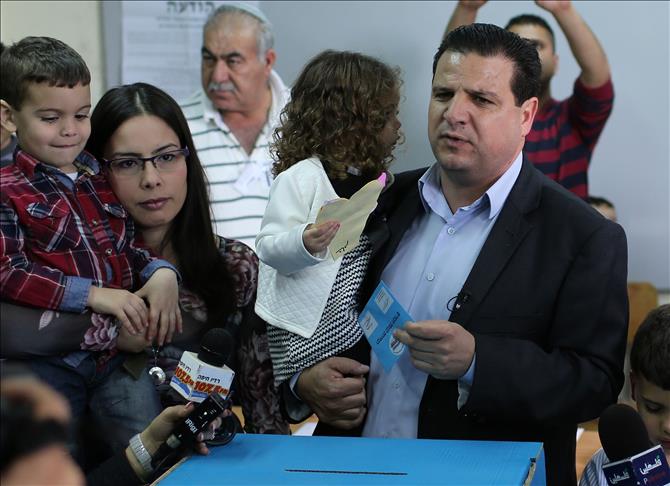
"I am truly excited. Despite attempts to exclude us from the circle of influence, we're united, imposing our presence and will to change the status quo," alliance leader Ayman Odeh was quoted as saying on Israeli television.
Odeh expects the joint Arab list to come in at third place in the polls after the right-wing Likud party led by PM Benjamin Netanyahu and the centrist Zionist Union led by Isaac Herzog.
"Just like any democratic citizen, I am very excited to cast my ballot and be part of… the pivotal transformation in the reality of the country's Arab and general population," Odeh said via Twitter after casting his vote.
Odeh urged eligible voters to cast their ballots as soon as possible, stressing that his bloc was capable of "affecting change."
"We're democratic Arabs and Jews; we can forge a better future for ourselves and our children," he said.
Incumbent Arab MK Haneen Zoabi, for her part, asserted: "We're voting for… our future. This is a referendum on Arab unity, and on our perseverance against Israeli racism."
Nearly 1.6 million Arabs live in Israel, accounting for more than 20 percent of the self-proclaimed Jewish state's eight-million-strong population.
The leaders of the Israeli-Arab parties that plan to take part in the polls said that Arab turnout in previous Knesset elections usually stood at some 50 percent.
They hope this figure will reach 70 percent this time around, owing to the unification of Arab parties under a single list.
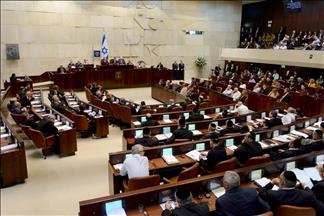
In the last Knesset, Arab parties held 11 of the assembly's 120 seats. Opinion polls now project that this figure will rise to 13, while party leaders hope to clinch as many as 15 seats in Tuesday's vote.
Israelis on Tuesday flocked to polling stations to elect new Knesset members amid a dead heat between the right-wing Likud party and the center-left Zionist Union alliance.
The electoral commission has put the number of eligible voters for the 20th Knesset vote at 5,881,697, who will cast ballots at 10,372 polling stations nationwide.
Twenty-five lists are competing in the election, but opinion polls suggest that only 11 of these will likely exceed the 3.25-percent electoral threshold.
According to Israeli law, Election Day is an official holiday, on which polling stations open at 7am and close at 10pm.
According to the electoral commission, official poll results will be announced on Thursday.