- Officially known as the Shimon Peres Negev Nuclear Research Center, the facility is considered the most important pillar of Israel’s nuclear program
- Stockholm International Peace Research Institute included Israel in list of nuclear-armed states in June 2025 and assessed Israel possesses more than 80 nuclear warheads
ISTANBUL
In a war already redrawing the region’s red lines, with the death toll from the US-Israeli attacks on Iran reportedly having surpassed 1,000, Tehran has brought one of the Middle East’s most sensitive strategic sites into the escalation equation: Israel’s Dimona nuclear site.
A senior Iranian military official told the Iranian website Iran Nuances, later reported by Iran’s semi-official ISNA news agency, that if the US and Israel pursue a “regime change” scenario in practice, Tehran’s “final effective missiles will target the Dimona nuclear reactor and all regional energy infrastructure,” adding: “This is a scenario we have already prepared for.”
Iran has retaliated with waves of drone and missile strikes targeting Israel as well as Gulf countries hosting US military assets, raising fears of a wider regional war.
The warning has reignited questions that often remain muted in regional crises: what is Dimona, why is it seen as the backbone of Israel’s nuclear capability, and how does its secrecy shape the politics of deterrence in a region already consumed by war.
Israel’s most guarded facility
Officially known as the Shimon Peres Negev Nuclear Research Center and commonly referred to in media and public discourse as the Dimona reactor, the facility is considered the most important pillar of Israel’s nuclear program.
It sits deep in the Negev Desert in southern Israel, away from major population centers, around 13 kilometers (8 miles) from the city of Dimona and about 90 kilometers (56 miles) from Jerusalem.
Israel renamed the facility in 2018 after former Prime Minister Shimon Peres, who is widely credited inside Israel with key contributions to developing the country’s nuclear program.
The site’s layout underscores its heavily protected nature.
According to available details, the facility consists of 10 buildings spread across roughly 36 square kilometers (14 square miles), ringed by electrified fencing, patrol roads, and anti-aircraft missile batteries.
It also includes eight underground laboratories dating back decades, with around 2,700 scientists and technicians believed to work there.
From ‘research’ to weapons-grade capability
Israel’s push toward Dimona dates back to the early years of the state.
Following the 1948 occupation of Palestinian lands, Israel began laying the groundwork for a nuclear program in the 1950s, establishing the Israeli Atomic Energy Commission in 1952.
In 1957, France provided support and approval, supplying Israel with a heavy-water, pressurized reactor. Dimona entered operation around 1963, with a reported capacity of 26 megawatts.
At the heart of the facility’s significance is its role in handling nuclear fuel.
Dimona processes spent nuclear fuel, described as the first stage in producing the atomic bomb, with the fuel then transferred elsewhere to be stored or mounted on missiles.
By 1967, reports cited from the US State Department’s Bureau of Intelligence and Research pointed to a reprocessing plant for uranium and production of weapons-usable plutonium, concluding that Israel possessed a nuclear bomb.
Vanunu and the anatomy of secrecy
Dimona’s international profile changed dramatically in October 1986 when Israeli nuclear technician Mordechai Vanunu publicly revealed details about the reactor.
Vanunu, a former technician at the facility, supplied detailed testimony, documents and photographs he secretly took during his work at the site to the Sunday Times, reinforcing longstanding international suspicions about Israel’s nuclear capabilities.
Despite decades of speculation, Israel has maintained a policy of ambiguity.
It did not publicly address whether it possessed nuclear weapons until 1960, when the Israeli parliament acknowledged the existence of the Dimona reactor while insisting it was built for peaceful research purposes.
US inspectors visited in the 1960s, and the International Atomic Energy Agency carried out inspections, but reports said inspectors did not discover lower levels that Israel allegedly concealed. Inspections were later halted entirely.
Signs of continued activity
While Dimona’s inner workings remain opaque, the facility has continued to draw attention in recent years.
Reports and satellite imagery published in 2021 suggested the reactor remains active and pointed to extensive construction and excavation work inside and around the site.
The reporting also described boxes seen in two rectangular pits with concrete bases, suggesting possible use for burying nuclear waste.
Dimona is also associated with the production cycle of nuclear material.
The reactor is described as capable of producing around 9 kilograms (20 pounds) of plutonium annually, an amount considered sufficient for one nuclear bomb with an explosive yield of about 20 kilotons.
Plutonium extracted from spent fuel is separated in specialized facilities and later used in nuclear warheads that can be stored or prepared for missile delivery.
What Israel is believed to have
Dimona’s secrecy has always been intertwined with Israel’s posture toward international nuclear regimes.
Israel refuses to sign the Treaty on the Prohibition of Nuclear Weapons and remains outside core non-proliferation frameworks that apply to many other states, fueling recurring regional arguments about selective scrutiny.
In 1996, Israel signed the Comprehensive Nuclear-Test-Ban Treaty but has never ratified it.
And in 1979, a mysterious “double flash” detected over the South Atlantic stirred suspicions of a covert nuclear test, allegedly involving Israel and apartheid-era South Africa. The incident has never been confirmed, and Israel did not deny it.
Without official confirmation, Israel’s nuclear arsenal remains a matter of estimates.
However, the Stockholm International Peace Research Institute included Israel in its list of nuclear-armed states in June 2025 and assessed that Israel possesses more than 80 nuclear warheads.
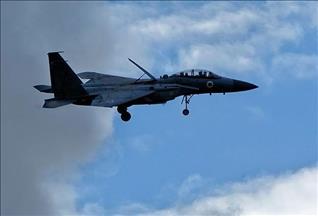
According to the institute’s annual report, roughly 30 are air-deliverable gravity bombs compatible with F-15 and F-16 aircraft, alongside around 50 long-range Jericho-2 ballistic missiles. The report also said Israel has stored fissile material sufficient to produce up to 200 nuclear warheads.