Aysu Bicer
20 March 2026•Update: 20 March 2026
LONDON
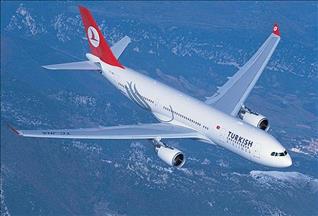
Airlines are drawing up contingency plans amid warnings that jet fuel shortages could disrupt global travel within weeks, following escalating tensions in the Middle East.
Industry leaders say supplies in some regions may come under pressure as the conflict threatens fuel flows.
Airline executives say uncertainty over fuel availability is a growing concern, particularly beyond the immediate term.
Kenton Jarvis, boss of budget airline easyJet, said suppliers had guaranteed deliveries for the next three weeks but offered little reassurance beyond that, according to a report by Financial Times.
“But no-one’s telling us ‘we have no immediate issues in six weeks’, because they’re not prepared to say that,” Jarvis added.
The potential impact may vary by region. While the UK and parts of Europe are believed to have sufficient supplies for now, long-haul carriers face greater risks when operating in fuel-dependent regions.
Ben Smith, chief executive of Air France-KLM, said: “We’re putting in plans today to draw up scenarios on how we would deal with the shortage of fuel.”
Concerns are particularly acute in South-East Asia, where reliance on Gulf fuel supplies is higher. Smith told the Financial Times: “South-east Asia is much more dependent on fuel coming over the Gulf than Europe is.
“We can get fuel out of Europe, but when we go to (a) south east-Asian city we’re not going to be able to fly the plane back. If there’s no fuel, you can’t fly.”
Willie Walsh, director general of the International Air Transport Association, warned: “This is a bigger supply issue than we’ve seen before.”
Airlines caution that reduced flight schedules could follow if shortages worsen, potentially affecting travel during peak holiday periods.
Meanwhile, Brent crude oil price is trading at $108.27 in international futures markets, down 0.3% at the week ending on Friday.
Measures such as the International Energy Agency (IEA) member countries agreeing to release 400 million barrels of strategic petroleum reserves, the US granting temporary exemptions to sanctions on Russian oil stranded at sea, and suspending certain maritime laws have not been enough to halt the rise in oil prices.