by Nilanjan Dutta
KOLKATA, India
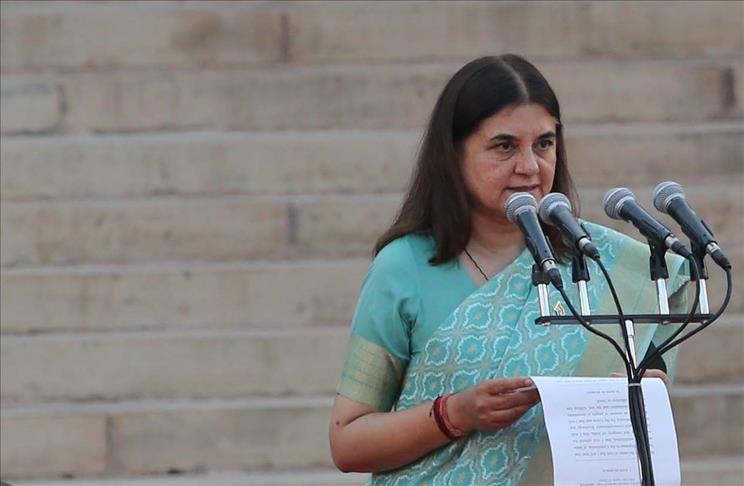
Maneka Gandhi, India's new women and child development minister, made some unusual observations in a newspaper column recently. The elections had passed she said, and it had not been used to raise awareness for environmental issues. Maneka pointed out that people routinely raise concerns about development and construction but disregard the potential environmental impacts.
"There will come a time when the entire election will be about water, the weather and its effect on the lack of food. But then it will be too late,” she wrote.
Hers is a lone voice among Indian politicians and she has not been given much chance to share it; despite being a noted environmentalist, she has not been given the environment portfolio in any ministry since 1989-91. However isolated Maneka Gandhi's concerns are, they were vindicated by the latest report from the Intergovernmental Panel on Climate Change. Its contents caused particular concern for residents of eastern Indian city Kolkata -- which was singled out for its susceptibility to climate change.
“[The report] described how global warming will make hunger, thirst, disease, refugees and war worse, in terrifying detail. The five terrors would fall on the poor, mostly those living in Asia, Africa and Latin America,” says Meher Engineer, environmental activist and former director of Kolkata’s premier science research centre, the Bose Institute.
“The planet will warm by about 4°C by 2100 compared to pre-industrial levels, unless additional measures to slow down human-caused climate change are made. The temperature difference between today's climate and that of the previous Ice Age was also 4°C," says Engineer. "That shows how big the effect of greenhouse gases emissions due to human activities is likely to be, unless mitigation is done fast and with a will.”
The potential impact on Kolkata, which has a metropolitan population of 14 million, could be overwhelming coastal flooding by 2070, the report warns. Also at risk are India's largest city Mumbai and neighboring Bangladesh's capital Dhaka.
“On the east coast of India, clusters of districts with poor infrastructure and demographic development are also the regions of maximum vulnerability," says the report. "Hence, extreme events are expected to be more catastrophic in nature for the people living in these districts."
The report highlights that half of Asia's urban populations lives in low-lying coastal zones and flood plains -- the types of areas most susceptible to changes in climate. It says that cholera and diarrhoea, common in Kolkata and Bangladesh, are both associated with rises in temperature. It also noted that livelihoods could be destroyed with extreme weather affecting crop yields and even fish, an integral part of the Bengali diet, becoming scarce.
Some concerned citizens are trying to make the government realize the gravity of global warming and take adequate action to reduce it. Recently, a large number of environmental organizations and activists have formed a platform called Sabuj Mancha (Green Forum) in Kolkata, which is preparing a document of demands for India's new government.
“National governments and political parties in India have generally paid little importance on conservation of environment historically, both in policy and practice," says Naba Datta, the Sabuj Mancha convenor. "Scrutinising their manifestoes for the last parliamentary polls, the environmental fraternity feels that much has not changed in this election campaign as well.”
By preparing the charter, he says, the group is attempting to push politicians “to break this inertia.”
www.aa.com.tr/en