Farmers hold key role in fight against climate change


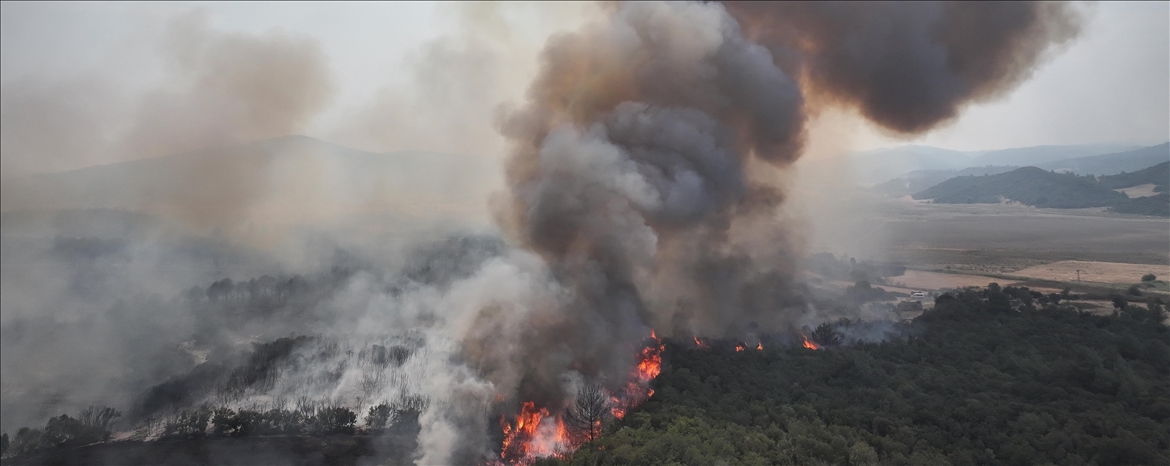
Researchers at Tsinghua University conducted a study to determine the true scale of air pollutants released globally by wildfires and controlled burning. The findings were published in December 2025 in the journal Environmental Science & Technology.
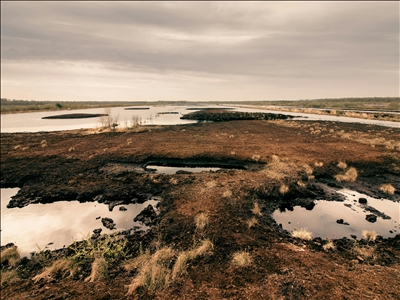
The study analyzed global data on forest, grassland, and peatland fires, as well as prescribed burns between 1997–2023. It assessed emissions of volatile, intermediate-volatility, and semi-volatile organic compounds released into the atmosphere, according to the type of burned area.
To calculate fire-related organic compound emissions at the global scale, the researchers combined field measurements, satellite observations, and emission inventories. For vegetation types lacking direct measurement data, emission factors derived from laboratory experiments were used.
The research showed that fires emit not only water vapor and ash, but also volatile, intermediate-volatility, and semi-volatile organic compounds. These compounds undergo chemical transformations in the atmosphere, forming respirable fine particulate matter, thereby worsening air pollution.
According to the results, the total amount of organic compounds released annually into the atmosphere by wildfires and prescribed burns is approximately 21 percent higher than previous estimates, corresponding to approximately 143 million tons per year worldwide.
Thousands of compounds, extremely difficult to measure
Doganay Tolunay, head of the department of Forest Engineering at Istanbul University, told Anadolu that wildfires are among the major disasters that are becoming more frequent, more intense, and more widespread globally.
Tolunay noted that wildfire smoke releases a wide range of pollutants into the atmosphere, including PM2.5 and PM10 particulate matter, carbon monoxide, carbon dioxide, nitrogen oxides, ammonia, sulfur dioxide, methane, volatile organic compounds (VOCs), non-methane hydrocarbons, and water-soluble inorganic ions. He explained that volatile, intermediate, and semi-volatile organic compounds have not been sufficiently taken into account in studies conducted so far.
Tolunay stressed that the new study reveals that the amount of these compounds mixing into the atmosphere via fires is at a level that cannot be ignored.
“The number of volatile, intermediate, and semi-volatile organic compounds runs into the thousands, and they are extremely difficult to measure,” he said. “Therefore, air pollution originating from fires has been estimated to be approximately one-fifth lower than it actually is.”
‘Wildfires make serious contribution to air pollution’
Tolunay stated that annual emissions of volatile organic compounds originating from human activities amount to around 167 million tons.
“Intermediate volatile and semi-volatile organic compound emissions caused by forest fires and human activity were calculated as 48 and 47 million tons annually, respectively. These figures clearly show that, even though not as much as industry and transportation, wildfires make a very serious contribution to air pollution,” he said.
The study also identified Equatorial Asia and parts of Africa as regions facing higher risk. Tolunay explained that this is linked to factors such as vegetation type, the amount of combustible material in forests, and the frequency of human-induced fires.
He stressed that the findings have important implications for air quality management, wildfire policy, and public health.
“It is now clearer that air pollutants we do not fully know or cannot easily measure can have serious impacts on air quality and human health,” he said. “Beyond biodiversity loss and the reduction of carbon sinks, wildfires are causing much higher levels of air pollution than previously estimated. This makes a new perspective essential in both wildfire management and the protection of public health during fires.”
Volatile organic compounds exist in gas phase at room temperature
Tolunay explained that volatile organic compounds (VOCs) are carbon-containing organic molecules found in the gas phase at room temperature, and are emitted from many sources in daily life, including paints, varnishes, and cleaning products.
In nature, plants emit these compounds to attract pollinators, defend against pests, or warn other plants in their surroundings; such emissions are referred to as “biogenic volatile organic compounds,” he noted.
Tolunay said that intermediate-volatility and semi-volatile organic compounds, which can partially exist in solid form, significantly contribute to PM2.5 pollution. Moreover, all VOCs can form secondary aerosols in the atmosphere.
“These aerosols, with diameters smaller than 2.5 microns, can have serious negative effects on human health,” he said.
He stressed that VOCs react photochemically with nitrogen oxides under sunlight, leading to ozone formation. While ozone plays a protective role in the stratosphere, when formed in the troposphere it becomes a harmful pollutant for humans, plants, and animals, he added.