Mauritian president, new Turkish ambassador explore avenues to expand cooperation


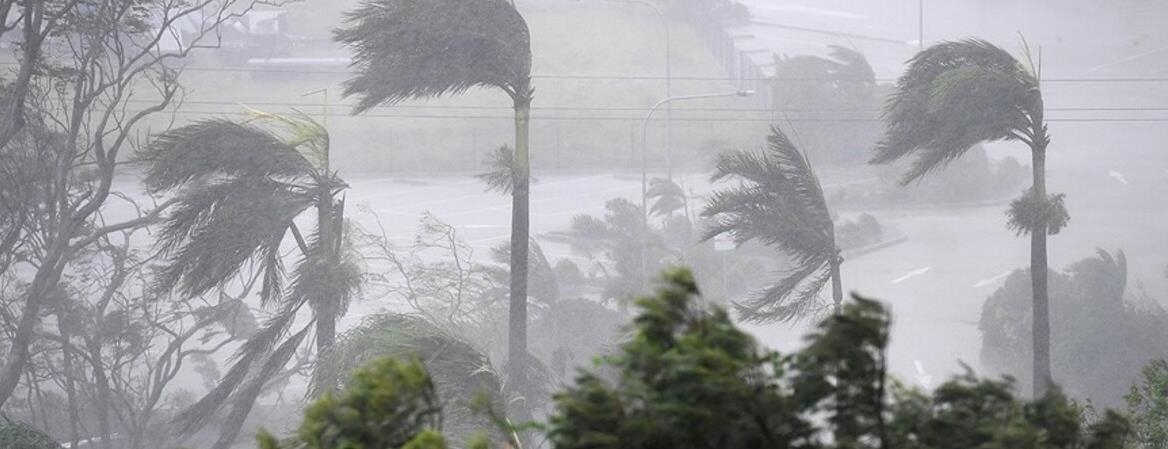
As climate change leads to increases in the number, frequency and intensity of hurricanes, some experts argue that the existing categories used to classify hurricanes are no longer sufficient.
Hurricanes are currently classified under the Saffir–Simpson Hurricane Wind Scale (SSHWS), which classifies storms from Category 1 to 5 based on sustained wind speed. Under this scale, hurricanes with winds of 119–153 km/h are classified as Category 1, 154–177 km/h as Category 2, 178–208 km/h as Category 3, 209–251 km/h as Category 4, and 252 km/h and above as Category 5.
A study conducted by academics from National Taiwan University and the University of Hawaii, published by the American Geophysical Union (AGU), found that climate change is responsible for 60–70% of the expansion of oceanic “hotspots” that lead to storm formation.
The researchers argue that these burgeoning ocean hotspots are increasing hurricane intensitythat exceed Category 5. They therefore propose introducing a Category 6 for hurricanes with sustained wind speeds exceeding 296 km/h.
Recent tropical cyclones analyzed
Examining all major hurricanes recorded over the past 40 years, the research team found that hurricanes meeting the proposed Category 6 threshold are appearing more often.
Accordingly, while eight tropical cyclones with wind speeds above 296 km/h were recorded between 1982 and 2012, this number rose to ten in a much shorter period, between 2013 and 2023.
In total, 10 of the 18 cyclones over the past four decades that could be qualified as Category 6 occurred within the last ten years.
Most of these storms developed over oceanic hotspots, with the largest located in the Western Pacific, east of the Philippines and Borneo. Another major hot spot stretches across parts of the North Atlantic near and east of Cuba, Hispaniola and Florida. The study also found that these hotspots are expanding over time.
According to researchers, introducing a Category 6 would help ensure that settlements in hotspot regions, where the most intense hurricanes occur more often, are better prepared for the future impacts.
Sea surface temperature as a critical threshold
Speaking to Anadolu, professor Murat Turkes said the link between climate change and tropical cyclones is underscored by oceans storing more heat, rising temperatures, and sea surface temperatures hovering at 27°C or above for longer periods during hurricane seasons.
Turkes stated that regions where tropical cyclones exceed Category 5 are already described as hotspots.
“As climate change intensifies, average sea surface temperatures exceeding 27 degrees during the tropical cyclone season are expected to lead, not just to increase in number of cyclones, but to cyclones with much stronger sustained winds, exceeding Category 5 intensity. Increased evaporation over warmer seas is also crucial. Rising sea surface temperatures and evaporation, together with climate change, are driving the formation of more intense tropical cyclones.”
He said that new classification categories could be considered if a large number of tropical cyclones exceeding the Category 5 occur in hotspot regions where tropical cyclones form.
Turkes emphasized that the Saffir–Simpson scale does not define an upper intensity range within Category 5, adding that the intensity of tropical cyclones that occurred in the last 30 years within the scope of climate normals should be examined during the phase of determining new categories.
“If a large number of formations exceed Category 5 and reach wind speeds much higher than 250 km/h, closer to or exceeding 300 km/h, then a Category 6 could be introduced to clearly define the severity of such cyclones,” he said. “However, Category 5 still serves this purpose as it is. From a climatological and statistical standpoint, more data are needed regarding tropical cyclone formation and intensity. Numbers like 8–10 events over 20–30 years are not yet statistically decisive, though they are not insignificant. If the figures cited in the study are exceeded in coming years, and such hurricanes, typhoons or cyclones continue to form, then the use of Category 6 may become necessary, particularly to announce the risks posed by extremely intense tropical cyclones.”
Early detection and prevention warning
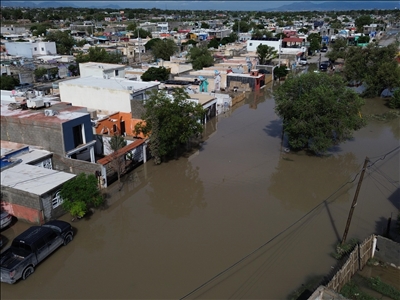
Turkes emphasized that storms powerful enough to blow buildings away are also associated with extreme precipitation, leading to floods, flash floods, landslides and urban flooding.
He noted that even without climate change, tropical cyclones have historically caused loss of life and property, as well as damage to agriculture and ecosystems, during certain seasons and in cyclone-prone regions. With climate change intensifying these storms, he stressed that early warning systems are becoming increasingly critical in reducing their impacts.