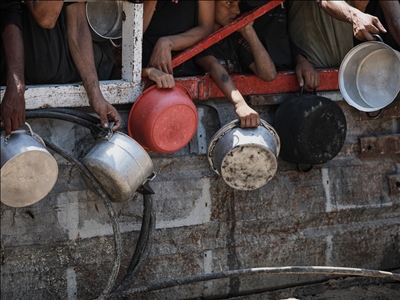
One-third of global food is wasted as millions face hunger


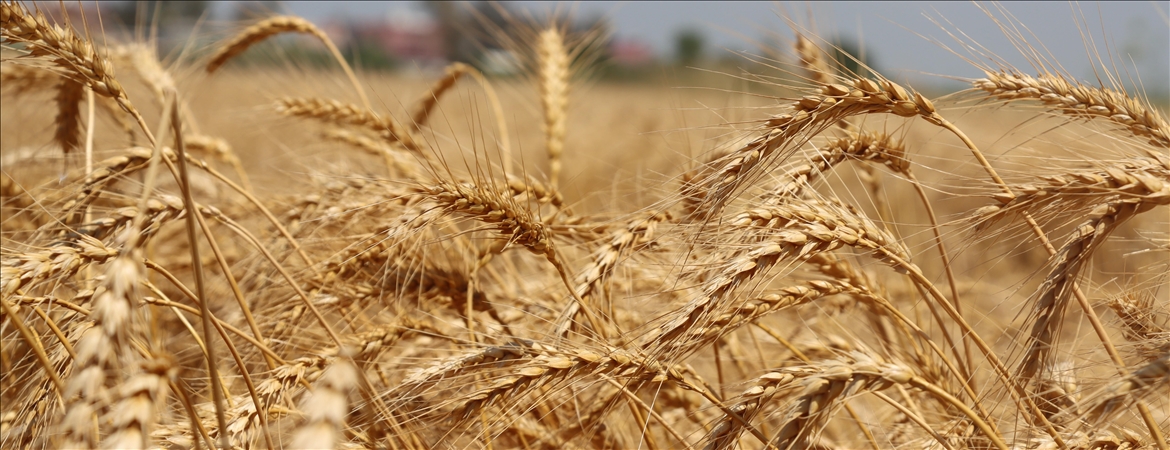
Climate change is exposing wheat production to increasingly severe risks. It is estimated that for every 1°C increase in global temperature, wheat yields could fall by around 6%, indicating significant losses in one of the world’s most essential food sources.
Speaking to Anadolu, Zeynep Zaimoglu, environmental engineering professor at Cukurova University, said they conducted a study titled “Effects of Climate Change on Wheat Agriculture: CROPWAT Model on Adana Province Analysis.”
Zaimoglu stated that over 50% of wheat production in Türkiye is carried out via the dry farming method which depends on precipitation, adding that climate change is causing yield and quality losses in these areas increasingly severe.
She stressed that crops grown in the Mediterranean basin and essential for food security are particularly vulnerable to climate change. “Although people from all over the world have the chance to consume more than 200 plant species, wheat, rice and maize account for 60% of human nutrition,” Zaimoglu said. “That is why we focus so carefully on wheat, maize and rice. We try to determine or model how much these crops will be affected by climate change, how their yields and irrigation water needs will change, and whether their place in human nutrition will change over time.”
Emphasizing that climate and crop models must be used together to support agricultural adaptation to climate change, Zaimoglu stated that their research is based on the Food and Agriculture Organization’s (FAO) crop model, which simulates crop growth and yields based on climate, soil conditions and agricultural practices.
Timing of optimum temperatures is changing
Zaimoglu said the most optimistic climate scenario is already long gone, the so-called average scenario has also been exceeded, and the scenario once described as the worst case has now become a realistic outlook.
Stating that their research examined the increase in wheat’s water requirements under the worst possible climate scenario for 2098, Zaimoglu said: “It does not seem very likely that we will be able to grow today’s crop varieties in the same locations and with the same characteristics in 2098. Even wheat alone needs about 20% more water, however, unfortunately it appears that the precipitation needed to meet this additional 20% water demand does not happen.”
She added that the rise in crop water demand will be driven by increased evaporation caused by temperature shocks in the future.
Emphasizing that wheat experiences yield losses when exposed to heat stress during the grain-filling period, Zaimoglu said: “It is clear that the failure to meet this additional 20% water requirement could result in a yield decline by roughly 30% to as much as 40%.”
Zaimoglu also noted that climate change is altering sowing periods. “We wait for an optimum temperature in the soil to bring the seed together with the soil,” she said. “Due to temperature fluctuations caused by climate change, these optimum temperatures can shift by nearly three weeks. In some years sowing happens earlier, in others later.”
Agricultural production based on water availability
Stressing the need to scale up measures at both national and international levels to combat climate change in agriculture, Zaimoglu recommended translating this approach into concrete local action by developing critical adaptation tools such as early warning systems and digital agriculture applications.
She said adaptation efforts should include preventing losses and leakages in irrigation, increasing soil organic matter to improve water-holding capacity, reducing transport distances for agricultural products, and shifting cropping patterns toward plant varieties better suited to local vegetation and climate conditions.
Highlighting the importance of crop-based planning in agricultural production, Zaimoglu added that production plans based on regional water availability would be highly beneficial for the sector.
Assoc. Prof. Dr. Burak Sen from the Department of Biosystems Engineering at Nigde Omer Halisdemir University Faculty of Agricultural Sciences and Technologies, and Hatice Akmaz, a graduate student at Cukurova University also contributed to the research.