One-third of global food is wasted as millions face hunger


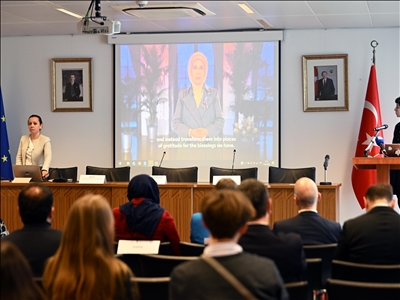
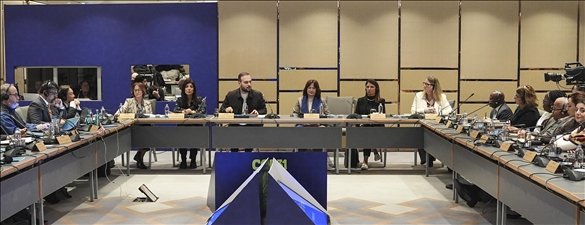
Under the auspices of Emine Erdogan, founder of the Zero Waste Movement and Honorary President of the Zero Waste Foundation, and in cooperation with the Ministry of Agriculture and Forestry and the Zero Waste Foundation, a High-Level Ministerial Panel on Agriculture and Forestry titled “Reducing Food Waste, Conserving Water, Safeguarding Our Future” was held in Istanbul.
The panel brought together agriculture ministers from various countries and representatives of different UN programmes.
Gerardine Mukeshimana, Vice President of the UN International Fund for Agricultural Development (IFAD), and Erfan Ali, Chief of Staff and Acting Director of the Regional Programme Division at the UN Human Settlements Programme (UN-Habitat), who attended the panel, spoke to Anadolu on efforts to combat food and water waste.
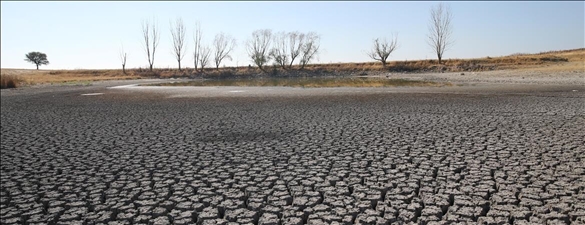
Mukeshimana noted that the process of preserving food begins at the production stage and said climate change affects crop losses. Pointing out that cereals make up most of humanity’s breadbasket, she said: “Cereals are really water hungry crops. As the climate changes, rivers are drying up, rainfall patterns are altered, and as a result we see the cereal productivity going down significantly.”
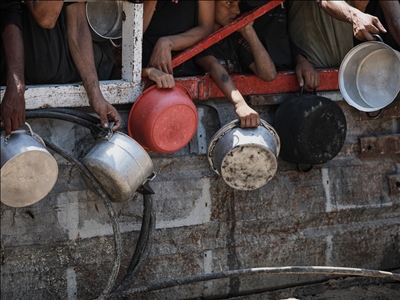
Stressing that produced food must not be wasted, Mukeshimana said, “In the context of zero waste, in developing countries, 30 percent of the produced food goes to waste. This waste also means the loss of water, energy, labor and life. Because we know that close to 700 million people, they go to bed hungry.”
She added that malnutrition brings many health problems and particularly affects children.
Mukeshimana emphasized that food waste and water loss are growing humanity crisis, adding: “No single country, no single organization can address it alone. So, this calls for international cooperation to work together to address these challenges.”
Climate finance must reach small-scale farmers
Mukeshimana said IFAD prioritizes supporting small-scale producers and works to increase production and facilitate their access to markets. She stressed their need for financial support, adding: “As we see it now with the climate change, the small-scale farmers are not getting the finance they need. So, we really want to see the climate adaptation financing getting to them. Because within the climate change financing, less than 1 percent reach small-scale farmers. Yet they are producing 30 percent of the global food supply.”
“Almost 70 percent of globally produced food is consumed in cities”
Erfan Ali from UN-Habitat pointed out to the scale of food waste in cities, saying: “Today, almost 70 percent of globally produced food is consumed in cities, while at the same time one-third of it is wasted. So, exchanging and learning from each other and establishing initiatives that could address this major challenge is important.”
Ali noted that food waste leads to other forms of waste as well: “When we talk about food waste, also the waste of water represents a huge and major challenge at the same time, especially in the urban areas in the cities. Global initiatives are crucial at this point. Initiatives such as the Zero Waste Initiative established in Türkiye, which now has global participation, are highly significant.”
“Collaboration is needed at different levels of governments; national, local and even community level. The private sector and non-governmental organizations must also be involved. We need everybody to collaborate to address the challenges and the issues related to wasted food and water,” Ali said, stressing the need for cooperation at multiple levels.
He stressed the need for integrated and effective policies on essential services and infrastructure systems to prevent food waste in cities, and noted that data, new technologies and artificial intelligence should be used for this purpose.
“I congratulate Türkiye for the successful proposal for the hosting of COP31”
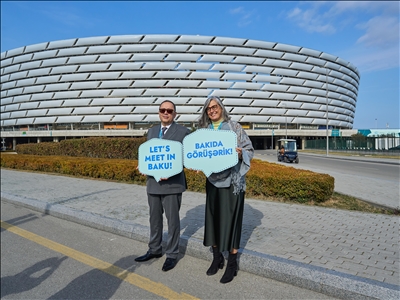
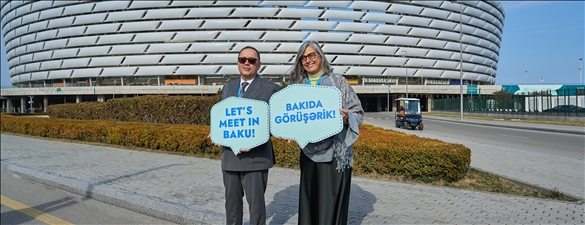
Noting that existing collaborations should carry over into the process leading to COP31, to be hosted and chaired by Türkiye, Ali said: “First of all, I congratulate for the successful proposal for the hosting of COP31. Türkiye has hosted many global events in the past and very relevant initiatives. I believe the Zero Waste Initiative and other efforts in Türkiye are all the foundation for a successful global COP31.”
“The experiences here in Türkiye, in many of the Turkish cities and municipalities represent major successful experiences in terms of addressing the local climate action. We are aware and we are following very interesting and successful initiatives in many municipalities, including Istanbul, Izmir, Ankara, Gaziantep and many, even the smaller or the medium-size cities on creating circularity, integrated solid waste management, and integrated water management. So, we do think that presenting these experiences from Türkiye and bringing together global experiences, partnerships and networks through COP31 represent a major opportunity and potential for a very successful COP31. We look forward to working with the Turkish partners to make it a successful global conference,” Ali said, recalling that COP summits are important platforms for sharing experience.