Agricultural commodity prices surge due to Middle East tensions


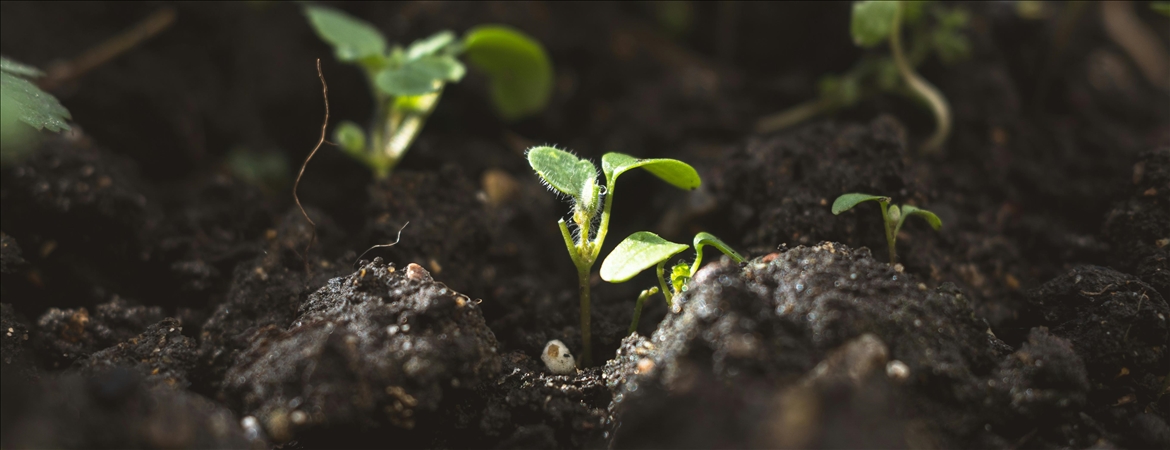
World Soil Day was first proposed in 2002 by the International Union of Soil Sciences (IUSS) and later supported by the UN Food and Agriculture Organization (FAO). In 2013, the FAO Conference requested its official adoption at the 68th UN General Assembly, the same year, the UN General Assembly designated 5 December 2014 as the first official World Soil Day.
According to a report titled “Solution instead of Victim: Integrating Soil Health into Nationally Determined Contributions (NDCs) for Climate Change Mitigation” published by Save Soil, a Netherlands-based environmental movement working to address declining global soil fertility, 70 percent of countries do not include soil as a mitigation tool in their Nationally Determined Contributions (NDCs), which are required every five years under the Paris Agreement.
The “4 per 1000” initiative launched at the 21st Conference of the Parties (COP21), proposes that countries should aim to increase global soil organic matter stocks by 0.4 percent annually, which would correspond to storing an additional 6–10 gigatons of carbon each year. Agricultural lands, together with grazing lands, plays a central role in carbon sequestration. According to the Save Soil’s report, if the 0.4 percent target is met, agricultural soils could provide 27 percent of the emissions reductions needed to keep global warming below 2 degrees Celsius.
The report recommends that each country prepare a concise soil-carbon annex to its NDC updates, treat soil-relevant measures as direct mitigation actions, and emphasized that regenerative agricultural practices can reduce greenhouse gas emissions, increase soil carbon storage and strengthen ecosystem resilience.
Organic matter supports soil health
Speaking to Anadolu, Ilkay Dellal, professor at Ankara University Department of Agricultural Economics, said soil is the second-largest carbon sink after the oceans, thanks to its organic matter content.
She noted that soil, which consists of water, air, living organisms, minerals, feces and remains of plants and animals, retains water and nutrients thanks to organic matter, thereby improving soil structure and supporting agricultural productivity.
Dellal warned that rising greenhouse gas concentrations will lead to higher temperatures, altered rainfall patterns and more frequent meteorological disasters, stressing the need to reduce emissions and protect the soil.
She highlighted that it is possible to reduce agriculture-related emissions, adding: “One of the best ways is to protect agricultural lands, prevent land-use change, protect soil health and apply techniques that increase organic content. Grasslands and grazing lands are among the most important carbon sinks. Strengthening the soil increases carbon sequestration and contributes to the Paris Agreement’s goal of keeping global temperatures below 2 degrees Celsius.”
Calling the 0.4% annual increase target realistic, Dellal recommended supporting this commitment with cover cropping, crop rotation with legumes, agricultural diversification, compost use and preferring organic fertilizers.
“Emissions from agricultural lans primarily come from chemical fertilizer use. Nitrous oxide emissions increase with the use of nitrogen fertilizers. Therefore, many NDCs include reducing chemical fertilizer use, diversifying crops, cover cropping, mulching, reduced tillage, no-till farming and crop rotation with legumes. Although not directly labelled as soil-health measures, these practices are included in the long-term strategies and NDCs of many countries. Türkiye’s NDC and long-term strategy documents also contain actions to protect and improve soil health,” she said, adding that many countries already classify agricultural soil emissions under mitigation in their NDCs.
Pointing out that soils in arid and semi-arid regions like Türkiye have low organic matter, Dellal said increasing nitrogen fertilizer use also leads to higher carbon emissions. She suggested using organic fertilizers, manure processed in biogas plants and compost as alternatives.
“There is a shift toward climate-friendly practices”
Stressing that agricultural land has reached its limits, Dellal said protecting existing soils must be the priority.
“In the past, to feed growing populations, developed countries adopted an agricultural system known as ‘intensive farming’, which involved the use of excessive inputs. But the negative environmental impacts of high-input agriculture have led to a shift toward practices that are more climate- and environment-friendly,” she said.
“These practices support agricultural sustainability while also enabling countries to pursue lower-carbon growth, thereby contributing both to food and income security and to mitigate the impacts of climate change.”