Chronic drought grips Türkiye as 2-year rainfall deficit deepens


According to FAO’s report titled “The Impact of Disasters on Agriculture and Food Security: Digital solutions for reducing risks and impacts,” losses in 191 agricultural products across 205 countries and territories were assessed for the years 1991–2023, revealing a total of $3.26 trillion in agricultural losses caused by disasters over 33 years. Approximately $2.9 trillion of these losses were linked to disasters such as floods, droughts and heatwaves.
At the beginning phase of the study, annual average losses were $64 billion; this rose to $67 billion in the 2000s, $144 billion after 2010 and $99 billion annually on average over the past 33 years.
Cereal crops experienced the greatest loss at 4.6 billion tons, followed by 2.8 billion tons in fruits and vegetables, while losses in meat and dairy products reached 900 million tons of loss.
Asia accounted for 47 percent of global losses, shouldering the heaviest burden, followed by the Americas at 22 percent and Africa at 19 percent.
In terms of agricultural GDP, Africa suffered the most severe relative economic impact at 7.4 percent, followed by the Americas at 5.2 percent, Oceania at 4.2 percent and Europe at 3.4percent.
Economic damage from extreme weather events
By type of hazard, floods caused the most damage exceeding $1.5 trillion. Storms caused $720 billion, earthquakes $336 billion, droughts $278 billion, extreme temperatures $187 billion and wildfires $166 billion in damage.
Meanwhile, in aquatic food systems, production losses exceeding 5.6 million tons between 1985 and 2022 affected 15 percent of global fisheries, causing about $6.6 billion in economic losses.
Extreme weather events threaten agriculture
Prof. Dr. Sermin Tagil, head of the Geography Department at İzmir Bakircay University’s Faculty of Humanities and Social Sciences, told Anadolu that the greatest uncertainty facing agriculture is the climate crisis.
Tagil said the frequency and intensity of extreme weather conditions such droughts, floods, storms, heatwaves and sudden frost events are increasing, directly threatening agricultural production.
Pointing out to disruptions in the water cycle causing critical problems, Tagil said:“Prolonged dry periods cause serious water stress in plants, while very heavy rainfall leads to many problems, from soil erosion to damage to cultivated fields. This clearly shows that disaster risk management must be placed at the center of agricultural policies. The climate crisis affects not only plant and animal cycles but the entire structure of the food system, from water resources to storage, marketing and infrastructure.”
Tagil emphasized that climate change is not a future threat for agriculture but a multidimensional crisis already being felt today. She said increasingly frequent extreme weather events in Türkiye in recent years are disrupting plant life cycles and posing a serious threat to the future of the agricultural sector.
“Cereals are among the most vulnerable groups to climate change”
Tagil stated that the products most affected by the climate crisis share two main characteristics.
“Plants with low ecological tolerance to water stress and temperature anomalies, and those with high water demand or dependence on specific temperature thresholds, are the primary targets of this crisis. Due to the climate crisis, plants’ natural ecological tolerance ranges no longer align with the new climate regime of the regions they are growing. Cereals are among the most vulnerable groups to climate change. Corn, being a plant that transpires heavily, is one of the fastest to react to water scarcity. Wheat and barley, which are cool-climate cerealcrops, are affected immediately when temperatures exceed optimal levels. Olive and grapeshow some tolerance to heat but are impacted by extreme temperature increases, leading to yield reductions. Fruits and vegetables are also highly sensitive to water and extreme heat,”she said.
Tagil noted that the climate crisis does not affect all regions in the same way, resulting in yield differences between regions.
Drought risk in Türkiye
Tagil said the Mediterranean climate zone is warming 20 percent faster than the global average, making Türkiye one of the countries experiencing the most severe impacts of the climate crisis. She added that this has led to significant reductions in rainfall, severe droughts and increases in the frequency and duration of extreme weather events.
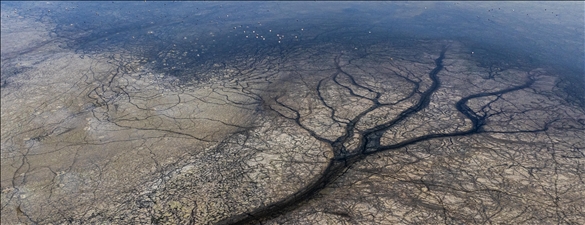
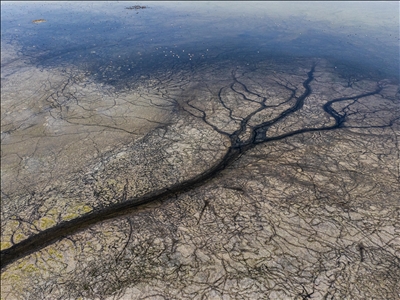
Tagil stated that around 88 percent of Türkiye’s land is at desertification risk, and drought is accelerating noticeably in western and southwestern regions. She noted that agricultural drought has become a permanent trend in Türkiye.
She highlighted that watershed management is among the most important measures in combating the climate crisis, adding that new-generation agricultural techniques such as water harvesting, vertical farming and soilless agriculture are now more important than ever, as they both save water and enable rapid adaptation to changing climate conditions.