El Nino could trigger fresh volatility in global commodity markets


According to data from the European Union’s (EU) Copernicus satellite monitoring system, 2025 was the third-warmest year on record, following 2024, the warmest year, and 2023, the second-warmest.
Rising temperatures negatively affect many sectors, including agriculture. According to an article published in Nature, science journal, titled “Crop pest responses to global changes in climate and land management,” warmer autumns and earlier spring warming cause many pest insects to enter diapause later and emerge earlier.
With this additional time, both their active periods and reproductive cycles are extended, allowing insects to damage crops for longer periods while reproducing more, thereby increasing local pest populations.
Higher temperatures, combined with declines in some species that naturally prey on these insects, leads to cropland expansion in which agricultural pests are effective. In addition to warming, biodiversity loss driven by drought conditions and deforestation further increases the negative impacts of these species on agriculture.
According to the study, crop losses caused by pests and diseases account for around 40percent of annual global crop production.
As global warming intensifies, this situation is expected to worsen. If the global average temperature rise reaches 2°C above pre-industrial levels, agricultural pests are projected to cause yield losses of 46 precent in wheat, 19 percent in rice, and 31 percent in maize.
The study examined pest species damaging wheat, rice, maize and soybeans, along with their impacts.
More than 100 insect species can damage wheat
In terms of both cultivated area and production volume, wheat ranks first among agricultural crops worldwide. Wheat farming in Europe, China, India, Pakistan, the United States and Australia accounts for around 85 percent of global production. The impact of global warming manifests itself as approximately 6 percent yield loss for every 1°C increase in temperature.
Globally, more than 100 insect species are capable of damaging wheat. These include the cereal leaf beetle (Oulema melanopus) in Europe and the Americas, the wheat stem fly (Atherigona naqvii) in India, and the northern armyworm (Mythimna separata) in Asia and Australia.
While global yield losses to pests and diseases currently vary between 4.8 percent and 16.3percent, indirect damage, such as aphid-borne viruses, reduce wheat yields by around 39percent.
10 precent decline in rice yield per 1 °C rise
Rice ranks second globally in terms of agricultural production volume and is primarily grown in tropical regions of Asia, particularly China, India, Bangladesh and Southeast Asia, which together account for about 90 percent of the global output. Climate change significantly reduces rice yields, with each 1°C increase in night-time temperature leading to an estimated 10 percent decline in yield.
More than 800 insect species can infest rice during the production process, 15 to 20 species among them cause serious damage. These include the white-backed planthopper (Sogatellafurcifera / WBPH), rice brown planthopper (Nilaparvata lugens / BPH), rice leaf folder (Cnaphalocrocis medinalis / RLF), striped rice stem borer (Chilo suppressalis / SRSB), yellow stemborer (Scirpophaga incertulas / YSB), stink bugs and small rice leafhoppers.
Maize and soybean
Maize and soybean thrive in warm regions and seasons with abundant sunlight and mild humidity, particularly in the United States, China, Brazil, Argentina, India, Europe and Africa.
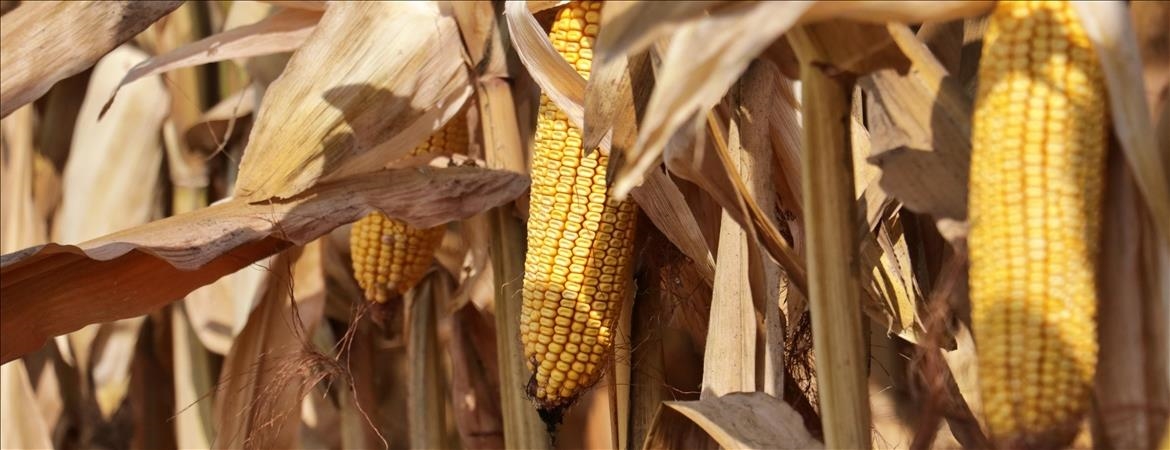
More than 280 insect species feed on maize, though only some cause significant crop damage. These include corn borers, tropical noctuid worms, aphids, soil pests and locusts. While these pests cause yield losses of 1.7 percent in Canada, this rate can rise up to 48.5 percent in Ethiopia.
Soybean, often rotated with maize in some countries, are most severely affected by stink bugs, corn earworm and soybean aphids. In China, pod borer and soybean aphids impact crops and cause economic losses. Globally, 21.4 percent of yield loss of soybean is attributed to pests and pathogens.
Globalized trade is another threat
International trade and travel further increase risks to agriculture, particularly by facilitating the spread of species into new regions where they become invasive. According to the report, the negative impacts of more than 3,500 invasive species on agricultural activities in 2019 alone resulted in $423 billion in damages, with such impacts increasing fourfold each decade since 1970.
“Cocoa and olive oil prices rose due to disease”
Speaking to Anadolu, Dan Bebber, professor of ecology at the University of Exeter and one of the article’s authors, said countries are affected differently by agricultural pests.
“We believe that developing countries, particularly in sub-Saharan Africa, are most affected by crop pests,” Bebber said. “This is because poorer farmers have limited access to disease-resistance crops and pesticides, and may not have the training to know what pests and diseases are affecting their crops.”
While pesticides are usually the first solution that comes to mind, Bebber said that they are costly and increasingly restricted in many parts of the world, especially in Europe. “We have alternatives to pesticides now,” he said. “Such as accelerated plant resistance breeding using technologies like Gene Editing.”
Bebber warned that these dynamics could affect food prices in the future.
“Could it impact food prices in the coming years? Yes, food prices can be affected by pests and disease. For example, the recent rise in cocoa prices was partly driven by disease impacts, as well as climate change. The Xylella fastidiosa disease has caused huge losses of olive trees, and increased the price of olive oil. Unless we move to diversify food production, reduce the amount of grain used to feed livestock, implement sustainable technologies like biological control and gene editing, there is a risk that the combined effects of climate change, pests and diseases, and pollinator insect losses will soon reduce our food security,” he said.