Şenhan Bolelli
02 October 2026•Update: 02 October 2026
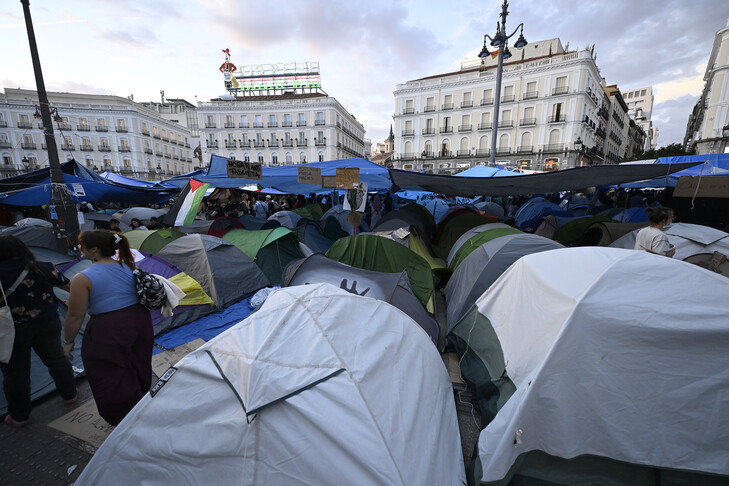
Protests over Spain's housing crisis continued in Madrid on Thursday, with more than 300 tents filling the capital's central Sol Square.
The demonstrations, which began Sept. 26, have been backed by left-wing and far-left civil society groups.
Protesters have held public meetings and called for neighborhood committees to be established to campaign for a general strike over housing.
Hundreds of protesters banged pots and pans, while smaller groups also demonstrated in cities including Barcelona, Seville and Las Palmas.
The protests come as Spain's parliament prepares to vote on two government decrees aimed at addressing the housing crisis.
The opposition People's Party and Vox have said they will vote against the measures. Their passage is expected to depend on smaller parties from the Basque Country and Catalonia.
One decree would introduce automatic, indefinite extensions for rental contracts, with rent increases linked to the consumer price index.
Landlords refusing the extensions would have to compensate tenants. The measure is expected to be rejected.
A second decree, which is expected to pass, would extend some rental contracts by two years, suspend forced evictions until 2030 and introduce new rules for seasonal and room rentals.
It would also prevent rent increases in contracts exceeding housing price index limits.
The decree would also ban certain high-risk investment funds, described as "vulture funds," from buying homes until 2028.
The government said the measures would benefit about 5 million people covered by 1.89 million rental contracts.
The housing crisis has become a major political issue in Spain.
The issue drew further attention last month when 87-year-old Mari Carmen was forcibly evicted from a Madrid home where she had lived for 70 years.
Following an agreement involving Madrid City Council and a property investment company, she is expected to return home under a new eight-year rental contract, paying 30% of her pension in rent.