Ayhan Simsek
27 November 2026•Update: 27 November 2026
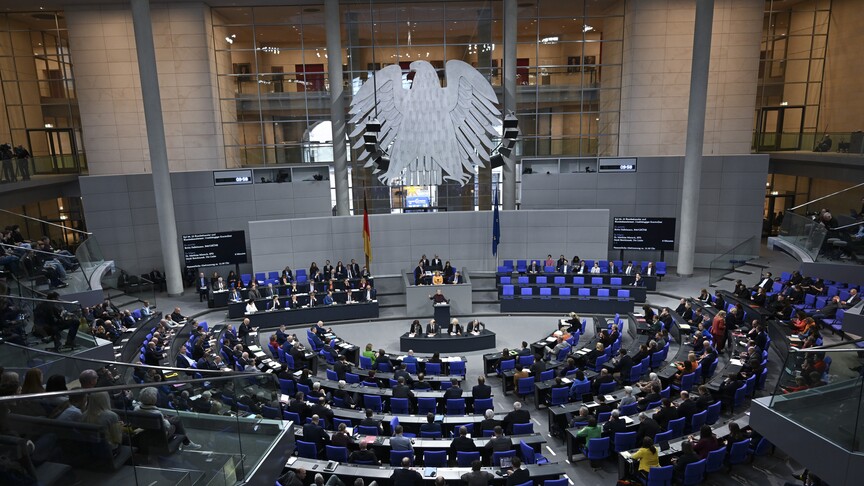
Germany's parliament approved a record federal budget of €555.9 billion ($609.6 billion) for 2027 on Friday, sharply increasing defense spending while reducing foreign aid and introducing new taxes on sugary drinks and alcohol.
In a roll-call vote on the final version of the budget law, 317 lawmakers supported the package and 260 opposed it, with no abstentions.
Chancellor Friedrich Merz's conservative CDU/CSU alliance and its coalition partner, the center-left Social Democratic Party, voted in favor.
Opposition parties, including the anti-immigrant Alternative for Germany, the environmentalist Greens and the socialist Left Party, voted against the package.
Defense spending is set to reach €139.6 billion ($153.1 billion) in 2027, combining a regular defense budget of €109.7 billion ($120.3 billion) with €29.9 billion ($32.8 billion) from a special fund for the armed forces.
That represents an increase of approximately €31 billion from the 2026 total of €108.2 billion.
Military procurement spending is planned to exceed €60 billion as Berlin works toward higher NATO defense targets amid the Russia-Ukraine war.
- Foreign aid, UN contributions face cuts
Development and foreign aid spending will fall to €9.58 billion ($10.5 billion), down approximately 4.7% from €10.06 billion in 2026.
Germany's direct contribution to the UN is scheduled to decline from €517.2 million ($567 million) to €309.5 million ($339 million).
Contributions to the UN and other international organizations through the Development Ministry will also decrease from €515.9 million ($566 million) to €442.7 million ($485 million).
- New taxes on sugary drinks, alcohol
To help offset smaller-than-planned reductions in federal payments to the health fund, the budget package introduces a tax on sugary drinks starting Jan. 1, 2028.
The levy will range from 25 to 35 cents per liter, depending on sugar content above five grams per 100 milliliters.
Pure fruit and vegetable juices will be exempt from the tax, which the government expects to generate approximately €1.1 billion ($1.21 billion) annually.
Alcohol taxes will also increase by roughly 20% on spirits and intermediate products, including port and sherry.
The government estimates the higher alcohol taxes will generate an additional €470 million ($515 million) in annual revenue.
- Electricity tax relief planned for 2027
Separately, an accompanying law lowers the electricity tax for all consumers to the European minimum of 0.1 cents per kilowatt-hour from the current 2.05 cents, beginning Jan. 1, 2027.
The reduction will initially apply for one year and is expected to lower federal revenue by approximately €5 billion ($5.5 billion).
The measure will be financed in 2027 through lower projected spending on renewable energy subsidies.
The governing coalition aims to extend the electricity tax relief beyond 2027 if lasting funding can be secured in the next federal budget.