- Amnesty International calls ruling 'historic,' says it has implications for other pending cases, including Gaza
In a landmark ruling Thursday, the UN's top court found that Myanmar committed genocide against Rohingya Muslims in 2017, marking the first time it has held a state responsible for genocide.
The International Court of Justice (ICJ) found Myanmar responsible for genocide during military operations in northern Rakhine State in a 9-6 vote.
Reading the judgment, ICJ President Judge Yuji Iwasawa said Myanmar "has committed genocide against the Rohingya group in northern Rakhine State, in violation of its obligations under the Convention on the Prevention and Punishment of the Crime of Genocide."
The judges also found Myanmar responsible for several other specific violations in rulings reached by majority votes.
What is the case about?
The case centers on the Myanmar military's 2017 crackdown in Muslim-majority Rakhine State on the country's western coast.
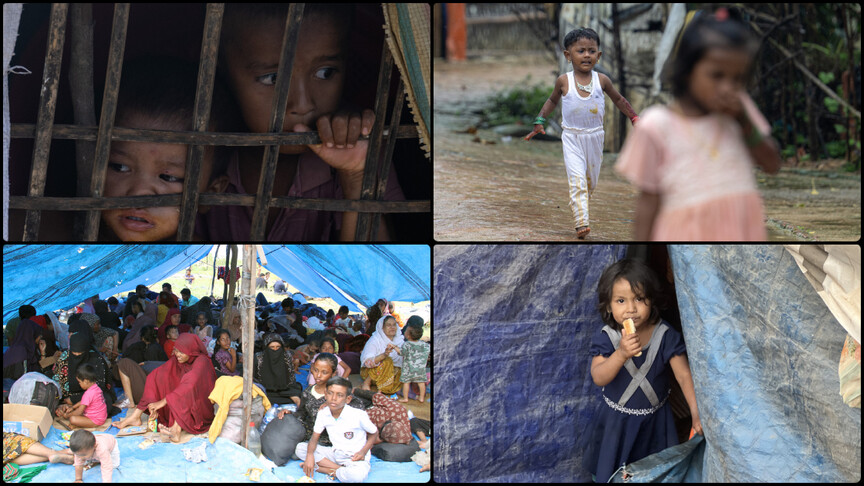
The military campaign forced hundreds of thousands of Rohingya Muslims to flee across the border into Bangladesh amid reports of mass killings of adults and children, gang rapes and villages being burned to the ground.
A UN fact-finding mission later concluded that approximately 10,000 people likely died during the military operations.
Bangladesh currently hosts about 1.3 million Rohingya refugees in camps along its southeastern coast, most of whom fled the military crackdown in August 2017.
The Gambia brought the case before the ICJ in The Hague in 2019, alleging a deliberate campaign of arson, rape and murder aimed at destroying the Rohingya minority in whole or in part.
During the hearings, Gambian Justice Minister Dawda Jallow told the court the case was not “about esoteric issues of international law,” but "about real people, real stories and a real group of human beings."
In January, the ICJ held closed-door sessions to hear testimony from survivors who traveled from refugee camps in Bangladesh.
Myanmar denied committing genocide, arguing that its military operations were a response to guerrilla-style attacks by a Rohingya militant group.
However, the judges rejected arguments that the operations were primarily counterterrorism measures or were intended merely to punish or forcibly displace the population without committing genocide.
Myanmar's junta-backed President Min Aung Hlaing, who commanded the military during the 2016-2017 attacks, faces a pending arrest warrant from the International Criminal Court (ICC) over allegations of crimes against humanity.
Unlike the ICJ, which adjudicates disputes between states, the ICC prosecutes individuals.
What did the court find?
The court found that Myanmar's security forces killed thousands of Rohingya civilians, committed widespread sexual violence and extreme violence against children, and attacked Rohingya fleeing toward Bangladesh.
The judges also concluded that Myanmar's security forces committed acts prohibited under the Genocide Convention with "an intent to destroy a substantial part of the Rohingya population of Myanmar."
"The court is fully convinced that the 2017 clearance operations caused serious bodily and mental harm to a significant number of the protected group," Judge Iwasawa said during the reading of the judgment, which lasted more than two hours in a packed Great Hall of Justice.
The court determined that the scale and methods of the violence went beyond military necessity and reflected "an intent to destroy a substantial part of the group."
Iwasawa called on Myanmar to provide reparations and restitution, including ensuring the safe return of Rohingya to their homes, restoring or replacing their property, and providing physical and mental rehabilitation.
"Finally, the Court decided that the question of the amount and the modalities of compensation or other reparation should be determined in a subsequent phase of the proceedings, and that, to that end, Myanmar should transmit to it, within two years of today’s Judgment, a report on the measures of restitution it has adopted and the amount and modalities of compensation," the court concluded.
'Significant for Gaza'
Human rights groups, particularly Amnesty International, hailed the ICJ ruling as "historic," highlighting its potential implications for other cases pending before the court, including the case concerning Gaza.
“Genocide. This is the unequivocal finding of the ICJ. After years of denial, impunity and suppression of truth, this ruling is a historic and authoritative recognition of the atrocities committed against the Rohingya and a rare moment of justice for survivors, victims and their families" Amnesty International’s Secretary General Agnes Callamard said in a statement Thursday.
Callamard said the judgment must serve as a wake-up call to the international community at a critical moment in Myanmar's history.
"The findings of independent investigators and international courts must not simply be ignored, she said, adding that this decision comes only because the government of The Gambia set the wheels of justice in motion, exemplifying how all states can and should respond to crimes that shock the conscience of humanity.
“The Court’s clarification that genocidal intent can coexist with other goals, including military aims, is especially significant for other cases pending at the ICJ, such as the case brought by South Africa against Israel for alleged genocide against Palestinians in Gaza," she maintained.
Amnesty International demanded that Myanmar's authorities immediately comply with the ICJ ruling.
Callamard also urged all other states, including members of the Association of Southeast Asian Nations (ASEAN), to uphold the judgment by fulfilling their obligations under the Genocide Convention and international law, including taking all possible measures to prevent and punish genocide.
She warned that failure to uphold the ruling would only embolden Myanmar's military to continue defying international law and perpetuate a cycle of impunity.
“This should not be the end of the struggle for justice for the Rohingya. Survivors and victims are entitled to full and effective reparations for the harms they have suffered," she further said.