Diyar Güldoğan
31 July 2026•Update: 31 July 2026
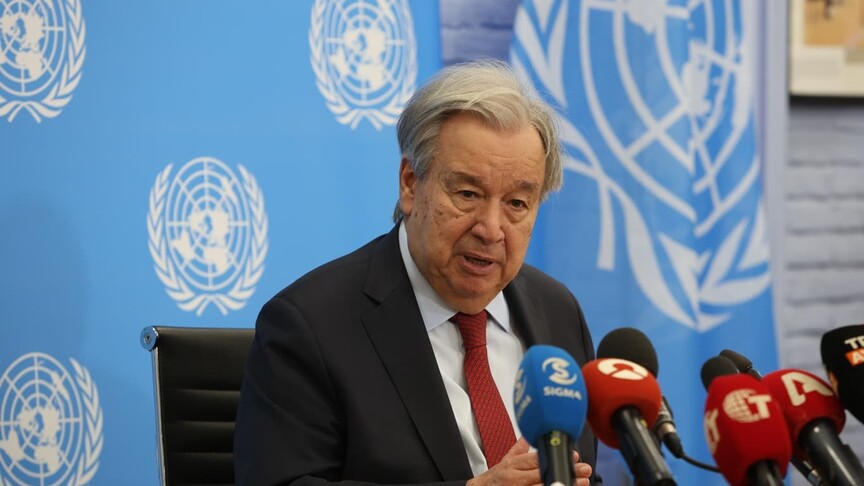
UN Secretary-General Antonio Guterres on Friday warned that the world is entering "uncharted territory" as a strengthening El Nino fuels an already worsening climate crisis, urging governments to accelerate action to protect people from extreme heat and reduce dependence on fossil fuels.
Speaking at a news conference in New York, Guterres said recent scientific forecasts showed El Nino is intensifying, raising the risk of record-breaking temperatures and worsening droughts, heat waves and other extreme weather events across much of the globe.
"Two months ago, I warned that El Nino was arriving on our doorstep. Now it is inside the house – and turning up the heat," he said.
Guterres said the world had already endured a summer marked by record-breaking heat domes, devastating wildfires in Spain, France and elsewhere, thousands of heat-related deaths, and record global sea-surface temperatures in June and July.
"But according to the latest science, this is only a warm-up act," he said.
Citing new forecasts released by the World Meteorological Organization, Guterres said Pacific Ocean temperatures driving El Nino had reached unprecedented levels for this stage of the climate pattern, with sea-surface temperatures in key monitoring regions expected to average nearly 3 degrees Celsius above normal.
He said World Meteorological Organization forecasts indicated nearly every land area on Earth is expected to experience above-normal temperatures through October, increasing the likelihood of seasonal heat records being broken.
"The verdict is clear: the climate crisis is in overdrive," Guterres said.
'Heat is claiming lives on a growing scale'
Guterres warned that El Nino also disrupts global rainfall patterns, pointing to below-average monsoon rains in India and forecasts for hotter and drier conditions across Central America, the Caribbean, parts of South America, South Asia, the Southwest Pacific, Europe and Africa.
"What we do know is deeply alarming: heat is claiming lives on a growing scale, day after day, in every region of the world," he said.
He said extreme heat is straining hospitals, power grids, transport networks and food supplies while exposing billions of workers to dangerous conditions and disproportionately affecting children, older people, people with disabilities, outdoor workers and marginalized communities.
Guterres called for stronger action, outlining four priorities: expanding heat-health action plans and early warning systems, improving workplace protections against extreme heat, designing cities and infrastructure to withstand rising temperatures, and accelerating the global transition away from fossil fuels.
"We are spending too much public money fueling the crisis – and too little protecting people from it," he said.
Guterres criticized continued investment in coal, oil and gas, warning that every new fossil fuel project approved today will make future heatwaves more dangerous and increase global insecurity.
"The warm-up act is over," he said. "We cannot afford to wait for the main event."