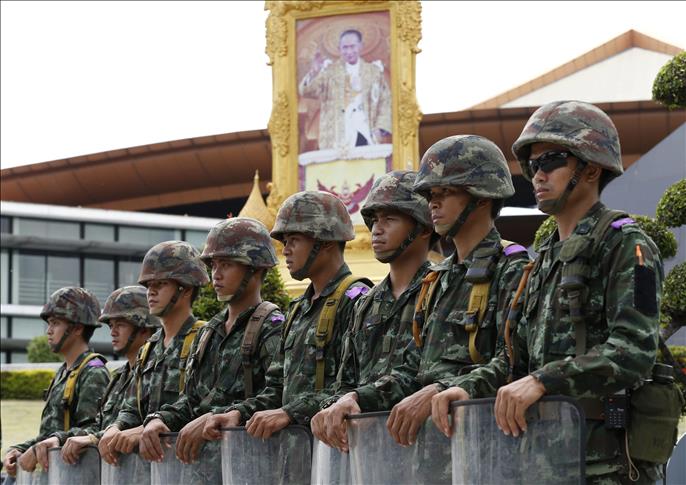
Human rights groups are concerned about the Thai junta's plans to repatriate more than 100,000 refugees on its border regions back to Myanmar.
Last week, Thailand's military leader Prayuth Chan-Ocha cited national security in his weekly "Return Happiness to the People" TV show as the reason for wanting to close refugee camps housing around 130,000 people and repatriate those inside.
The process would take place “in compliance with humanitarian principles,” he added.
Rights groups monitoring the welfare of the refugees along the border voiced concerns to the Anadolu Agency this week at both the logistics of the operation and possible abuses that might occur.
According to The Border Consortium, which coordinates non-governmental organization activity in the camps, around 120,000 Myanmar refugees live in the ten centers along the Thai-Myanmar border.
"We are worried because some of these people have been here over 20 years, many of them came to escape [the Myanmar government] to begin with," an NGO source told AA.
The source refused to be named due to the sensitive nature of the issue.
Most of the refugees on the border regions are from various ethnic minority groups who fled the country to avoid poverty, persecution and a bloody sectarian war between the central government and various groups fighting to achieve autonomy.
Many have lived in the camps for around 20 years with no legal means of making an income.
"We have not received any guarantee that the refugees will be safe from persecution once they are repatriated either," the source continued.
The Thai army, meanwhile, is adamant that the Myanmar authorities will treat all refugees humanely.
They also counter that the plans are long-term and will not happen overnight as checks need to be made over the nationality and origin of the refugees.
Since emerging from nearly five decades of isolation under a repressive military regime, the Myanmar government has discussed repatriating refugees based in camps along Thailand's borders.
NGOs in both countries, however, continue to voice concerns about a lack of infrastructure to help those returning rebuild their lives.
Since seizing power May 22, the Thai military has embarked on a campaign to clean up the country and clamp down on a string of illegal businesses, from taxi networks overcharging their customers to underground casinos.
Spectacular operations have also been launched against drug dealers, foreign mafia bosses and arms caches.
Last month, more than 200,000 undocumented Cambodian workers - a key part of Thailand's migrant workforce employed in fishing, construction and other industries - fled the country after being threatened with arrest. The Thai state has long seen such refugees – who are without any legal status or marketable skills - as a burden.
Thailand then scrambled to reverse the exodus by opening centers to help migrants secure employment permits and regulate the alien labor market.
On Wednesday, a labor official said the Kingdom had now registered more than 100,000 workers from countries such as Myanmar, Laos and Cambodia.
The country also has an estimated two million Myanmar migrant workers, many of whom work in the fishing industry.
www.aa.com.tr/en