BRASILIA, Brazil
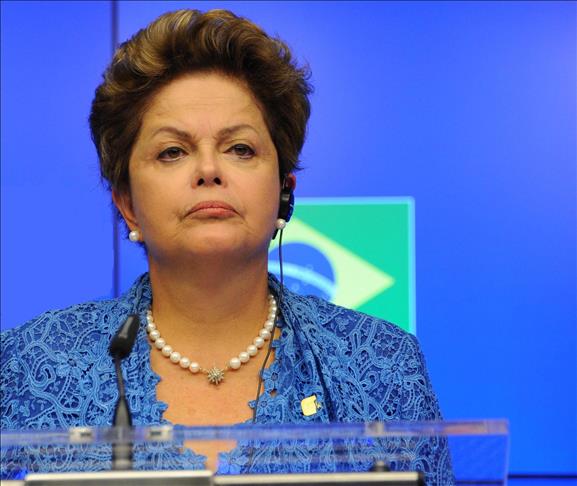
The heads of state of the five BRICS - Brazil, Russia, India, China and South Africa nations of emerging economies are meeting with the leaders of 11 South American countries Wednesday, in the Brazilian capital, Brasilia.
The presidents of the BRICS, which make up the bloc of developing economies, are holding their third official day of the sixth BRICS Summit.
Among the 11 South American leaders are Venezuelan President Nicolás Maduro, Argentinian leader Cristina Kirchner and the recently re-elected President of Colombia, Juan Manuel Santos.
The group will meet for the summit's second working session at the Brazilian Ministry of External Affairs, the Itamaraty.
Earlier Wednesday, President Rousseff met with Indian Prime Minister Narendra Modi at her official residence, the Alvorada Palace, for a breakfast meeting and private ceremony. A number of joint agreements between the two nations were signed behind closed doors. The agreements included environmental and diplomatic issues, and assistance with satellite monitoring of deforestation and terrorities home to Brazil's threatened indigenous populations.
Rousseff has held a one-on-one meeting with Russian President Vladimir Putin on Monday to discuss nuclear and defense cooperation, signing military, technological, economic and health agreements.
- New $100 billion BRICS bank
During the first two days of the summit, held in the northeast Brazilian city of Fortaleza, leaders agreed the so-called "Fortaleza Declaration" which oversaw the forging of a new $100 billion BRICS development bank and currency reserve fund.
The development is considered an attempt to shift the balance of economic power away from traditional Western economies and associated institutions such as the International Monetary Fund and the World Bank.
Brazilian President Dilma Rousseff announced Tuesday that the bank would be headquartered in Shanghai and that an Indian CEO would first take the helm - a position that will be in rotation. A regional office will also be set up in South Africa.
Rousseff added that the creation would benefit emerging and developing countries, as well as "contribute resources to guarantee investments in infrastructure."
www.aa.com.tr/en