By Deepak Adhikari
KATHMANDU, Nepal
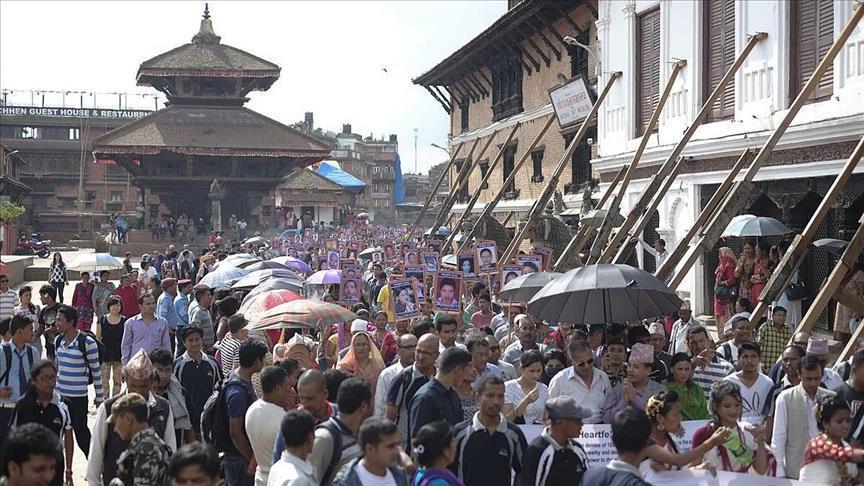
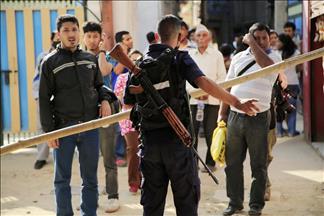
Amid signs of growing rapprochement, Nepalese protesters and government negotiators have resumed talks aimed at ending months of political deadlock over the country’s new constitution.
The leaders of a four-party alliance representing the protesters recently joined a committee tasked with resolving outstanding differences over the new charter, the adoption of which last September sparked protests across the country’s Southern Plains region.
For its part, Nepal’s coalition government, which includes the Unified Marxist-Leninist Party, Maoists and a host of smaller parties, has moved forward with plans to amend the constitution -- a major demand of the Madhesi ethnic group, who object to certain articles of the charter.
The proposed amendment is meant to ensure proportional representation for the Madhesi people in state institutions and delineate of electoral constituencies based on their respective populations.
The plans for constitutional amendment have been welcomed by India, Nepal’s influential neighbor, which had earlier called for a "broad consensus" while drafting the charter.
While Nepalese leaders had initially received warnings from India regarding the constitution’s contents, they nevertheless went ahead with the initial draft of the charter.
The move irked New Delhi, which responded by blocking the import of basic goods -- including fuel, food and medicine -- into the country.
Although India adopted the measure with a view to supporting the protesters, the unofficial blockade has led to crippling shortages of fuel in the small, landlocked nation.
‘Cordial relations’
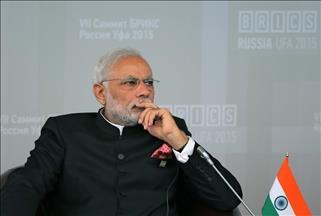
Last week, Nepalese Prime Minister KP Sharma Oli called his Indian counterpart, Narendra Modi, in hopes of ending the standoff.
"The two spoke about strengthening relations between India and Nepal," Oli’s spokesman, Pramod Dahal, said.
"Prime Minister Oli told the Indian prime minister that he wanted cordial relations between two countries," he added.
Rajaram Gautam, a local political commentator, said India’s conciliatory tone had served to pressure the Madhesis to show more flexibility regarding their demands.
"Both sides were nudged by India. So the talks have made some progress in the last few days," Gautam told Anadolu Agency. "Both sides have shown signs of fatigue."
"Frustration among people who have endured hardship [as a result of the siege] has reached saturation point," he added.
This, he went on, "has forced both the protesters and government to try to find a way out".
At the heart of the dispute is the demarcation of the boundaries of Nepal’s federal states by the new charter, which essentially divides the country into seven provinces.
The Madhesis and Tharus, two groups of the Southern Plains who have long complained of marginalization, are calling for the southern flatlands to be carved into two states.
Skeptical
The government has proposed the formation of a commission to settle the dispute, but Madhesi leaders remain skeptical.
"There’s a serious trust deficit. We’re not sure about the commission because it raises so many questions," Manish Kumar Suman, a spokesman for the Sadvawana Party, said.
"We don’t know its jurisdiction or its legitimacy," he said. "In the past, we’ve seen one commission after another present reports. But most end up in the dust bin."
Suman agreed that some headway had been made over the past week, but added that their past experience of talking with the government did not inspire confidence.
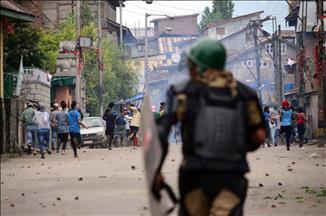
"Every time there’s significant progress in talks and we’re headed towards a breakthrough, police unleash a crackdown on protesters, which strains relations," he told Anadolu Agency.
"The government negotiators sweet talk, but their position remains rigid," he added.
Humanitarian crisis
Meanwhile, as talks continue in Kathmandu, common people across the country continue to suffer from the crippling blockade.
International donors operating in Nepal -- which is still recovering from a devastating earthquake that happened nine months ago -- warn of a looming humanitarian crisis if the blockade remains in place.
People have also directed their anger against Madhesi leaders for what they describe as "holding the country hostage" to their demands.
In a special report for Nepal’s leading Kantipur newspaper last week, writer Bhusan Yadav wrote of mounting frustration in and around Birgunj, a border crossing that has become a flashpoint for protests.
"No one had imagined that sit-in protests on the border would last to this day," Yadav wrote. "Local people have started to pray for the success of talks between the Madhesi Morcha [the protesters’ coalition] and the government."
Gautam, the political commentator, agrees that Nepal’s ruling class has ignored and alienated the country’s sizable Madhesi population.
He faulted Nepali leaders, however, for being so beholden to New Delhi that they failed to see the writing on the wall.
"This is the result of our leaders’ inability to deal with New Delhi," he said.
"In the past, these same leaders had sought India’s involvement to end political crises in Nepal," he added. "But this time around, they seem to have ignored India’s suggestions."
"Once you allow New Delhi to play a critical role in Nepal’s political settlements, you give them the upper hand in internal matters," he asserted.
"They must make it clear to the people regarding what extent India’s involvement in Nepalese affairs is acceptable," he said. "Heaping blame on India alone won’t help us to solve our problems.