Ikrame Imane Kouachi
23 September 2026•Update: 23 September 2026
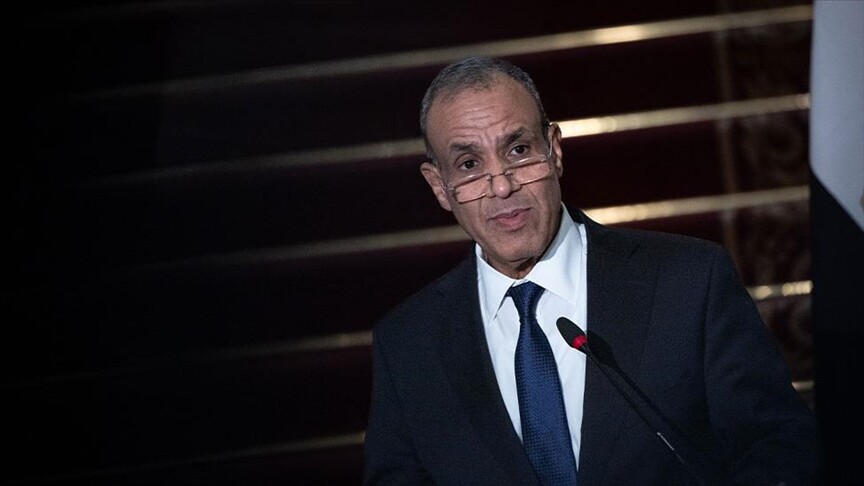
Egyptian Foreign Minister Badr Abdelatty and British National Security Adviser Jonathan Powell discussed ways to strengthen bilateral relations and regional developments during a meeting in New York, Egypt's Foreign Ministry said Wednesday.
The meeting was held Tuesday on the sidelines of the high-level segment of the 81st session of the UN General Assembly, according to a ministry statement.
The two officials exchanged views on bilateral relations and a number of regional issues, stressing the importance of further advancing Egyptian-British ties in political, economic, and investment fields and building on recent momentum in relations.
Abdelatty expressed Egypt's interest in intensifying joint efforts to boost economic and trade cooperation and increase British investments in Egypt.
The two sides also discussed ways to increase trade, with Abdelatty stressing the importance of facilitating Egyptian exports' access to the British market under the Egyptian-British Partnership Agreement.
Britain is among the largest foreign investors in Egypt, with accumulated British investments reaching about £20.7 billion ($27.56 billion) through more than 2,100 companies operating in various sectors, particularly energy, according to the statement.
Bilateral trade neared £2.8 billion in 2025, including £1.5 billion in Egyptian exports and £1.3 billion in British exports, according to remarks by Egyptian Investment and Foreign Trade Minister Mohamed Farid Saleh.
Palestine, regional conflicts
The meeting also addressed regional developments, particularly the Palestinian issue.
Abdelatty welcomed Britain's decision to ban trade in goods and services linked to Israeli settlements in the occupied Palestinian territories, saying the move reaffirmed its commitment to international law and international legitimacy.
On Sept. 8, the British government announced a ban on imports of goods from illegal settlements in the occupied Palestinian territories, alongside measures targeting services supporting settlement expansion. Israel responded with a series of measures, including closing the British Consulate in Jerusalem and banning 12 Britons from entering the country.
Abdelatty reiterated Egypt's position that an independent Palestinian state should be established along the June 4, 1967 borders and rejected the displacement of Palestinians.
Regarding Sudan, Abdelatty reaffirmed Egypt's support for Sudan's unity, sovereignty, territorial integrity, and national institutions.
He stressed the need to reach a sustainable ceasefire and pursue a comprehensive political settlement through dialogue and negotiations in a way that preserves Sudan's sovereignty and meets its people's aspirations for security, stability, and development.
On developments in Yemen and the war involving Iran, Abdelatty stressed the importance of de-escalation and prioritizing political solutions to promote regional security and stability.
He also stressed the need to ensure the security and freedom of maritime navigation in accordance with international law.