ISTANBUL
Turkish Prime Minister Recep Tayyip Erdogan’s condolences to Armenians ahead of the anniversary of the 1915 incidents is a welcome gesture that falls short of dealing with the historical problem, an Armenian political analyst said Friday.
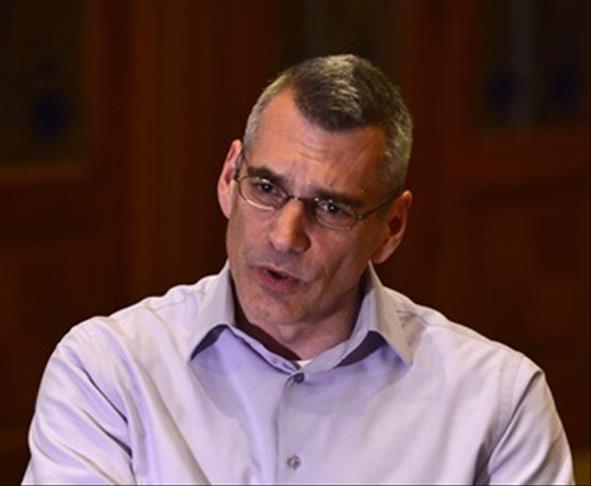
Richard Giragosian, the director of the Armenia-based think-tank Regional Studies Centre, labelled Erdogan’s statement as "an unprecedented gesture” from the Turkish side.
“I would argue that the statement was both unexpected and unprecedented. Therefore it was a welcome gesture from the Turkish side,” Giragosian said in an exclusive interview with the Anadolu Agency.
However, he added that Armenia and its diaspora saw the statement as not going fast or far enough in terms of dealing with the 1915 incidents.
On Wednesday, Turkish Prime Minister Recep Tayyip Erdogan released a statement in nine languages, including Armenian, in which he termed the events of 1915 as “inhumane” and offered condolences to the Armenians. The move attracted worldwide media reaction.
Events dubbed as 'the 1915 incidents' took place during the World War I, when a portion of the Armenian population living in the Ottoman Empire sided with invading Russians and rose up against the Ottoman authority. The uprisings were followed by a decision by the Ottoman-era officials to relocate the Armenians living in eastern Anatolia.
As a result, an unknown number of people died amid civil strife.
Pointing out that there is a natural difference between Armenian diaspora and the Republic of Armenia, Giragosian said: “As a neighboring country, Armenia seeks open borders and diplomatic relations with Turkey, which is a different state level agenda than the diaspora whose perspective and the identity was shaped by the incidents of 1915 as is mine.”
Giragosian, who was a member of the U.S.-based Armenian diaspora and later moved to Armenia, said the fact that he lives in Armenia changed his perspective to embrace the need for trade, open borders and diplomatic relations.
“The lack of an open border between the two countries has resulted in an opening of minds,” he said.
Giragosian - who played an important role in the “normalization” efforts between Turkey and Armenia - was in Istanbul on April 24 to take part in a commemoration of the 1915 incidents. The American-born political analyst is still very much engaged with the process, conducting meetings with officials and NGOs from both sides.
He said the Turkey had become much more confident and much more secure within years and it is something related to economic deveopment as much as political leadership.
“At the same time what is interesting is that a revolution is going on in Turkey as serious and profound as Ataturk’s revolution,” he said.
He said Erdogan’s statement on the 1915 incidents represented a bold step forward in terms of the way Turkey deals with the issue.
Despite the suspension of the normalization process between Turkey and Armenia, a “great deal” has already been achieved, Giragosian said.
Even though the normalization process has not achieved its goal of opening the border and establishing true diplomatic relations, Giragosian said: "There is increased contact where both Turks and Armenians getting to know each other once again, embracing the shared history - even the painful elements."
“I am optimistic about the future, because both sides have gone too far to go backwards.”
The Armenian diaspora and the state of Armenia term the 1915 incidents as "genocide" and ask for compensation, whereas Turkey says that, while Armenians died during the relocation, many Turks also died due to the attacks by Armenian gangs all across Anatolia.
Exactly what unfolded in 1915 continues to be a contentious issue between Turkey and Armenia that has proven a spoiler in relations between the two neighbors.
Giragosian said the question of whether Turkish and Armenian peoples are ready for a normalization still remains unclear.
“In this case what we need is leadership and statesmanship from both sides to lead people and to shape public opinion.”
However, he added: “At the same time public opinion is quite willing to actually move beyond the old debates and rhetoric. I think people on the both sides of the close borders have overcome the past and are looking for new openings."
According to Giragosian, there are three different target audiences of Erdogan's statement: the Armenian diaspora, the State of Armenia and the Turkish society.
“I do see this as a new style for Prime Minister Erdogan. Much more presidential, much more Gul style in terms of larger humanistic ideas.”
He suggested that the first concrete steps to be taken in the future should focus on how to establish diplomatic relations immediately and how to open the border.
However, he said the ultimate solution would not be reached before the 100th anniversary of the 1915 events and general elections in Turkey due in the same year.
“What we should expect and demand are much more practical small steps to create the environment for such an outcome,” he said.
englishnews@aa.com.tr