ANKARA
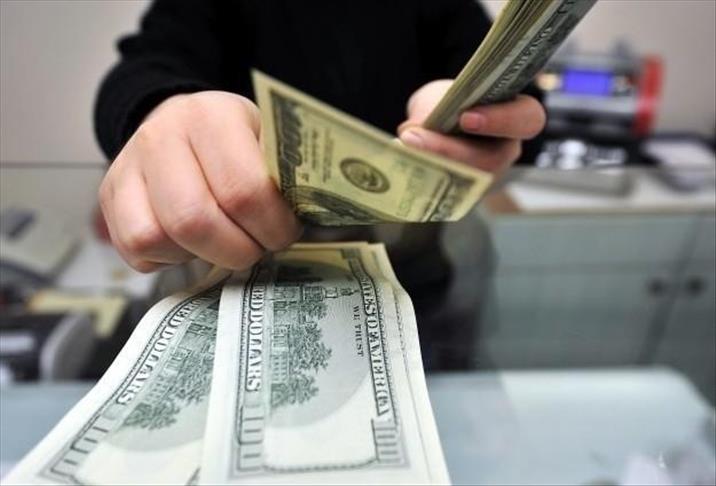
Turkey's current account deficit reached $3.15 billion in July, an increase of $768 million compared to the same month last year, the central bank said Thursday.
The 12-month rolling deficit rose to $45.02 billion from $44.7 billion in June.
The year-on-year increase in the current account deficit is mainly attributable to nearly a $1 billion rise in the foreign trade deficit, which rose to $5.75 billion; a $67 million decrease in the services surplus, which fell to $3.01 billion; and a $214 million drop in the primary income deficit to $528 million.
Experts consulted by Anadolu Agency forecast that Turkey’s year-end current account deficit would stand at $38.6 billion. Last year’s deficit stood at $45.8 billion.
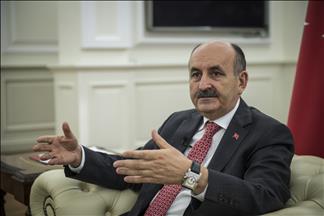
“Turkey’s total current account deficit in the first seven months of 2015 fell by 5.6 percent to $25.4 billion compared with $26.9 billion in the same period last year due to a decrease of the country’s foreign trade deficit,” Economy Minister Nihat Zeybekci said in a statement.
“This is a very positive development for our country's economy.”
Zeybekci noted that Turkey’s foreign trade deficit fell to $30.7 billion in the first seven months of the year - down from $34.2 billion in same period last year.
“Turkish exporters showed a better performance in these difficult global conditions compared to their competitors,” Zeybekci added, noting that the foreign trade deficit would continue to decline over the coming months.
“Thus, our foreign trade will continue to strongly support the decline in the current account deficit this year.”
Declining oil prices have had a significant positive effect on the current account deficit and inflation, which stood at 7.14 percent in July.
Turkey’s energy imports declined by almost 26.7 percent to reach $23.7 billion in the first seven months of 2015, compared with $32.3 billion in January-July 2014, according to the Turkish Statistical Institute.
The country spent nearly $55 billion on energy imports in 2014. Oil, natural gas and coal imports meet 70 percent of Turkey's energy needs.
Separately, Turkey’s second-quarter GDP growth of 3.8 percent was up from 3.1 percent in the first quarter of the year, the institute added.
However, Finance Minister Mehmet Simsek said the economy may fail to reach the government's 2015 growth target.
“It is possible to see growth drop below the 4 percent target set by the government's medium-term economic program,” he said.
“Investment is being postponed due to political uncertainty. Volatility in the global financial markets, rising geopolitical tensions as well as recession in EU have limited Turkish economic growth in the first half year.”