ANKARA
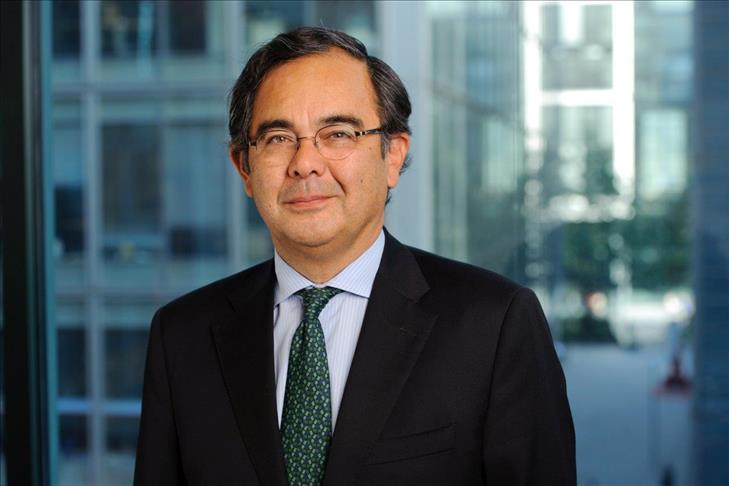
Ahead of an international conference on energy efficiency and financing in Istanbul on Wednesday, the European Bank for Reconstruction and Development (EBRD) Managing Director for Energy Efficiency Josue Tanaka told Anadolu Agency about how the bank is helping Turkish institutions to implement energy-saving programs.
"Like many other countries, Turkey faces high energy costs. This creates an opportunity for banks to finance energy-saving projects. The return on these projects brings profit to the banks based on the savings achieved by the companies who implement the projects," Tanaka told Anadolu Agency ahead of the Istanbul event, the Conference on Energy Efficiency Financing.
The EBRD has been financing Turkish banks that offer these loans to their clients since 2010. Overall, the bank has invested close to $3 billion in energy projects in the country, and the result has been $700 million in savings since the EBRD began the program.
"Our approach to energy efficiency lending at banks has three prongs," Tanaka said. "First, we help the banks identify the business opportunities in this kind of lending. Often, a client will come to a bank with another project, and the bank can then propose that the client link the initial project to energy efficiency. We help banks develop this kind of strategy."
Then, the EBRD supports the banks with technical assistance, helping them to structure the loans and to assess returns, Tanaka said.
"At the same time, we work at the country level, identifying policy areas for the government and helping it develop the requisite regulatory requirements," he added.
The EBRD lends funds to the banks for these programs, and the banks can then use them with their clients, Tanaka said.
In general, Tanaka explained that there is a focus on three types of projects. He said energy savings for large industry is a large part of the offer.
"But you also have opportunities in commercial space, reducing energy for lighting systems, air conditioning systems, etc. And there can be energy savings achieved at residential real estate, for example blocks of flats and houses."
Banks select the types of projects they want based on the type of clientele they have, Tanaka pointed out. Then the EBRD can provide the funds needed for lending, and the banks take the risks in working with the clients on implementation.
"The interest for Turkey is clear," Tanaka continued. "Apart from helping with the high cost of energy, the projects make Turkish industry more competitive. Much of Turkish industry is energy-intensive, as there are many producers of steel, ceramics, cement and other such products. Cutting energy costs at these companies makes a big difference."
Then the energy efficiency projects also help cut Turkey’s carbon emissions footprint, Tanaka pointed out. The EBRD calculates that the projects have reduced carbon emissions in Turkey by the equivalent of 2 million tonnes of oil, Tanaka said while carbon emissions have been reduced by 8 million tonnes.
Currently, Tanaka is working with Turkish authorities on the national energy efficiency action plan, looking at a set of measures across different sectors, and planning new and expanded investments.
The EBRD also makes energy efficiency project loans directly to big companies in Turkey. "We have worked directly with Aksa Akrilik, for example," Tanaka said.
The success of these programs has stimulated interest around the world, and so 70 banks from all over the globe are meeting in Istanbul at the EBRD conference, which Turkey’s private lender Garanti Bank is helping sponsor. The conference will discuss ways of scaling up energy efficiency financing both for the banks and for government regulators.
The conference will link its work both with the G20 agenda, which, under the Turkish presidency has improved energy efficiency as a stated goal, and with the UN Climate Change conference to be held in Paris on Nov. 30.
"Our conference will connect the global energy issues to everyday reality," Tanaka said. "We will address the question: How do you finance and integrate energy efficiency?"