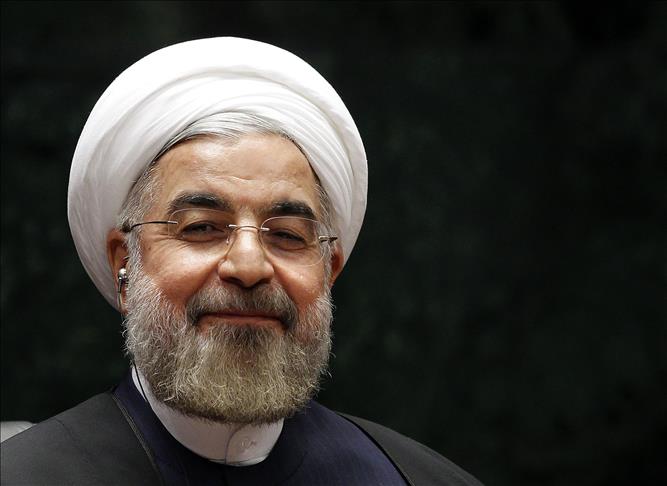
Iran is ready to assist the Iraqi government in its fight against armed insurgents if it asks us for help, Iranian President Hassan Rouhani said Saturday.
Speaking at a press conference in Tehran, Rouhani said that Iran was ready to provide assistance to Iraq within the framework of international norms.
"Those who lost the elections are trying to compensate their loss by resorting to violence and arms, yet they will not solve problems by killing people and spreading terrorism," he said.
- Iraq parliament mandate expires
The current Iraqi parliament is supposed to finish its mandate on Saturday and to be replaced by the new lawmakers elected in last April’s parliamentary vote.
However, the Iraqi Federal court has not authenticated the names of the new lawmakers.
In May, Iraqi Prime Minister Nouri Al-Maliki's alliance won the parliamentary elections in Iraq as “State of Law” bloc had taken 92 of the 328 seats.
Under a de facto agreement established in recent years, Iraq's prime minister is a Shia Arab, the president is a Kurd and the speaker of parliament is a Sunni Arab.
- Al-Maliki praises Islamic scholars
In Samarra -- the largest city of Salahuddin province -- Al-Maliki praised Shia and Sunni scholars' recent fatwas regarding the ISIL insurgency.
On Friday, Shia leader Ayatollah Ali al-Sistani issued a religious ruling -- known as fatwa -- calling followers to 'holy war.' He called on the Shia to take up arms and defend Iraq against ISIL militants.
Al-Maliki said that masses of 'volunteers' were about to reach the city of Samarra to eradicate the ISIL militants, according to a security source.
Al-Maliki also threatened army defectors with 'harsh penalties' including death sentence if they did not return to their posts.
Since Tuesday, the Islamic State of Iraq and the Levant, or ISIL, which has developed into a formidable force inside Syria, has extended its reach in Iraq, gaining near-complete control of the northern Iraqi city of Tikrit and seizing Mosul, Iraq’s second-largest city.
The group seized large swaths of western Iraq’s Anbar Province in January, including much of Fallujah and parts of Ramadi, flashpoints of the U.S.-led war in 2003.
Iraq has seen a marked increase in sectarian violence between Sunni and Shia Muslims in recent months, which the Iraqi government blames on ISIL.
www.aa.com.tr/en