Satuk Buğra Kutlugün
18 December 2015•Update: 20 December 2015
BEIJING
China has expressed that it “strongly opposes” the United States’ sale of a $1.83 billion arms package to Taiwan, even summoning its charge d'affaires in Beijing, state media reported Thursday.
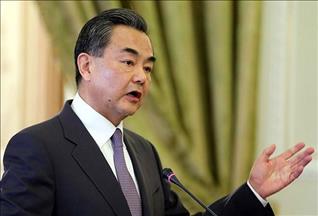
State news agency Xinhua reported China's vice foreign minister, Zheng Zeguang, as saying, "Taiwan is an inalienable part of China's territory. China strongly opposes the U.S. arms sale to Taiwan."
He added Wednesday that in order to “safeguard” national interests, Beijing has “decided to take necessary measures, including imposing sanctions against the companies involved in the arms sale.”
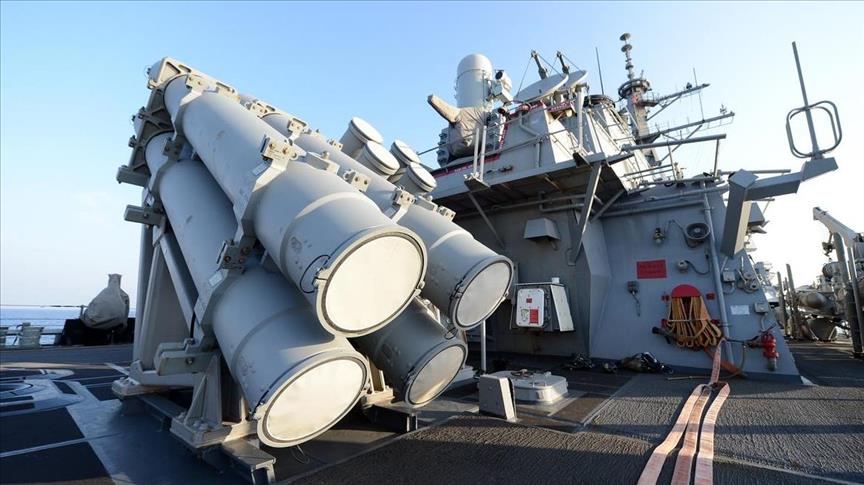
Under the arms sale authorized Wednesday by Washington, Taiwan is set to receive a variety of military equipment including two frigates, amphibious assault vehicles and missiles.
Since Chinese nationalist leaders fled to Taiwan in 1949 after a brutal civil war with Mao Zedong's Communists, China has seen the region as a breakaway province that will eventually return.
Taiwan's Ministry of Foreign Affairs released a statement late Wednesday expressing "heartfelt welcome" and "appreciation" for the U.S. – which does not support the territory’s independence -- over the $1.83 billion deal.
It added that the package is the fourth one after President Ma Ying-jeou took the office in May 2008.
"The arms sales underscores the common interest that the United States and Taiwan share in the region and Taiwan's strategic position as an important economic and security partner of the United States in the Asia Pacific," according to the ministry statement.
China's Vice Foreign Minister Zheng urged the United States to "abide by the clear commitment it has made in the three joint communiques," and "revoke the arms sale plan, and stop military contact with Taiwan, so as to avoid bringing further damage to China-U.S. relations and bilateral cooperation in major areas."
Zheng, however, called on the U.S. to abide by the alleged “clear commitment” it made in three China-U.S. joint communiques and revoke the sale plan, while also bringing an end to military contact with Taiwan “so as to avoid bringing further damage to China-U.S. relations and bilateral cooperation in major areas.”
"No one can shake the firm will of the Chinese government and people to defend their national sovereignty and territorial integrity, and to oppose foreign interference," he added.
In December last year, the U.S. passed a bill into law authorizing the sale of four Perry-class guided missile frigates to Taiwan, despite opposition from China, which claimed the U.S. was reneging on previous bilateral agreements on arms sales.
In early November, the presidents of China and Taiwan had a chance to meet face-to-face for the first time in around 70 years during a scheduled meeting in Singapore.
Beside tensions over history and sovereignty, relations between China and Taiwan are also strained due to disputes over areas of the South China Sea.
China claims almost all the resource-rich waters, and has overlapping claims with the Philippines, Vietnam, Malaysia and Brunei as well as Taiwan.
The U.S. and its allies have expressed alarm at China's maritime expansion, which they suspect is aimed at extending its military reach, with the Philippines even taking the quarrel to the International Tribunal for the Law of the Sea in The Hague.