Christopher Smart is managing partner of the Arbroath Group, an investment strategy consultancy, and was a senior economic policy adviser in the Obama administration
In its simplest form, the role of a central banker is little more than the description offered by William McChesney Martin Jr., whose term as chairman of the US Federal Reserve spanned from Harry Truman to Richard Nixon. The job, he famously said, is "to serve as the chaperone who has ordered the punchbowl removed just when the party was really warming up."
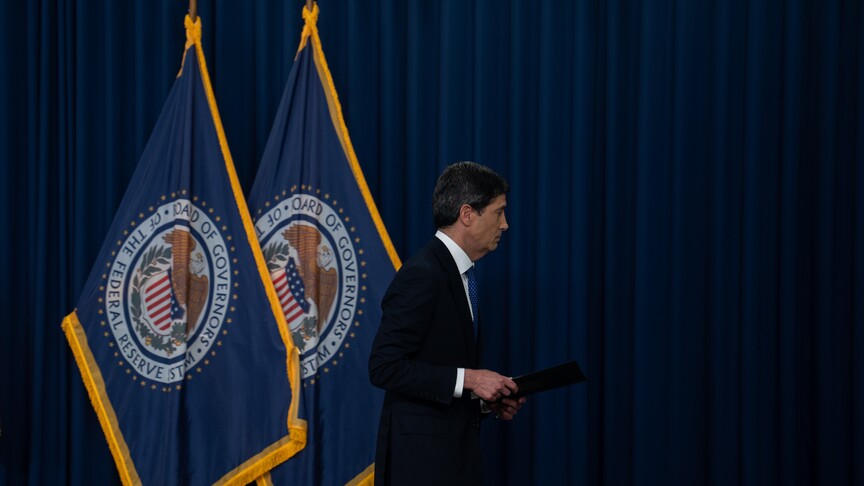
Just four months into the job, Kevin Warsh seems to be taking the challenge seriously, and investors appear pleased. Bond yields have edged higher since the decision last week to raise the federal funds rate by 0.25%, but the stock market took it all in stride, rebounding nicely after an initial selloff.
To be clear, few Americans believe they are living through a party, with just 28% feeling the country is on the right track, according to a recent YouGov poll. The S&P 500 may be up 13% so far this year, but plenty of signs suggest the world is unraveling. Protracted wars in Ukraine and the Gulf have driven gasoline and diesel prices higher. Electricity costs have spiked amid a binge of data center construction to support artificial intelligence. Meanwhile, the US government has imposed tariffs on imports and shows few signs of controlling its carefree spending habits as borrowing costs edge higher than at any time since 2007.
Dodging the White House
Warsh refused to cite any of these specific causes of the persistent inflationary pressures when he explained that the Federal Open Market Committee had "removed a dose of accommodation." He has said from the start that he believes too much guidance from the Fed may distract investors from focusing on economic data. But he may also be trying to avoid anything that sounds like blaming the president of the United States.
For investors, the decision comes as a pleasant, reassuring surprise after months of Donald Trump's broadsides on the Federal Reserve. First came relentless social media posts criticizing Warsh’s predecessor, Jerome Powell, for refusing to cut rates. Then prosecutors launched an investigation into cost overruns for the renovation of the Fed’s headquarters, and Trump tried to fire Fed Governor Lisa Cook on barely credible grounds.
Before Warsh's appointment, his published views also suggested that he had turned noticeably more dovish, arguing that artificial intelligence would ultimately improve productivity and relieve price pressures. In his confirmation hearings, Sen. Elizabeth Warren of Massachusetts accused Warsh of being the president’s "sock puppet."
Complicating matters further was Warsh’s longstanding concern about central bankers offering too much "forward guidance" about their intentions, which he argues shifts market attention away from actual economic fundamentals as traders try to guess what the Fed will do next. Thus, his first news conference as chair was widely panned when he refused to engage reporters on the likely causes of inflation, leading to a bond selloff.
But a more hawkish speech at the Fed’s conference in Jackson Hole in August was apparently enough to rally the Federal Open Market Committee (FOMC) behind a unanimous decision. He cited too many inflation subcomponents running above 3%, as the Fed has now failed to achieve its 2% inflation target for more than five years. "We removed a dose of accommodation," were his bland words.
Trump’s response was not so bland in a social media post: "Interest Rates in the United States should be 1%, or less, because we are the Best Credit in the World — BY FAR. Our Country is BOOMING with new Investment!" Investors have come to overlook a president who misunderstands that a "booming" economy requires guardrails against inflation, but they were grateful he chose not to attack Warsh personally. There was also relief that senior Republicans held their fire, even with a tightening decision coming just a few weeks before difficult midterm elections.
Restoring credibility in an era of shocks
Warsh has cleared this initial hurdle in bolstering the Fed’s credibility, and market inflation expectations have remained steady through the rate announcement. But the challenges ahead may be even more daunting than resisting pressure from the White House as the FOMC navigates commodity price spikes, the uncertain impact of artificial intelligence and the continuing profligacy of the US government.
Warsh lumped all these pressures into the blandest of descriptions, attributing inflationary pressures to "the geopolitical landscape of shocks and uncertainty." Single price shocks from oil, tariffs or borrowing rates can be absorbed as buyers, sellers and investors adjust their expectations. The problem these days is that the shocks have become a permanent feature of the emerging order. They just keep coming.
*Opinions expressed in this article are the author's own and do not necessarily reflect the editorial policy of Anadolu.