The writer is a professor of politics at Queen Mary University of London and the co-author of European Politics – a Comparative Introduction.
ISTANBUL
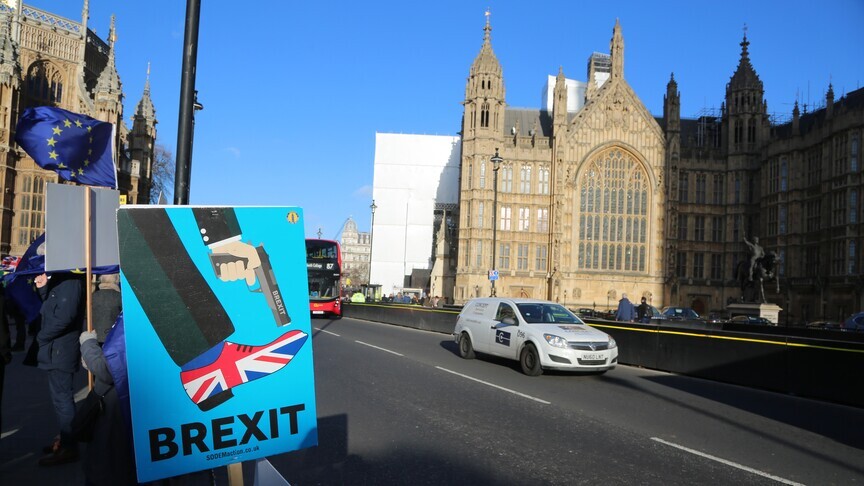
British Prime Minister Andy Burnham surprised everyone – including many of his Cabinet colleagues – when, in his speech to the Labour Party’s annual conference, he unexpectedly reopened the question of the UK’s relationship with the EU.
Brexit, he declared, had “done more harm than good,” and, if we wanted to “restore a higher level of growth and prosperity,” then we needed a “clear path … into the rest of the century.” Accordingly, he continued, he would soon “take the opportunity … to lay out to the country what … the different options are” after which he would “see if we could find consensus around one which will give us clarity about our position, and the future of the continent we live in.”
In so doing, Burnham broke a taboo that has, since 2016, effectively condemned the majority of the UK’s center-left politicians to going no further than promising, just as his predecessor Keir Starmer did, to “make Brexit work” – largely out of fear of appearing to want to renege on what Leave campaigners still insist on calling the “will of the people” as expressed in the 2016 referendum.
Following the polls and the money
That Burnham’s words did not trigger a backlash amongst “the people” (or, tellingly perhaps, a detailed defense of Brexit’s benefits by its advocates) is testament to the fact that a majority of Brits have, since early in 2021, been telling pollsters that the decision the country came to 10 years ago was the wrong one. Currently, some 57% of voters, including 23% of those who voted Leave, agree, while some 55% say they want to rejoin the EU. And Burnham’s decision arguably makes even more electoral sense when one realizes that around eight out of 10 voters whose support he needs for Labour (or else to vote tactically at the next election so as to keep the Conservatives and Reform UK out of office) support rejoining the EU.
Just as importantly, his intervention makes economic sense. Indeed, it is likely that the research suggesting Brexit has done severe damage to the UK’s trade, growth and public finances is (along with this shift in public opinion and the concern that the USA is no longer such a reliable ally) one of the main reasons why Burnham has, after just 10 weeks in the job, concluded that more has to be done to reverse or at least further mitigate the colossal act of self-harm that Brexit constituted.
Under Starmer, the Labour government was pursuing a series of incremental moves to reduce the trade friction created by the UK’s departure. But no economist thinks that this strategy – much like the various trade deals the UK signed with other countries under the Conservatives – will add much more than a fraction of a percent to its GDP. In truth, the only move that will make more than a marginal difference will be joining not just the customs union (just like Türkiye) but the single market too. Yet to do that without going the whole hog and rejoining would mean the UK becoming, in the jargon, a “rule-taker” – something such a large economy with a particularly deep attachment to its sovereignty would probably find it impossible to accept both in principle and in practice.
The smart money is on Burnham inserting into Labour’s next election manifesto a commitment not to rejoin per se but to opening negotiations on a new, closer relationship with the EU, with any deal that might be arrived at being subject to a referendum.
High price of re-entry
Winning such a vote, however, is far from a racing certainty, especially if it were to involve full membership. That is because the current member states would almost certainly refuse to grant the UK most of the opt-outs and the budget rebate that it enjoyed before it formally left in 2020 – and current polling suggests that support for rejoining among the British electorate drops significantly once they are presented with that scenario.
Moreover, this assumes that every EU member state (and, under the rules, it really would have to be every member state) would welcome the UK back into the fold, and that cannot be guaranteed.
For one thing, European governments will worry about the possibility that any decision on the part of the UK to rejoin could be reversed by a future Eurosceptic government. For another, any deal would need to be negotiated with an EU whose largest members, France and Germany, might at that stage be run by two far-right parties (the French RN and the German AfD) whose affection for and affinity with Britain are, to say the least, questionable.
Against that, we should remember that Britain is still a relatively rich middle power with an outsized diplomatic and defense presence. And the positive reaction to Burnham’s opening gambit by France’s current president, Emmanuel Macron, is a reminder that many European politicians and publics would, whatever the obstacles negotiations might throw up, be happy to see the UK finally admitting to itself that, in an increasingly unstable economic and geopolitical environment, being inside the EU is the safest place to be.
*Opinions expressed in this article are the author's own and do not necessarily reflect the editorial policy of Anadolu.