Wassim Samih Seifeddine and Sahin Demir
17 September 2026•Update: 17 September 2026
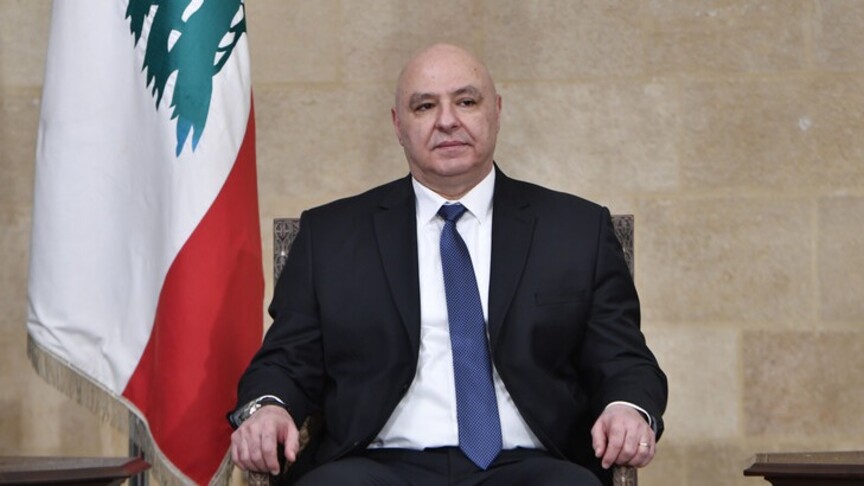
Lebanese President Joseph Aoun said Thursday that his country has begun translating its “choice of the state” into action, urging long-term international support to strengthen its military and security institutions, according to the Lebanese presidency.
Aoun made the remarks during a meeting at Les Invalides in Paris to prepare for an international conference supporting the Lebanese Armed Forces and Internal Security Forces under the Aqaba Initiative.
The meeting was attended by French President Emmanuel Macron, Jordan’s King Abdullah II and representatives from the US, Arab and European countries.
Aoun said the army is the “main pillar for protecting Lebanon’s sovereignty,” stressing that strengthening state authority is a Lebanese choice rather than an externally imposed demand.
He said the army is assuming growing responsibilities, particularly in southern Lebanon, including strengthening the state’s presence, maintaining stability and combating smuggling, terrorism and organized crime.
Aoun also said expected changes to the presence and role of the UN Interim Force in Lebanon (UNIFIL) require an orderly transition to prevent a security vacuum.
UNIFIL’s mandate is set to expire at the end of 2026. The peacekeeping force has been deployed in southern Lebanon since 1978.
Aoun said the military and security institutions had maintained their cohesion and discipline despite the economic crisis. He urged support that would allow them to move “from resilience to capacity-building.”
He wants a long-term international partnership with clear and sustained commitments that would enable Lebanon’s military and security institutions to plan and develop their capabilities.
On southern Lebanon, Aoun said the US-sponsored trilateral framework reached with Israel, with Arab and European support, aims to end the war and move toward a new phase of security and stability.
He said Lebanon had fulfilled its commitments and encouraged the full implementation of the framework, saying stability cannot be achieved while Israeli attacks and occupation of parts of Lebanese territory continue.
Beirut and Tel Aviv signed a framework agreement in Washington on June 26 that provides for a gradual Israeli withdrawal from Lebanese territory and the deployment of the army in areas vacated by Israeli forces.
Israel has continued attacks in southern Lebanon despite the agreement and maintains control over areas of Lebanese territory.