Şahin Demir
10 September 2026•Update: 10 September 2026
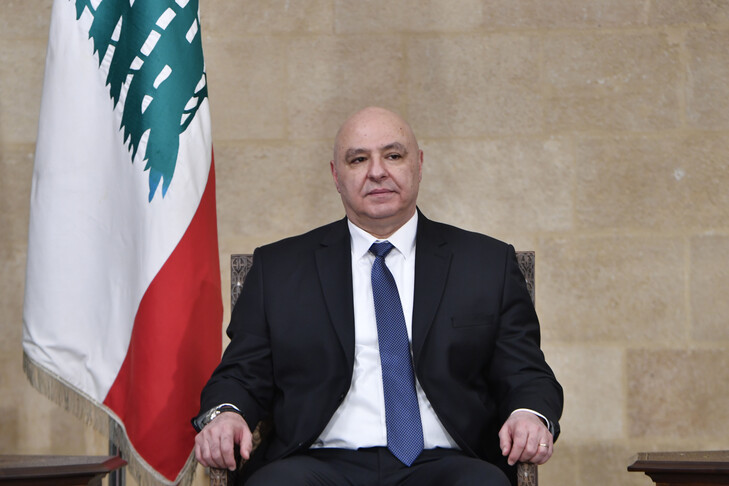
Lebanese President Joseph Aoun said Thursday that “the time has come for the state to return to the south,” as Israeli attacks continue in the region.
Aoun made the remarks at the opening of a Cabinet meeting at the presidential palace, according to a statement by the Lebanese presidency.
He said the presidency had listened to appeals from residents of Nabatieh, Tyre and Arabsalim, stressing that the state stands with them.
“We can only make every possible effort to remain by your side, help you and provide all the means necessary for your resilience as much as possible,” Aoun said.
He described the south as “an essential part of Lebanon,” adding: “The time has come for the state to return to the south. This is our collective responsibility and our duty toward our people.”
Aoun urged all government ministries to provide support to residents of southern Lebanon.
Turning to the economy, Aoun welcomed the laying of the foundation stone for the expansion of Beirut port, describing it as a positive development that offers hope to the Lebanese people.
He said Lebanon had previously asked ministries to prepare projects to be presented to the United Arab Emirates, noting that Emirati officials and businesspeople had expressed interest in investing in the country and that two UAE delegations had visited Lebanon for that purpose.
Aoun urged ministers to move quickly and coordinate to take advantage of investment opportunities and launch planned projects.
Non-oil trade between the UAE and Lebanon reached $4.2 billion in 2025, an annual increase of 35.6%, according to the UAE foreign trade minister.
The UAE lifted restrictions on its citizens traveling to Lebanon on June 29, reversing a travel ban imposed on April 30 amid regional tensions.
Aoun’s remarks come as Israeli attacks continue across southern Lebanon despite a US-mediated framework agreement signed by Beirut and Tel Aviv on June 26.
The agreement provides for a gradual Israeli withdrawal from occupied Lebanese territory alongside the deployment of the Lebanese army.
Israel continues to occupy areas in southern Lebanon, including territory held for decades and positions seized during the 2023-2024 conflict and subsequent military operations.