Rania Abushamala
07 September 2026•Update: 07 September 2026
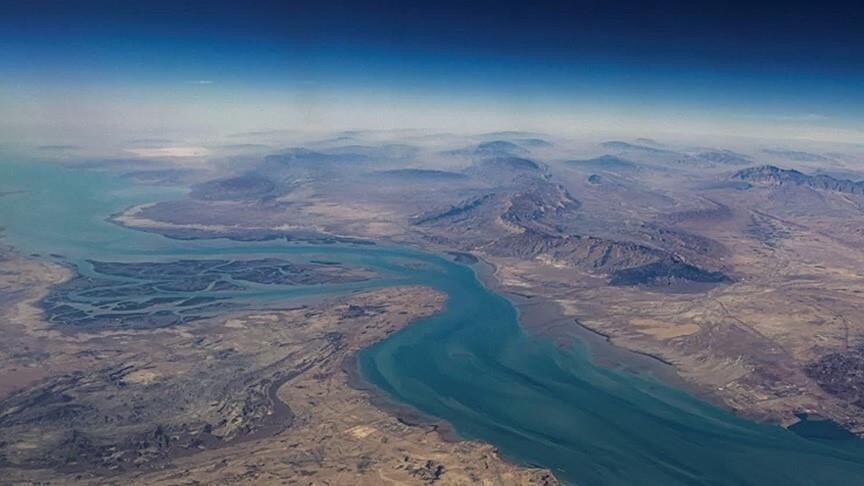
Iran will declare a new “restricted” maritime zone outside the Strait of Hormuz in the coming days, the country’s top national security official said Sunday, warning that any vessel entering the area would be placed on a sanctions list.
In a televised interview, Mohsen Rezaei, the secretary of Iran’s Supreme National Security Council, said the zone will begin from the US Navy’s blockade line and extend into parts of the Gulf, according to the Iranian state-run Press TV.
“Any vessel entering this new zone will be placed on a sanctions list,” he said.
Rezaei also said Iran and Oman would sign an agreement in the coming days on the new corridor through Hormuz, with its entry and exit points under Iranian control.
He said the Strait of Hormuz was “completely closed and under the control of the armed forces,” dismissing US President Donald Trump’s claim that the strategic waterway remained open as a “big lie.”
Before Iran closed the strait, more than 100 ships carrying over 100 million tons of cargo passed through it daily, Rezaei said. He added that only seven or eight ships carrying essential goods for Iran were now transiting the waterway.
“The Americans are trying to smuggle five to six vessels through at great expense, but these ships are usually struck,” he said, without elaborating.
Rezaei said Iran had decided against sinking the vessels because they were carrying oil and doing so would damage the region’s environment.
He also claimed that Iran had successfully tested a new anti-ship missile above a US Navy vessel 48 hours earlier.
“For the first time, we tested our anti-ship missile above an American warship,” he said.
“This special missile created hell for the Americans, and they fled,” he added, without identifying the vessel or specifying where the test occurred.
He separately rejected claims that the US economic blockade was causing widespread famine in Iran.
“The claim that the US economic blockade is causing a major famine in Iran is a big lie,” Rezaei told Iranian state broadcaster IRIB.
“The Iranian government has been preparing for this for a long time and has sufficient stocks of food and essential goods,” he added.
Regional tensions have escalated since US-Israeli attacks on Iran began on Feb. 28, with Tehran responding with missile and drone strikes against Israel and US interests across the region.
Iran and the US signed a memorandum of understanding in June mediated by Pakistan and Qatar outlining steps toward ending hostilities, reopening the Strait of Hormuz and addressing economic restrictions.
The two sides have since accused each other of failing to implement commitments under the memorandum, while military tensions have continued alongside disputes over sanctions and navigation through the Strait of Hormuz.