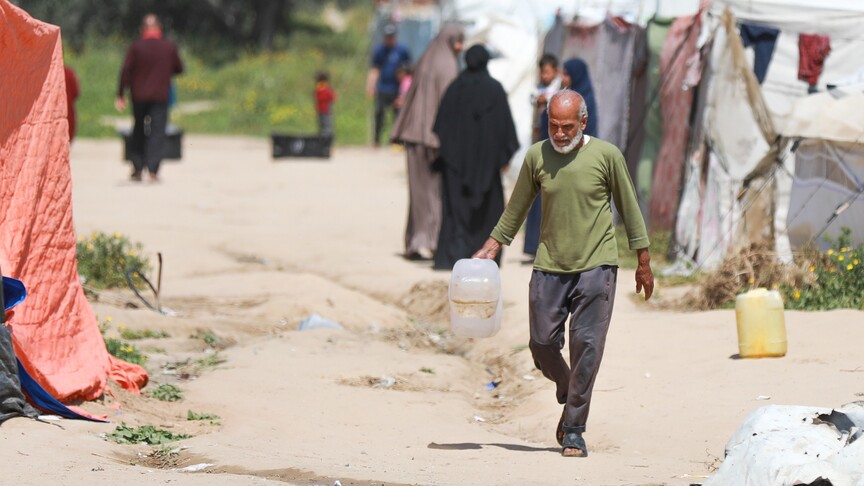
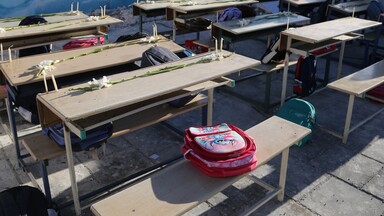
- ‘We no longer go to school. We spend our days filling water. We come from far away and wait for long hours, and sometimes we don’t get enough,’ says Abdullah Safi, 12
With hesitant steps, Shaima Abu Jamos, 28, stands before a water tank in the city of Khan Younis in southern Gaza, trying to approach the source without being able to see, waiting for someone to help her fill her containers in a daily struggle that has become part of her life.
“I stand for long hours in line and cannot fill water on my own, so I rely on others to secure my daily needs,” Abu Jamos, who is visually impaired, told Anadolu.
The water crisis in the Gaza Strip continues to worsen due to widespread destruction of water infrastructure during Israel’s two-year war and the loss of a large portion of its sources, along with stalled maintenance and rehabilitation efforts.
With ongoing Israeli restrictions on the entry of equipment and essential materials, the gap between daily needs and available supply continues to widen, making access to water an ongoing challenge that is intensifying with the growing number of displaced people and deteriorating humanitarian conditions.
The crisis comes as Gaza faces multiple challenges, including shortages of fuel and electricity, directly affecting basic services such as water and health care.
Daily hardship
As she tries to complete this daily task, Abu Jamos said, “Sometimes people help me, and sometimes I return without getting enough water.”
She added that this hardship has been repeated daily for months under harsh conditions while living in a tent with her sisters.
The Palestinian woman said the available water is often unfit for drinking and causes illness, especially among children.
Local officials and experts have warned of contamination of Gaza’s aquifer due to the use of absorption pits in displacement camps to dispose of wastewater, increasing the risk of disease outbreaks.
An absorption pit is a covered underground chamber with permeable walls that allows wastewater to slowly seep into the surrounding soil layers.
Every day, dozens of displaced residents carrying plastic containers line up in long queues, waiting for limited amounts of water from trucks supplying mobile tanks, amid severe shortages and a clear decline in supply services, especially in central Khan Younis and the Mawasi area, which hosts tens of thousands of displaced people.
Amid this scene stands 12-year-old Abdullah Safi, who has been forced to leave school to spend his days searching for water.
“We no longer go to school. We spend our days filling water. We come from far away and wait for long hours, and sometimes we don’t get enough,” Safi told Anadolu.
He added that he tries to help others, especially the elderly and people with disabilities like Shaima, noting that he has helped her more than once because she cannot use hoses.
Water disaster
Alaa al-Din al-Batta, deputy head of the Union of Gaza Municipalities and mayor of Khan Younis, said the sector is facing a “real water disaster” due to the destruction of about 95% of water sources.
“Maintenance efforts, despite continuing for more than two years, have succeeded in rehabilitating only about 30% of the infrastructure due to the ban on importing pipes and essential equipment and the continued blockade,” Al-Batta told Anadolu.
“No water pipes, spare parts or generators have entered the Gaza Strip for a long time, leading to an unprecedented deterioration in municipalities’ ability to operate wells and desalination plants.”
Israel has not implemented its obligations under the ceasefire agreement in place since Oct. 10, 2025, including provisions to allow the entry of machinery, equipment and tools needed by municipalities and civil defense, worsening the situation for Palestinians.
Harsh summer
Batta said municipalities are forced to shut down generators every two hours to conserve remaining fuel supplies, which are unavailable in markets, alongside shortages of tires and spare parts, threatening a complete shutdown of the water system.
“Even generators that have broken down have no replacements, and everything has doubled in price, while we suffer from shortages of diesel and oil, forcing us to reduce operating hours to the minimum,” he added.
Available alternatives such as solar energy are no longer effective due to a lack of maintenance and batteries, while international efforts face Israeli restrictions preventing the entry of necessary equipment.
“Water quantities have declined by more than 50%. Previously, about 3 million liters were supplied daily; now it does not exceed 1 million liters, covering only 30% to 40% of residents’ needs,” Batta said.
He warned that the Gaza Strip is heading toward a “very harsh summer,” with a high likelihood of severe water shortages, calling for urgent international action to lift restrictions and ensure the entry of essential supplies.
Decline in aid projects
With the increasing number of displaced people and the overcrowding of tents in western Khan Younis, the water crisis is worsening as support and supply projects that previously helped alleviate it are declining, according to a source who spoke to Anadolu on condition of anonymity.
The source said dozens of international and local aid organizations in Gaza have significantly scaled back their operations, particularly water distribution to displaced people, due to an Israeli decision to halt their activities.
He warned that this step threatens the collapse of the humanitarian system and worsens policies of deprivation in Gaza amid deteriorating living conditions.
On Jan. 4, Israel began revoking the operating licenses of 37 international organizations delivering humanitarian aid to Gaza, citing their refusal to provide staff lists and comply with new security registration procedures, according to Israel’s public broadcaster.
Israel launched a war on Oct. 8, 2023, that lasted two years, killing more than 72,000 Palestinians and injuring over 172,000, and causing massive destruction affecting about 90% of civilian infrastructure in the enclave.
*Writing by Lina Altawell in Istanbul