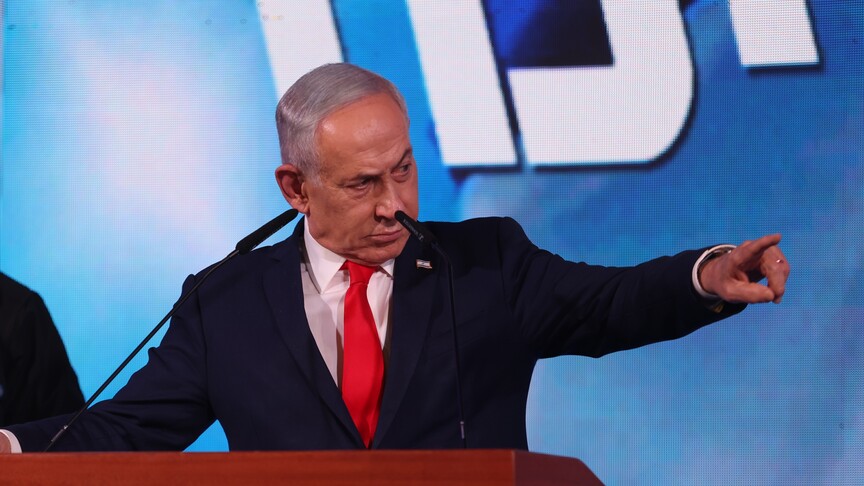
Israeli Prime Minister Benjamin Netanyahu is pressing US President Donald Trump to authorize renewed military action against Iran, but growing opposition within Israel and Washington's reluctance to commit to another campaign could complicate his efforts, experts say.
The Israeli prime minister has intensified his lobbying as he faces an uncertain political future following the election, which deprived his right-wing bloc of a parliamentary majority and gave opposition leader Gadi Eisenkot the first opportunity to form a government.
Trump, meanwhile, has indicated that he is in no hurry to make a decision on renewed strikes, saying he will revisit the issue after the beginning of the new year.
"I am not rushing into any decision (on Iran). We will see what happens after the beginning of the year," Trump told Axios in a telephone interview on Nov. 19.
Experts feel that Trump's position reflects competing considerations within his administration, including whether economic measures can achieve Washington's objectives without another major military operation, and how Iran might retaliate against US forces and regional allies.
For Netanyahu, however, the prospect of renewed hostilities is also closely tied to Israel's internal political situation.
The US-Israeli war against Iran, began on Feb. 28, with fighting now continuing at a reduced level. The US has imposed a naval blockade on Iran, while military escorts have helped restore some oil shipments through the Strait of Hormuz. Iran has continued attacks on US facilities and commercial shipping in the Gulf.
Rob Geist Pinfold, a lecturer in international security at King's College London, said Netanyahu was in a more complicated position following the election than he had been before it.
The prime minister's bloc secured 53 seats in the 120-member Knesset, while Eisenkot's opposition bloc held 48. Arab parties won a combined 19 seats, leaving neither side with the 61 needed for a parliamentary majority.
The opposition leader has until Dec. 6 to form a government, with a possible 14-day extension. His Yashar party reached its first coalition agreement with Avigdor Lieberman's Yisrael Beytenu on Nov. 24, while negotiations with other parties remain complicated.
Pinfold said Netanyahu had an interest in renewed confrontation with Iran because it could disrupt the coalition negotiations now taking place and potentially strengthen his position.
"On the one hand, he's still prime minister, so it's in his interest to renew hostility against Iran that would scupper the coalition negotiations that are going on at the moment."
But the political environment has changed, with opposition figures increasingly questioning the need for another military campaign, he said.
"Now the situation is very different in that we're hearing Israel's opposition leaders, particularly Gadi Eisenkot, publicly coming out and saying that a renewal of hostilities with Iran is not necessary for the time being."
He said reports from Israel's military establishment also suggested there was no immediate reason to resume hostilities.
"There is less domestic support to renew hostilities against Iran," he said.
Pinfold added that Netanyahu could nevertheless see military escalation as increasingly important to his political survival.
"Netanyahu may feel that a renewal of the campaign is more exigent for his own political survival than ever," he said.
Ryan Bohl, senior Middle East and North Africa analyst at New York-based firm Rane, said Trump's decision would depend largely on whether Netanyahu could frame renewed strikes as beneficial to the US president.
"I don't think that Trump will do anything that's not good for Trump," Bohl said.
He said Netanyahu could appeal to Trump's desire for a strong presidential legacy, dramatic headlines and the perception that backing away from military action would signal weakness.
However, the analyst said, Netanyahu would struggle to make the case on political and strategic grounds, particularly given questions within Israel's intelligence community about the effectiveness of another campaign.
"I think that he can do it on a personal level, I think he will struggle on a political and even a strategic level to sell the idea," he said.
Netanyahu has reportedly argued that Iran is rebuilding its missile stockpiles and restoring its air defenses, making the current period an opportunity to strike before Tehran recovers.
He also sent Mossad chief Roman Gofman to Washington this month to meet CIA Director John Ratcliffe and US envoy Steve Witkoff, presenting Israeli intelligence about alleged Iranian chemical weapons activities and pressing for renewed military action, according to Axios.
Bohl said Trump was also assessing whether Netanyahu could survive the election, arguing that renewed hostilities could strengthen the prospects of a unity government with Eisenkot and keep the Israeli prime minister in power.
"If there's a war, that's a much stronger driver for a unity government with Eisenkott, and that keeps Netanyahu in power," he said.
Bohl said Trump's decision to delay major strikes could also reflect uncertainty within his administration, the political consequences of the November midterm elections and the timing of Israel's government formation.
He pointed to the American Thanksgiving holiday period and the possibility that Trump wants to avoid disrupting the US with another war before the end of the year.
He also said Washington was assessing whether additional US military deployments to the Persian Gulf could improve its options.
Another possibility, Bohl said, was that Trump could allow Israel to carry out unilateral operations against Iran rather than directly joining an attack.
But such a scenario could still draw Washington into the conflict, said Bohl, adding that Iran would hold the US responsible for any Israeli operation.
"I think … Netanyahu is going to continue to try to provoke the Iranians and try to convince the Americans to strike first," Bohl said.
He described Iran as having been "pretty disciplined" and suggested Tehran might avoid responding to provocations during the caretaker government period.
Meanwhile, regional governments are intensifying diplomatic efforts to prevent another major confrontation.
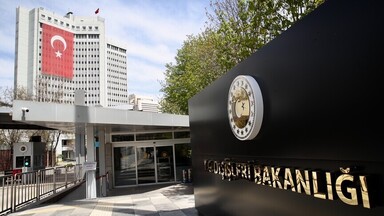
Officials from Gulf countries, Türkiye and Pakistan have held contacts with senior US officials, seeking to prevent Washington from restarting the war or allowing Israel to attack Iranian nuclear and missile facilities.
Their concerns include possible Iranian retaliation against oil and gas facilities, power and desalination plants, undersea communications cables and shipping routes, including the Bab el-Mandeb Strait.
Bohl said the US midterm election results and the incoming Democratic-controlled Congress could also shape Trump's plans.
He said the president might face growing pressure from lawmakers to reconsider military operations, although Republicans could be reluctant to break with him.
"If we're going to finally see a congressional revolt to stop a war, I think this is it," Bohl said.
For now, the possibility of renewed strikes remains open, despite Trump's stated preference to wait until the new year.
"Of course, Trump always sets deadlines that he doesn't keep," Bohl said.
The final decision rests heavily on Trump's own calculations, he said.
news_share_descriptionsubscription_contact

contact_the_ombudsman
is_there_an_error_in_this_story